












Accelerating active catalyst discovery: a probabilistic prediction-based screening methodology with applications in dry reforming of methane
Literature Information
Publication Date
2023-12-14
DOI
10.1039/D3TA05472A
Impact Factor
12.732
Authors
Hyungtae Cho, Insoo Ro, Junghwan Kim
View Original
Abstract
Dry reforming of methane (DRM) is a promising technology for syngas production from CH4 and CO2. However, discovering feasible and efficient catalysts remains challenging despite recent advancements in machine learning. Herein, we present a novel probabilistic prediction-based, high-throughput screening methodology that demonstrates outstanding performance, with a coefficient of determination (R2) of 0.936 and root-mean-square error (RMSE) of 6.66. Additionally, experimental validation was performed using 20 distinct catalysts to ensure the accurate verification of the model, 17 of which were previously unreported combinations. Our model accurately predicts CH4 conversion rates and probability values by considering catalyst design, pretreatment, and operating variables, providing reliable insights into catalyst performance. The proposed probabilistic prediction-based screening methodology, which we introduce for the first time in the field of catalysis, holds significant potential for accelerating the discovery of catalysts for DRM reactions and expanding their application scope in other crucial industrial processes. Thus, the methodology effectively addresses a key challenge in the development of active catalysts for energy and environmental research.
Related Literature
Use multiscale simulation to explore the effects of the homodimerizations between different conformation states on the activation and allosteric pathway for the μ-opioid receptor
Xi Zhang, Yuan Yuan, Longrong Wang, Yanzhi Guo, Menglong Li, Chuan Li, Xuemei Pu
2018-04-19
Paper
DOI: 10.1039/C8CP02016G
Performance of PELDOR, RIDME, SIFTER, and DQC in measuring distances in trityl based bi- and triradicals: exchange coupling, pseudosecular coupling and multi-spin effects
Andreas Meyer, Jean Jacques Jassoy, Sebastian Spicher, Andreas Berndhäuser, Olav Schiemann
2018-05-01
Paper
DOI: 10.1039/C8CP01276H
The reactivity of cyclopropyl cyanide in titan's atmosphere: a possible pre-biotic mechanism
E. López, D. Ascenzi, P. Tosi, J. M. Bofill, J. de Andrés, M. Albertí, J. M. Lucas, A. Aguilar
2018-01-23
Paper
DOI: 10.1039/C7CP06911A
Electronic structure calculations and nonadiabatic dynamics simulations of excited-state relaxation of Pigment Yellow 101
Meng Che, Yuan-Jun Gao, Yan Zhang, Shu-Hua Xia, Ganglong Cui
2018-02-05
Paper
DOI: 10.1039/C7CP07692D
Oxygen-induced high diffusion rate of magnesium dopants in GaN/AlGaN based UV LED heterostructures
Paweł Piotr Michałowski, Sebastian Złotnik, Jakub Sitek, Krzysztof Rosiński, Mariusz Rudziński
2018-05-01
Paper
DOI: 10.1039/C8CP01470A
Bandgap scaling and negative differential resistance behavior of zigzag phosphorene antidot nanoribbons (ZPANRs)
Santhia Carmel, Adhithan Pon, N. Meenakshisundaram, R. Ramesh, Arkaprava Bhattacharyya
2018-05-01
Paper
DOI: 10.1039/C8CP01435C
A first-principles study of hydrogen storage capacity based on Li–Na-decorated silicene
Zhe Sheng, Shujing Wu, Xianying Dai, Tianlong Zhao, Yue Hao
2018-04-25
Paper
DOI: 10.1039/C8CP00722E
A “turn-off” red-emitting fluorophore for nanomolar detection of heparin
Palash Jana, Mithun Radhakrishna, Saumyakanti Khatua, Sriram Kanvah
2018-01-24
Paper
DOI: 10.1039/C7CP06300H
Phenyl radical + propene: a prototypical reaction surface for aromatic-catalyzed 1,2-hydrogen-migration and subsequent resonance-stabilized radical formation
Zachary J. Buras, Te-Chun Chu, Adeel Jamal, Nathan W. Yee, Joshua E. Middaugh, William H. Green
2018-04-13
Paper
DOI: 10.1039/C8CP01159A
Fermi resonance in solvated H3O+: a counter-intuitive trend confirmed via a joint experimental and theoretical investigation
Qian-Rui Huang, Tomoki Nishigori, Marusu Katada, Asuka Fujii, Jer-Lai Kuo
2018-04-30
Paper
DOI: 10.1039/C8CP02151A
You might also like
Compound Q&A
What precautions should be taken when handling 2-Chloro-1,2-bis(4-methylphenyl)ethanone (CAS: 71193-32-3)?
When handling 2-Chloro-1,2-bis(4-methylphenyl)ethanone (CAS: 71193-32-3), it is ...
71193-32-32-Chloro-1,2-bis(4-m...
Compound Q&A
What industries use 4-Ethoxy-3-(5-methyl-4-oxo-7-propyl-1,4-dihydroimidazo[5,1-f][1,2,4]triazin-2-yl)benzenesulfonyl chloride (CAS: 224789-26-8)?
4-Ethoxy-3-(5-methyl-4-oxo-7-propyl-1,4-dihydroimidazo[5,1-f][1,2,4]triazin-2-yl...
224789-26-84-Ethoxy-3-(5-methyl...
Compound Q&A
How should Methyl 3-Oxo-4-Androsten-17-Carboxylate (CAS: 2681-55-2) be stored?
Methyl 3-Oxo-4-Androsten-17-Carboxylate (CAS: 2681-55-2) should be stored in a c...
2681-55-2Methyl 3-Oxo-4-Andro...
Compound Q&A
What are the main uses of (R)-3-Amino-4-(3-hexylphenylamino)-4-oxobutylphosphonic acid (CAS: 909725-61-7)?
(R)-3-Amino-4-(3-hexylphenylamino)-4-oxobutylphosphonic acid is primarily used i...
909725-61-7(R)-3-Amino-4-(3-hex...
Compound Q&A
What regulatory guidelines apply to 2-Methyl-2-propanyl 3-amino-3-carbamoyl-1-azetidinecarboxylate (CAS: 1254120-14-3)?
2-Methyl-2-propanyl 3-amino-3-carbamoyl-1-azetidinecarboxylate (CAS: 1254120-14-...
1254120-14-32-Methyl-2-propanyl ...
Compound Q&A
Are there alternatives to (E)-4-(tert-Butoxy)-4-oxobut-2-enoic acid (CAS: 135355-96-3) in synthesis?
There are alternative reagents that can be used in synthesis instead of (E)-4-(t...
135355-96-3(E)-4-(tert-Butoxy)-...
Compound Q&A
What are the physical and chemical properties of [2-(3-Chlorophenyl)-1,3-thiazol-4-yl]methanol (CAS: 121202-20-8)?
[2-(3-Chlorophenyl)-1,3-thiazol-4-yl]methanol (CAS: 121202-20-8) is a crystallin...
121202-20-8[2-(3-Chlorophenyl)-...
Compound Q&A
What is the market or research trend for Methyl (2S)-[(4S)-2,2-dimethyl-1,3-dioxolan-4-yl]{[(4-methylphenyl)sulfonyl]oxy}acetate (CAS: 166249-17-8)?
The market and research trends for Methyl (2S)-[(4S)-2,2-dimethyl-1,3-dioxolan-4...
166249-17-8Methyl (2S)-[(4S)-2,...
Compound Q&A
What is the market or research trend for 1-Bromo-2-isocyanatoethane (CAS: 42865-19-0)?
The market for 1-Bromo-2-isocyanatoethane (CAS: 42865-19-0) is driven by its use...
42865-19-01-Bromo-2-isocyanato...
Compound Q&A
What are the main uses of 4-Nitro-D-phenylalanine hydrochloride (CAS: 147065-06-3)?
4-Nitro-D-phenylalanine hydrochloride (CAS: 147065-06-3) is primarily used in re...
147065-06-34-Nitro-D-phenylalan...
Source Journal
Journal of Materials Chemistry A

CiteScore:
19.5
Self-citation Rate:
4.7%
Articles per Year:
2211
Journal of Materials Chemistry A, B & C cover high quality studies across all fields of materials chemistry. The journals focus on those theoretical or experimental studies that report new understanding, applications, properties and synthesis of materials. The journals have a strong history of publishing quality reports of interest to interdisciplinary communities and providing an efficient and rigorous service through peer review and publication. The journals are led by an international team of Editors-in-Chief and Associate Editors who are all active researchers in their fields. Journal of Materials Chemistry A, B & C are separated by the intended application of the material studied. Broadly, applications in energy and sustainability are of interest to Journal of Materials Chemistry A, applications in biology and medicine are of interest to Journal of Materials Chemistry B, and applications in optical, magnetic and electronic devices are of interest to Journal of Materials Chemistry C. More than one Journal of Materials Chemistry journal may be suitable for certain fields and researchers are encouraged to submit their paper to the journal that they feel best fits for their particular article. Example topic areas within the scope of Journal of Materials Chemistry A are listed below. This list is neither exhaustive nor exclusive. Artificial photosynthesis Batteries Carbon dioxide conversion Catalysis Fuel cells Gas capture/separation/storage Green/sustainable materials Hydrogen generation Hydrogen storage Photocatalysis Photovoltaics Self-cleaning materials Self-healing materials Sensors Supercapacitors Thermoelectrics Water splitting Water treatment
Recommended Compounds
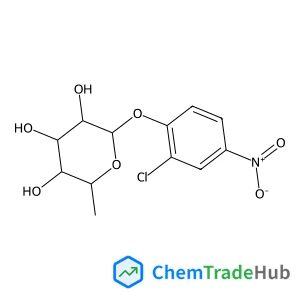
2-Chloro-4-nitrophenyl 6-deoxy-alpha-L-galactopyranoside
CAS Number:
157843-41-9
Molecular Formula:
C12H14ClNO7
Recommended Suppliers





Disclaimer
This page provides academic journal information for reference and research purposes only. We are not affiliated with any journal publishers and do not handle publication submissions. For publication-related inquiries, please contact the respective journal publishers directly.
If you notice any inaccuracies in the information displayed, please contact us at support@chemtradehub.com. We will promptly review and address your concerns.