













Ethyl 2,4-bis(trifluoromethyl)-5-pyrimidinecarboxylate
CAS Number:
188781-15-9
Molecular Formula:
C9H6F6N2O2
Haijia Li, Jian Cai, Jianping Liao, Yiting Li, Xueyi Zeng, Xin He, Chaojun Fan, Zhen Ma, Junmin Nan
A functional electrolyte containing propyl 4-methylbenzenesulfonate (PMBS) additive is developed to improve the performance of the LiNi0.8Co0.1Mn0.1O2 (NCM811)/graphite pouch full cells, especially the cycling lifetime under low temperature. It is indicated that the addition of PMBS into the electrolyte facilitates the formation of stable and low impedance interfacial films of the NCM811 cathode and graphite anode due to the preferential decomposition of PMBS over solvent molecules. Compared to the cells without additives, the cells containing 2% PMBS exhibit enhanced performance, and the capacity retention rate increases from 55.97% to 87.20% after 1200 cycles at 25 °C. And under the temperature condition of −10 °C, the capacity retention rate increases from 55.37% to 98.02% after 100 cycles, indicating the unique effect of PMBS on the low-temperature cycling performance of high-nickel lithium-ion batteries.
Yigang Fang, Andrew Bennett, Jianbo Liu
DOI: 10.1039/C0CP00823K
Nicholas A. Besley, Frans A. Asmuruf
DOI: 10.1039/C002207A
Yanli Chen, Marcel Bouvet, Thibaut Sizun, Yingning Gao, Cedric Plassard, Eric Lesniewska, Jianzhuang Jiang
DOI: 10.1039/C0CP00381F
Pingya Luo, Rong Zeng, Pedro J. S. B. Caridade, António J. C. Varandas
DOI: 10.1039/B927542H
Erping Gao, Wenzhong Wang, Meng Shang, Jiehui Xu
DOI: 10.1039/C0CP01749C
Yi Geng, Yantao Shi, Liduo Wang, Beibei Ma, Rui Gao, Yifeng Zhu, Haopeng Dong, Yong Qiu
DOI: 10.1039/C0CP01866J
Anna M. Chizhik, Regina Jäger, Alexey I. Chizhik, Sebastian Bär, Hans-Georg Mack, Marcus Sackrow, Catrinel Stanciu, Alexey Lyubimtsev, Michael Hanack, Alfred J. Meixner
DOI: 10.1039/C0CP02228D
Satoshi Habuchi, Suguru Onda, Martin Vacha
DOI: 10.1039/C0CP01729A
Aleksey A. Kocherzhenko, Ferdinand C. Grozema, Laurens D. A. Siebbeles
DOI: 10.1039/C0CP01432J
When handling lithium chloride hydrate (1:1:1) (CAS: 16712-20-2), it is importan...
4-(4H-1,2,4-Triazol-4-yl)piperidine is generally considered safe for use in phar...
Waste containing 1,3-Thiazole-2-carboxamide (CAS: 16733-85-0) should be collecte...
5-(Difluoromethyl)-2-fluorobenzonitrile (CAS: 934175-58-3) is subject to regulat...
Methyl 3-acetamido-2-thiophenecarboxylate can be synthesized by the reaction of ...
4-Isoquinolinecarbonitrile is a chemical compound with the CAS number 34846-65-6...
Store Methyl 1H-1,2,3-triazole-4-carboxylate (CAS: 877309-59-6) in a cool, dry p...
6-Bromo[1,3]thiazolo[5,4-b]pyridin-2-amine (CAS: 1160791-13-8) is subject to the...
(2S,3S)-2-Ammonio-3-(3,4-dihydroxyphenyl)-3-hydroxypropanoate (CAS: 23651-95-8) ...
7-Bromo-3-methyl-3,4-dihydroquinazolin-4-one is a solid with a crystalline form....
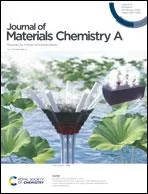
Journal of Materials Chemistry A, B & C cover high quality studies across all fields of materials chemistry. The journals focus on those theoretical or experimental studies that report new understanding, applications, properties and synthesis of materials. The journals have a strong history of publishing quality reports of interest to interdisciplinary communities and providing an efficient and rigorous service through peer review and publication. The journals are led by an international team of Editors-in-Chief and Associate Editors who are all active researchers in their fields. Journal of Materials Chemistry A, B & C are separated by the intended application of the material studied. Broadly, applications in energy and sustainability are of interest to Journal of Materials Chemistry A, applications in biology and medicine are of interest to Journal of Materials Chemistry B, and applications in optical, magnetic and electronic devices are of interest to Journal of Materials Chemistry C. More than one Journal of Materials Chemistry journal may be suitable for certain fields and researchers are encouraged to submit their paper to the journal that they feel best fits for their particular article. Example topic areas within the scope of Journal of Materials Chemistry A are listed below. This list is neither exhaustive nor exclusive. Artificial photosynthesis Batteries Carbon dioxide conversion Catalysis Fuel cells Gas capture/separation/storage Green/sustainable materials Hydrogen generation Hydrogen storage Photocatalysis Photovoltaics Self-cleaning materials Self-healing materials Sensors Supercapacitors Thermoelectrics Water splitting Water treatment
![1-[4-(4-Methyl-1H-imidazol-1-yl)phenyl]ethanone structure](https://static.chemtradehub.com/structs/142/142161-53-3-7f55.webp "1-[4-(4-Methyl-1H-imidazol-1-yl)phenyl]ethanone structure")
![6-(Benzyloxy)-8-(2-bromoacetyl)-2H-benzo[b][1,4]oxazin-3(4H)-one structure](https://static.chemtradehub.com/structs/926/926319-53-1-2287.webp "6-(Benzyloxy)-8-(2-bromoacetyl)-2H-benzo[b][1,4]oxazin-3(4H)-one structure")
![Benzeneacetic acid, 2-bromo-α-[[(1,1-dimethylethoxy)carbonyl]amino]-, (αS)- structure](https://static.chemtradehub.com/structs/122/1228547-87-2-f296.webp "Benzeneacetic acid, 2-bromo-α-[[(1,1-dimethylethoxy)carbonyl]amino]-, (αS)- structure")



