












![2-Methylbenzo[h]quinoline structure](https://static.chemtradehub.com/structs/605/605-88-9-ac43.webp "2-Methylbenzo[h]quinoline structure")
Advances in photoinduced radical–polar crossover cyclization (RPCC) of bifunctional alkenes
Literature Information
Publication Date
2023-12-20
DOI
10.1039/D3QO01929B
Impact Factor
5.281
Authors
Meng Liu, Xinke Ouyang, Chenglong Xuan
View Original
Abstract
The term “cyclic architectures” refers to a class of molecules that are highly valuable and play significant roles in organic compounds. Therefore, there is growing interest in researching the development of efficient and straightforward methods for constructing these complex structures. Photoinduced radical–polar crossover cyclization (RPCC) of bifunctional alkenes represents a class of reactions that are of great synthetic utility because they show high chemoselectivity, broad functional group tolerance and proceed under mild conditions to produce high-value cyclic products with precise alkene design. This mini-review summarizes the recent representative advances in the development of RPCC over the past two decades through different synthetic strategies in the reactions, highlighting their product diversity, selectivity and applicability, and the mechanistic rationale where possible. The intention is to provide readers with a comprehensive understanding of the current state-of-play in this field and contribute to future research efforts.
Recommended Journals
Related Literature
Questioning the photophysical model for the indolechromophore in the light of evidence obtained by controlling the non-specific effect of the medium with 1-chlorobutane as solvent
Juan Pablo Catalán
2011-07-14
Paper
DOI: 10.1039/C1CP21380F
Kinetics of the C–C bond beta scission reactions in alkyl radicals
Artur Ratkiewicz
2011-07-22
Paper
DOI: 10.1039/C1CP21229J
A layered structure at the surface of P3HT/PCBM blends
Natalya Schmerl, Gunther Andersson
2011-07-18
Paper
DOI: 10.1039/C1CP20734B
Quantum design rules for single molecule logic gates
N. Renaud, M. Hliwa, C. Joachim
2011-07-27
Paper
DOI: 10.1039/C1CP21221D
Stabilization of organic field-effect transistors by tert-butyl groups in dibenzotetrathiafulvalene derivatives
Junki Nagakubo, Minoru Ashizawa, Tadashi Kawamoto, Akihiko Tanioka
2011-06-15
Paper
DOI: 10.1039/C1CP21507H
Interactions of the N3 dye with the iodide redox shuttle: quantum chemical mechanistic studies of the dye regeneration in the dye-sensitized solar cell
Abu Md Asaduzzaman, Georg Schreckenbach
2011-07-20
Paper
DOI: 10.1039/C1CP21168D
Monolayer properties of uronic acid bicatenary derivatives at the air–water interface: effect of hydroxyl group stereochemistry evidenced by experimental and computational approaches
Hary Razafindralambo, Aurore Richel, Bernard Wathelet, Christophe Blecker, Jean-Paul Wathelet, Robert Brasseur, Laurence Lins, Jose Miñones, Jr., Michel Paquot
2011-07-22
Paper
DOI: 10.1039/C1CP21365B
Probing the electronic and optical properties of silica-coated quantum dots with first-principles calculations
Cunku Dong, Jingyao Qi
2011-07-08
Paper
DOI: 10.1039/C1CP21030K
Assessment of an effective quasirelativistic methodology designed to study astatine chemistry in aqueous solution
Andrea Sabatié-Gogova, Eric Renault, Gilles Montavon, Nicolas Galland
2011-07-18
Paper
DOI: 10.1039/C1CP20512A
You might also like
Compound Q&A
How should 2-Methylbenzene-1,4-diamine dihydrochloride (CAS: 615-45-2) be stored?
2-Methylbenzene-1,4-diamine dihydrochloride (CAS: 615-45-2) should be stored in ...
615-45-22-Methylbenzene-1,4-...
Compound Q&A
Is (1S,4S)-2,5-Diazabicyclo[2.2.1]heptane dihydrobromide (CAS: 132747-20-7) safe?
(1S,4S)-2,5-Diazabicyclo[2.2.1]heptane dihydrobromide is generally considered sa...
132747-20-7(1S,4S)-2,5-Diazabic...
Compound Q&A
What industries use (6-Chloropyridazin-3-YL)methanamine (CAS: 871826-15-2)?
(6-Chloropyridazin-3-YL)methanamine finds applications in the pharmaceutical ind...
871826-15-2(6-Chloropyridazin-3...
Compound Q&A
What are the main uses of 2-Fluoro-3-methylphenol (CAS: 77772-72-6)?
2-Fluoro-3-methylphenol is primarily used in the synthesis of pharmaceuticals, p...
77772-72-62-Fluoro-3-methylphe...
Compound Q&A
What precautions should be taken when handling 3-Methoxy-4-nitrobenzonitrile (CAS: 177476-75-4)?
When handling 3-Methoxy-4-nitrobenzonitrile, it is important to wear appropriate...
177476-75-43-Methoxy-4-nitroben...
Compound Q&A
What precautions should be taken when handling 1,3-Oxazolo[4,5-b]pyridine-2(3H)-thione (CAS: 211949-57-4)?
When handling 1,3-Oxazolo[4,5-b]pyridine-2(3H)-thione (CAS: 211949-57-4), it is ...
211949-57-4[1,3]Oxazolo[4,5-b]p...
Compound Q&A
What regulatory guidelines apply to 4-Ethynylbenzamide (CAS: 90347-86-7)?
4-Ethynylbenzamide (CAS: 90347-86-7) falls under various regulatory guidelines i...
90347-86-74-Ethynylbenzamide
Compound Q&A
What are the main uses of 3-(2-Ethylphenyl)-2-thioxo-4-imidazolidinone (CAS: 186822-57-1)?
3-(2-Ethylphenyl)-2-thioxo-4-imidazolidinone is primarily used as an intermediat...
186822-57-13-(2-Ethylphenyl)-2-...
Compound Q&A
What is (2-Fluoro-6-methoxyphenyl)acetic acid (CAS: 500912-19-6)?
(2-Fluoro-6-methoxyphenyl)acetic acid, also known as 4-fluoro-3-methoxybenzoic a...
500912-19-6(2-Fluoro-6-methoxyp...
Compound Q&A
What is the market or research trend for 2-[4-(Hydroxymethyl)phenoxy]ethanol (CAS: 102196-18-9)?
Market trends for 2-[4-(Hydroxymethyl)phenoxy]ethanol (CAS: 102196-18-9) indicat...
102196-18-92-[4-(Hydroxymethyl)...
Source Journal
Organic Chemistry Frontiers

CiteScore:
7.8
Self-citation Rate:
8.7%
Articles per Year:
724
Organic Chemistry Frontiers publishes high-quality research from across organic chemistry. Emphases are placed on studies that make significant contributions to the field of organic chemistry by reporting either new or significantly improved protocols or methodologies. Topics include, but are not limited to the following: Organic synthesis Development of synthetic methodologies Catalysis Natural products Functional organic materials Supramolecular and macromolecular chemistry Physical and computational organic chemistry
Recommended Compounds
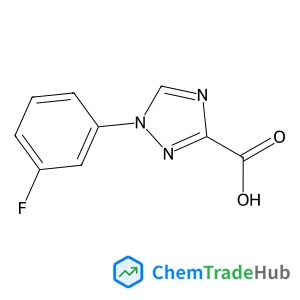
1-(3-Fluorophenyl)-1H-1,2,4-triazole-3-carboxylic acid
CAS Number:
1292369-51-7
Molecular Formula:
C9H6FN3O2
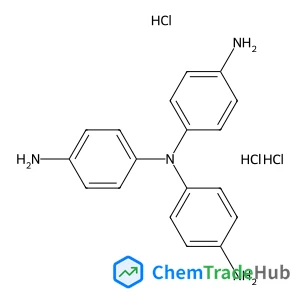
N1,N1-Bis(4-aminophenyl)benzene-1,4-diamine trihydrochloride
CAS Number:
114254-48-7
Molecular Formula:
C18H21Cl3N4
![[(5-Methyl-1,3,4-thiadiazol-2-yl)sulfanyl]acetic acid structure](https://static.chemtradehub.com/structs/509/50918-26-8-4ce8.webp "[(5-Methyl-1,3,4-thiadiazol-2-yl)sulfanyl]acetic acid structure")
[(5-Methyl-1,3,4-thiadiazol-2-yl)sulfanyl]acetic acid
CAS Number:
50918-26-8
Molecular Formula:
C5H6N2O2S2
![4-Chloro-2-{[(2-chlorophenoxy)acetyl]amino}benzoic acid structure](https://static.chemtradehub.com/structs/351/351424-20-9-9467.webp "4-Chloro-2-{[(2-chlorophenoxy)acetyl]amino}benzoic acid structure")
4-Chloro-2-{[(2-chlorophenoxy)acetyl]amino}benzoic acid
CAS Number:
351424-20-9
Molecular Formula:
C15H11Cl2NO4
Recommended Suppliers






Disclaimer
This page provides academic journal information for reference and research purposes only. We are not affiliated with any journal publishers and do not handle publication submissions. For publication-related inquiries, please contact the respective journal publishers directly.
If you notice any inaccuracies in the information displayed, please contact us at support@chemtradehub.com. We will promptly review and address your concerns.