













14-electron reduced Mo IV6-ε-Keggin polyoxometalates: highly stable and reversible electron/Li+ sponge materials
Literature Information
Publication Date
2023-11-07
DOI
10.1039/D3QI01828H
Impact Factor
6.569
Authors
Jie Zi, Meng Cao, Cuiming Ren
View Original
Abstract
First, 14-electron reduced MoIV6-ε-Keggin polyoxometalates (POMs), namely14e-[Sb2MoIV6MoV2MoVI4O32(OH)2py6]2− (1), 14e-[(GeO)2MoIV6MoV2MoVI4O34(OH)2py6]4− (2), and 14e-[Sb2ZnMoIV6MoV2MoVI4O34py7] (3) (py = pyridine), were prepared. X-ray structural analyses of 1–3 revealed two triangularly metal–metal Δ-bonded 6e-[MoIV3O4] incomplete cubane-type units and one 2e-[MoV2O4], which account for the hollow ε-Keggin structures free of central heteroatoms. Long-range π-stacking interactions and super electron-rich Keggin structures of 14e-1 and 14e-2 lead to their 260 times higher electrical conductivity than conventional fully oxidized MoVI-Keggin POMs. The hollow MoIV6-ε-Keggin POM 1 exhibited structural integrity retained during 24-electron charging/discharging processes when being simultaneously monitored by ex situ XPS and IR. A dynamic study of Li-ion migration in 1 revealed its dominant capacitor-like Li+-storage mechanism and effective/fast absorption/desorption of Li+. Therefore, it exhibited a high discharge specific capacity (303 mA h g−1, 50 mA g−1), superior rate and cycling performance, especially at an extremely high current density (121.6 mA h g−1, 100 cycles, 8.0 A g−1), which remarkably enhances the performance of conventional fully oxidized MoVI-Keggin cathode materials, and provides a new option for using super electron-rich, hollow POMs to improve the electrochemical performance of POM electrode materials.
Related Literature
Conference report. Alternatives to chemical solvents restricted by the Montreal Protocol: February 15, 1995, London, UK
Other
DOI: 10.1039/AN995200096N
You might also like
Compound Q&A
What precautions should be taken when handling lithium chloride hydrate (1:1:1) (CAS: 16712-20-2)?
When handling lithium chloride hydrate (1:1:1) (CAS: 16712-20-2), it is importan...
16712-20-2Lithium chloride hyd...
Compound Q&A
Is 4-(4H-1,2,4-Triazol-4-yl)piperidine (CAS: 690261-92-8) safe?
4-(4H-1,2,4-Triazol-4-yl)piperidine is generally considered safe for use in phar...
690261-92-84-(4H-1,2,4-Triazol-...
Compound Q&A
How should waste containing 1,3-Thiazole-2-carboxamide (CAS: 16733-85-0) be handled?
Waste containing 1,3-Thiazole-2-carboxamide (CAS: 16733-85-0) should be collecte...
16733-85-01,3-Thiazole-2-carbo...
Compound Q&A
What regulatory guidelines apply to 5-(Difluoromethyl)-2-fluorobenzonitrile (CAS: 934175-58-3)?
5-(Difluoromethyl)-2-fluorobenzonitrile (CAS: 934175-58-3) is subject to regulat...
934175-58-35-(Difluoromethyl)-2...
Compound Q&A
How is Methyl 3-acetamido-2-thiophenecarboxylate (CAS: 22288-79-5) typically synthesized?
Methyl 3-acetamido-2-thiophenecarboxylate can be synthesized by the reaction of ...
22288-79-5Methyl 3-acetamido-2...
Compound Q&A
What is 4-Isoquinolinecarbonitrile (CAS: 34846-65-6)?
4-Isoquinolinecarbonitrile is a chemical compound with the CAS number 34846-65-6...
34846-65-64-Isoquinolinecarbon...
Compound Q&A
How should Methyl 1H-1,2,3-triazole-4-carboxylate (CAS: 877309-59-6) be stored?
Store Methyl 1H-1,2,3-triazole-4-carboxylate (CAS: 877309-59-6) in a cool, dry p...
877309-59-6Methyl 1H-1,2,3-tria...
Compound Q&A
What regulatory guidelines apply to 6-Bromo[1,3]thiazolo[5,4-b]pyridin-2-amine (CAS: 1160791-13-8)?
6-Bromo[1,3]thiazolo[5,4-b]pyridin-2-amine (CAS: 1160791-13-8) is subject to the...
1160791-13-86-Bromo[1,3]thiazolo...
Compound Q&A
Is (2S,3S)-2-Ammonio-3-(3,4-dihydroxyphenyl)-3-hydroxypropanoate (CAS: 23651-95-8) safe?
(2S,3S)-2-Ammonio-3-(3,4-dihydroxyphenyl)-3-hydroxypropanoate (CAS: 23651-95-8) ...
23651-95-8(2S,3S)-2-Ammonio-3-...
Compound Q&A
What are the physical and chemical properties of 7-bromo-3-methyl-3,4-dihydroquinazolin-4-one (CAS: 1293987-84-4)?
7-Bromo-3-methyl-3,4-dihydroquinazolin-4-one is a solid with a crystalline form....
1293987-84-47-bromo-3-methyl-3,4...
Source Journal
Inorganic Chemistry Frontiers
CiteScore:
10.4
Self-citation Rate:
6.6%
Articles per Year:
625
Inorganic Chemistry Frontiers publishes research articles, reviews, notes, comments and methods covering all areas of inorganic chemistry. Emphases are placed on interdisciplinary studies where inorganic chemistry and organometallic chemistry meet related areas, such as catalysis, biochemistry, nanoscience, energy and materials science. For publication in Inorganic Chemistry Frontiers, papers should report high-quality work of exceptional novelty, which will be of significant interest to the wide readership of the journal.
Recommended Compounds

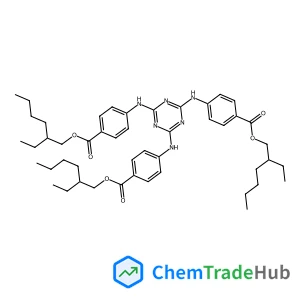
Tris(2-ethylhexyl) 4,4',4''-(1,3,5-triazine-2,4,6-triyltriimino)tribenzoate
CAS Number:
88122-99-0
Molecular Formula:
C48H66N6O6
Recommended Suppliers





Disclaimer
This page provides academic journal information for reference and research purposes only. We are not affiliated with any journal publishers and do not handle publication submissions. For publication-related inquiries, please contact the respective journal publishers directly.
If you notice any inaccuracies in the information displayed, please contact us at support@chemtradehub.com. We will promptly review and address your concerns.