











Back cover
Literature Information
Publication Date
2023-11-22
DOI
10.1039/D3OB90167J
Impact Factor
3.876
Authors
View Original
Abstract
A graphical abstract is available for this content
Related Literature
Designing ionic liquids for absorptive cooling
Kiki Adi Kurnia, João A. P. Coutinho
2014-06-17
Communication
DOI: 10.1039/C4GC00954A
TiO2-photocatalytic acceptorless dehydrogenation coupling of primary alkyl alcohols into acetals
Zhenping Zhu, Yupeng Wu, Tianjian Zhao, Li Li
2014-05-13
Communication
DOI: 10.1039/C4GC00413B
Solvent-free mechanochemical synthesis of alane, AlH3: effect of pressure on the reaction pathway
S. Gupta, T. Kobayashi
2014-07-22
Paper
DOI: 10.1039/C4GC00998C
Rational investigations in the ring opening of cyclic carbonates by amines
L. Jean-Gérard, R. Auvergne, D. Benazet, S. Caillol, B. Andrioletti
2014-07-16
Paper
DOI: 10.1039/C4GC01032A
Catalytic bio–chemo and bio–bio tandem oxidation reactions for amide and carboxylic acid synthesis
Beatrice Bechi, Susanne Herter, Shane McKenna, Christopher Riley, Silke Leimkühler, Nicholas J. Turner, Andrew J. Carnell
2014-08-18
Communication
DOI: 10.1039/C4GC01321B
Structural–functional evaluation of ionic liquid libraries for the design of co-solvents in lipase-catalysed reactions
João V. Rodrigues, Diana Ruivo, Ana Rodríguez, Francisco J. Deive, José M. S. S. Esperança, Isabel M. Marrucho, Cláudio M. Gomes, Luís Paulo N. Rebelo
2014-08-04
Communication
DOI: 10.1039/C4GC01329H
Continuous production of sugars from pyrolysis of acid-infused lignocellulosic biomass
2014-06-17
Paper
DOI: 10.1039/C4GC00602J
t-BuXPhos: a highly efficient ligand for Buchwald–Hartwig coupling in water
Patrick Wagner, Maud Bollenbach, Christelle Doebelin, Frédéric Bihel, Jean-Jacques Bourguignon, Martine Schmitt
2014-07-01
Paper
DOI: 10.1039/C4GC00853G
High-yield production of levulinic acid from cellulose and its upgrading to γ-valerolactone
Daqian Ding, Jianjian Wang, Jinxu Xi, Xiaohui Liu, Guanzhong Lu, Yanqin Wang
2014-06-19
Paper
DOI: 10.1039/C4GC00737A
You might also like
Compound Q&A
How should 2-Methylbenzene-1,4-diamine dihydrochloride (CAS: 615-45-2) be stored?
2-Methylbenzene-1,4-diamine dihydrochloride (CAS: 615-45-2) should be stored in ...
615-45-22-Methylbenzene-1,4-...
Compound Q&A
Is (1S,4S)-2,5-Diazabicyclo[2.2.1]heptane dihydrobromide (CAS: 132747-20-7) safe?
(1S,4S)-2,5-Diazabicyclo[2.2.1]heptane dihydrobromide is generally considered sa...
132747-20-7(1S,4S)-2,5-Diazabic...
Compound Q&A
What industries use (6-Chloropyridazin-3-YL)methanamine (CAS: 871826-15-2)?
(6-Chloropyridazin-3-YL)methanamine finds applications in the pharmaceutical ind...
871826-15-2(6-Chloropyridazin-3...
Compound Q&A
What are the main uses of 2-Fluoro-3-methylphenol (CAS: 77772-72-6)?
2-Fluoro-3-methylphenol is primarily used in the synthesis of pharmaceuticals, p...
77772-72-62-Fluoro-3-methylphe...
Compound Q&A
What precautions should be taken when handling 3-Methoxy-4-nitrobenzonitrile (CAS: 177476-75-4)?
When handling 3-Methoxy-4-nitrobenzonitrile, it is important to wear appropriate...
177476-75-43-Methoxy-4-nitroben...
Compound Q&A
What precautions should be taken when handling 1,3-Oxazolo[4,5-b]pyridine-2(3H)-thione (CAS: 211949-57-4)?
When handling 1,3-Oxazolo[4,5-b]pyridine-2(3H)-thione (CAS: 211949-57-4), it is ...
211949-57-4[1,3]Oxazolo[4,5-b]p...
Compound Q&A
What regulatory guidelines apply to 4-Ethynylbenzamide (CAS: 90347-86-7)?
4-Ethynylbenzamide (CAS: 90347-86-7) falls under various regulatory guidelines i...
90347-86-74-Ethynylbenzamide
Compound Q&A
What are the main uses of 3-(2-Ethylphenyl)-2-thioxo-4-imidazolidinone (CAS: 186822-57-1)?
3-(2-Ethylphenyl)-2-thioxo-4-imidazolidinone is primarily used as an intermediat...
186822-57-13-(2-Ethylphenyl)-2-...
Compound Q&A
What is (2-Fluoro-6-methoxyphenyl)acetic acid (CAS: 500912-19-6)?
(2-Fluoro-6-methoxyphenyl)acetic acid, also known as 4-fluoro-3-methoxybenzoic a...
500912-19-6(2-Fluoro-6-methoxyp...
Compound Q&A
What is the market or research trend for 2-[4-(Hydroxymethyl)phenoxy]ethanol (CAS: 102196-18-9)?
Market trends for 2-[4-(Hydroxymethyl)phenoxy]ethanol (CAS: 102196-18-9) indicat...
102196-18-92-[4-(Hydroxymethyl)...
Source Journal
Organic & Biomolecular Chemistry

CiteScore:
3.4
Self-citation Rate:
10.3%
Articles per Year:
1041
Organic & Biomolecular Chemistry (OBC) publishes original and high impact research and reviews in organic chemistry. We welcome research that shows new or significantly improved protocols or methodologies in total synthesis, synthetic methodology or physical and theoretical organic chemistry as well as research that shows a significant advance in the organic chemistry or molecular design aspects of chemical biology, catalysis, supramolecular and macromolecular chemistry, theoretical chemistry, mechanism-oriented physical organic chemistry, medicinal chemistry or natural products. Articles published in the journal should report new work which makes a highly-significant impact in the field. Routine and incremental work is generally not suitable for publication in the journal. More details about key areas of our scope are below. In all cases authors should include in their article clear rationale for why their research has been carried out.
Recommended Compounds
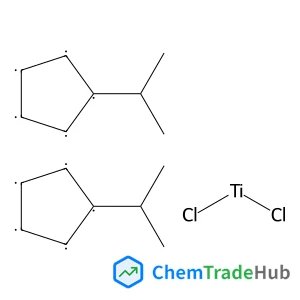
BIS(I-PROPYLCYCLOPENTADIENYL)TITANIUM DICHLORIDE
CAS Number:
12130-65-3
Molecular Formula:
C16H22Cl2Ti
![Methyl 2-[5-(3-Phenoxyphenyl)-2H-tetrazol-2-yl]acetate structure](https://static.chemtradehub.com/structs/130/1305320-60-8-84b4.webp "Methyl 2-[5-(3-Phenoxyphenyl)-2H-tetrazol-2-yl]acetate structure")
Methyl 2-[5-(3-Phenoxyphenyl)-2H-tetrazol-2-yl]acetate
CAS Number:
1305320-60-8
Molecular Formula:
C16H14N4O3
Recommended Suppliers





Disclaimer
This page provides academic journal information for reference and research purposes only. We are not affiliated with any journal publishers and do not handle publication submissions. For publication-related inquiries, please contact the respective journal publishers directly.
If you notice any inaccuracies in the information displayed, please contact us at support@chemtradehub.com. We will promptly review and address your concerns.