


Metal-free synthesis of functionalized tacrine derivatives and their evaluation for acetyl/butyrylcholinesterase and α-glucosidase inhibition‡
Literature Information
Publication Date
2023-12-18
DOI
10.1039/D3OB01760E
Impact Factor
3.876
Authors
Thangellapally Shirisha, Subir Majhi, Kalivarathan Divakar, Dhurke Kashinath
View Original
Abstract
A mild and greener protocol was developed for C–C (C(sp3)−H functionalization) and C–N bond formation to synthesize functionalized tacrine derivatives using a biodegradable and reusable deep eutectic solvent [(DES) formed from N,N′-dimethyl urea and L-(+)-tartaric acid in a 3 : 1 ratio at 80 °C]. The condensation of 9-chloro-1,2,3,4-tetrahydroacridines with a variety of aromatic aldehydes gave unsaturated compounds via C(sp3)−H functionalization (at the C-4 position) with good yields. The substituted N-aryl tacrine derivatives were obtained from the condensed products of 9-chloro-1,2,3,4-tetrahydroacridine with substituted anilines via the nucleophilic substitution reaction (SN2 type) in the DES with good yields. This is the first example of C4-functionalized tacrine derivatives, highlighting the dual capacity of the DES to serve as both a catalyst and a solvent for facilitating C–N bond formation on acridine. The generated compounds were evaluated for acetyl/butyrylcholinesterase (AChE/BChE) and α-glucosidase inhibitory activity. It was found that the majority of the compounds reported here were significantly more potent inhibitors than the standard inhibitor tacrine (AChE IC50 = 203.51 nM; BChE IC50 = 204.01 nM). Among the compounds screened, 8m was found to be more potent with IC50 = 125.06 nM and 119.68 nM towards AChE and BChE inhibition respectively. The α-glucosidase inhibitory activity of the compounds was tested using acarbose as a standard drug (IC50 = 23 100 nM) and compound 8j was found to be active with IC50 = 19 400 nM.
Recommended Journals

Photochemical & Photobiological Sciences

Physical Chemistry Chemical Physics

Journal of Enzyme inhibition and Medicinal Chemistry

Contact Lens & Anterior Eye

Green Chemistry

European Journal of Organic Chemistry

Faraday Discussions

Angewandte Chemie International Edition

Journal of Medical Biochemistry

Environmental Toxicology and Pharmacology
Related Literature
Tungsten oxide-coated copper gallium selenide sustains long-term solar hydrogen evolution
David W. Palm, Christopher P. Muzzillo, Micha Ben-Naim, Imran Khan, Nicolas Gaillard
2020-12-08
Communication
DOI: 10.1039/D0SE00487A
Correction: Using high-throughput virtual screening to explore the optoelectronic property space of organic dyes; finding diketopyrrolopyrrole dyes for dye-sensitized water splitting and solar cells
Isabelle Heath-Apostolopoulos, Diego Vargas-Ortiz, Liam Wilbraham, Kim E. Jelfs, Martijn A. Zwijnenburg
2021-02-10
Correction
DOI: 10.1039/D1SE90005F
Morphologically controlled rapid fabrication of rhodium sulfide (Rh2S3) thin films for superior and robust hydrogen evolution reaction
Muhammad Ali Ehsan, Alaaldin Adam, Abdul Rehman, Abbas Saeed Hakeem, Anvarhusein A. Isab
2020-11-16
Paper
DOI: 10.1039/D0SE01423K
Techno-economic analysis of a sustainable process for converting CO2 and H2O to feedstock for fuels and chemicals
Aniruddha P. Kulkarni, Tomy Hos, Miron V. Landau, Daniel Fini, Sarbjit Giddey, Moti Herskowitz
2020-11-23
Paper
DOI: 10.1039/D0SE01125H
Mass transfer characteristics and energy penalty analysis of MEA regeneration process in packed column
Fengming Chu, Guozhen Xiao, Guoan Yang
2020-11-16
Paper
DOI: 10.1039/D0SE01251C
Alkaline membrane fuel cells: anion exchange membranes and fuels
Maša Hren, Mojca Božič, Darinka Fakin
2020-11-16
Review Article
DOI: 10.1039/D0SE01373K
Nb2C MXene assisted CoNi bimetallic catalysts for hydrogenolysis of aromatic ethers
Sen-Wang Wang, Zhen-Hong He, Jian-Gang Chen, Kuan Wang, Zhong-Yu Wang, Pan-Pan Guo, Jie Lan, Weitao Wang
2020-12-28
Paper
DOI: 10.1039/D0SE01532F
Assessment of liquid biofuel potential from energy crops within the sustainable water–land–energy–carbon nexus
2020-12-21
Review Article
DOI: 10.1039/D0SE00814A
You might also like
Compound Q&A
What regulatory guidelines apply to 4-Amino-3-bromophenol (CAS: 74440-80-5)?
4-Amino-3-bromophenol (CAS: 74440-80-5) falls under the classification of a haza...
74440-80-54-Amino-3-bromopheno...
Compound Q&A
How should (17beta)-3-Oxoestr-4-en-17-yl acetate (CAS: 1425-10-1) be stored?
(17beta)-3-Oxoestr-4-en-17-yl acetate should be stored in a cool, dry place away...
1425-10-1(17beta)-3-Oxoestr-4...
Compound Q&A
What are the physical and chemical properties of 2-[(2,2-Diethoxyethyl)disulfanyl]-1,1-diethoxyethane (CAS: 76505-71-0)?
2-[(2,2-Diethoxyethyl)disulfanyl]-1,1-diethoxyethane (CAS: 76505-71-0) is a colo...
76505-71-02-[(2,2-Diethoxyethy...
Compound Q&A
What is the market or research trend for 1-(β-D-ribofuranosyl)-1H-imidazo[4,5-c]pyridin-4-amine?
The market and research for 1-(β-D-ribofuranosyl)-1H-imidazo[4,5-c]pyridin-4-ami...
6736-58-91-(beta-D-Ribofurano...
Compound Q&A
How should waste containing Conjugated Estrogen (CAS: 12126-59-9) be handled?
Waste containing Conjugated Estrogen (CAS: 12126-59-9) should be collected and d...
12126-59-9Conjugated Estrogen
Compound Q&A
What is the market or research trend for Bis(2,2,2-trifluoroethyl) (methoxycarbonylmethyl)phosphonate?
The market for Bis(2,2,2-trifluoroethyl) (methoxycarbonylmethyl)phosphonate (CAS...
88738-78-7Bis(2,2,2-trifluoroe...
Compound Q&A
Are there alternatives to 3,4'-Di-O-methylellagic acid (CAS: 57499-59-9) in synthesis?
There are several alternatives to 3,4'-Di-O-methylellagic acid (CAS: 57499-59-9)...
57499-59-93,4'-Di-O-methylella...
Compound Q&A
What regulatory guidelines apply to 2-Chloro-N,N-dimethylpyridin-4-amine (CAS: 59047-70-0)?
2-Chloro-N,N-dimethylpyridin-4-amine (CAS: 59047-70-0) is regulated under the Gl...
59047-70-02-Chloro-N,N-dimethy...
Compound Q&A
What is cerium(3+);oxygen(2-);vanadium(5+) (CAS: 13597-19-8)?
Cerium(3+);oxygen(2-);vanadium(5+) (CAS: 13597-19-8) is a complex inorganic comp...
13597-19-8cerium(3+);oxygen(2-...
Compound Q&A
Is 7-Chloro-1-iodoisoquinoline (CAS: 1203579-27-4) safe?
7-Chloro-1-iodoisoquinoline (CAS: 1203579-27-4) is generally considered safe whe...
1203579-27-47-Chloro-1-iodoisoqu...
Source Journal
Organic & Biomolecular Chemistry

CiteScore:
3.4
Self-citation Rate:
10.3%
Articles per Year:
1041
Organic & Biomolecular Chemistry (OBC) publishes original and high impact research and reviews in organic chemistry. We welcome research that shows new or significantly improved protocols or methodologies in total synthesis, synthetic methodology or physical and theoretical organic chemistry as well as research that shows a significant advance in the organic chemistry or molecular design aspects of chemical biology, catalysis, supramolecular and macromolecular chemistry, theoretical chemistry, mechanism-oriented physical organic chemistry, medicinal chemistry or natural products. Articles published in the journal should report new work which makes a highly-significant impact in the field. Routine and incremental work is generally not suitable for publication in the journal. More details about key areas of our scope are below. In all cases authors should include in their article clear rationale for why their research has been carried out.
Recommended Compounds
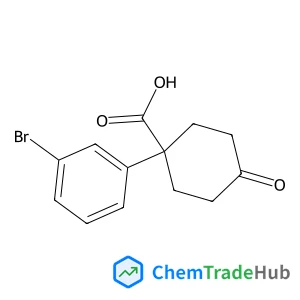
1-(3-Bromophenyl)-4-oxocyclohexanecarboxylic acid
CAS Number:
1385694-53-0
Molecular Formula:
C13H13BrO3
Recommended Suppliers





Disclaimer
This page provides academic journal information for reference and research purposes only. We are not affiliated with any journal publishers and do not handle publication submissions. For publication-related inquiries, please contact the respective journal publishers directly.
If you notice any inaccuracies in the information displayed, please contact us at support@chemtradehub.com. We will promptly review and address your concerns.