












![[1-(5-Methyl-2-pyridinyl)-1H-pyrazol-4-yl]methanol structure](https://static.chemtradehub.com/structs/143/1439822-99-7-6cc9.webp "[1-(5-Methyl-2-pyridinyl)-1H-pyrazol-4-yl]methanol structure")
[1-(5-Methyl-2-pyridinyl)-1H-pyrazol-4-yl]methanol
CAS Number:
1439822-99-7
Molecular Formula:
C10H11N3O
Camilo Febres-Molina, Xavier Prat-Resina, Gonzalo A. Jaña
Resveratrol, a polyphenolic compound known for its health benefits but limited by poor water solubility and low bioavailability, represents a valuable substrate for glucosylation by carbohydrate-active enzymes such as glucosyltransferase-SI (GTF-SI). Using quantum mechanics/molecular mechanics (QM/MM) calculations and molecular dynamics simulations, this study reveals the atomic scale dynamics of resveratrol glucosylation by wild-type GTF-SI. This enzyme exhibited an energy barrier of 8.8 kcal mol−1 and an exothermic process, both consistent with experimental data of similar enzymes. We report a concerted and synchronous reaction mechanism for the catalytic step, characterized by an oxocarbenium ion-like transition state, and elucidate a conformational itinerary of the glucosyl moiety (4H3/E3) → [E3]‡ → 4C1, which aligns with the consistent patterns observed across enzymes of the GH13 and GH70 families. A key interaction was observed between Asp477 and the OH group on carbon 6 of the glucosyl moiety, together with a 2.0 kcal mol−1 transition state stabilization by three water molecules within the active site. Comparative insights with the previously studied Q345F SP enzyme system shed light on the unique and common features that govern transglucosylation reactions. Importantly, the calculated activation barriers strongly support the capability of GTF-SI to facilitate resveratrol glucosylation. This study advances our understanding of the transglucosylation reaction and opens up new ways for the glycodiversification of organic compounds such as polyphenols, thus expanding their potential applications in the food, cosmetic, and pharmaceutical industries.
DOI: 10.1039/C8CP04012E
Lukáš Bučinský, Filipe Teixeira, M. Natália D. S. Cordeiro
DOI: 10.1039/C8CP02035C
A. L. Nord, A. F. Pols, M. Depken, F. Pedaci
DOI: 10.1039/C8CP03056A
Jingxiang Guo, Jeremy C. Palmer
DOI: 10.1039/C8CP04237C
Fu-Qiang Zhou, Ru-Fang Zhao, Jin-Feng Li, Wen-Hua Xu, Chao-Chao Li, Lan Luo, Jian-Li Li, Bing Yin
DOI: 10.1039/C8CP07313A
Alicja Domaracka, Rudy Delaunay, Arkadiusz Mika, Michael Gatchell, Henning Zettergren, Henrik Cederquist, Patrick Rousseau, Bernd A. Huber
DOI: 10.1039/C8CP01179F
Giuseppe Cassone, Donatella Chillé, Claudia Foti, Ottavia Giuffré, Rosina Celeste Ponterio, Jiri Sponer, Franz Saija
DOI: 10.1039/C8CP04320E
Wei-yan Liang, Anita Das, Xue Dong, Zhong-hua Cui
DOI: 10.1039/C8CP01376D
Kushal Mazumder, Alfa Sharma, Yogendra Kumar, Mahendra A. More, Rupesh Devan
DOI: 10.1039/C8CP01982G
Fabian Kollhoff, Johannes Schneider, Gao Li, Sami Barkaoui, Wenjie Shen, Thomas Berger, Oliver Diwald
DOI: 10.1039/C8CP04873H
2-Methylbenzene-1,4-diamine dihydrochloride (CAS: 615-45-2) should be stored in ...
(1S,4S)-2,5-Diazabicyclo[2.2.1]heptane dihydrobromide is generally considered sa...
(6-Chloropyridazin-3-YL)methanamine finds applications in the pharmaceutical ind...
2-Fluoro-3-methylphenol is primarily used in the synthesis of pharmaceuticals, p...
When handling 3-Methoxy-4-nitrobenzonitrile, it is important to wear appropriate...
When handling 1,3-Oxazolo[4,5-b]pyridine-2(3H)-thione (CAS: 211949-57-4), it is ...
4-Ethynylbenzamide (CAS: 90347-86-7) falls under various regulatory guidelines i...
3-(2-Ethylphenyl)-2-thioxo-4-imidazolidinone is primarily used as an intermediat...
(2-Fluoro-6-methoxyphenyl)acetic acid, also known as 4-fluoro-3-methoxybenzoic a...
Market trends for 2-[4-(Hydroxymethyl)phenoxy]ethanol (CAS: 102196-18-9) indicat...

Organic & Biomolecular Chemistry (OBC) publishes original and high impact research and reviews in organic chemistry. We welcome research that shows new or significantly improved protocols or methodologies in total synthesis, synthetic methodology or physical and theoretical organic chemistry as well as research that shows a significant advance in the organic chemistry or molecular design aspects of chemical biology, catalysis, supramolecular and macromolecular chemistry, theoretical chemistry, mechanism-oriented physical organic chemistry, medicinal chemistry or natural products. Articles published in the journal should report new work which makes a highly-significant impact in the field. Routine and incremental work is generally not suitable for publication in the journal. More details about key areas of our scope are below. In all cases authors should include in their article clear rationale for why their research has been carried out.
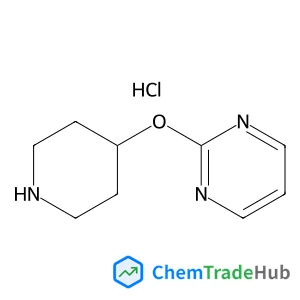
![trans-2-{[(Tert-butoxy)carbonyl]amino}cyclobutane-1-carboxylic acid structure](https://static.chemtradehub.com/structs/951/951173-25-4-27cd.webp "trans-2-{[(Tert-butoxy)carbonyl]amino}cyclobutane-1-carboxylic acid structure")
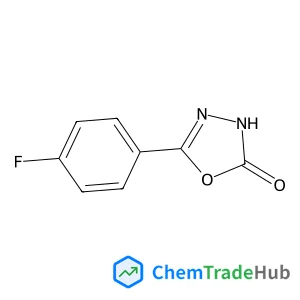
![Methyl 2-[5-(3-Phenoxyphenyl)-2H-tetrazol-2-yl]acetate structure](https://static.chemtradehub.com/structs/130/1305320-60-8-84b4.webp "Methyl 2-[5-(3-Phenoxyphenyl)-2H-tetrazol-2-yl]acetate structure")





