












A synthetic route to artificial chiral α-amino acids featuring a 3,4-dihydroisoquinolone core through a Rh(iii)-catalyzed functionalization of allyl groups in chiral Ni(ii) complexes‡
Literature Information
Publication Date
2023-11-09
DOI
10.1039/D3OB01513K
Impact Factor
3.876
Authors
Mikhail A. Arsenov, Nadezhda V. Stoletova, Tat'yana F. Savel'yeva, Victor I. Maleev
View Original
Abstract
Currently, non-proteinogenic α-amino acids (α-AAs) have attracted increasing interest in bio- and medicinal chemistry. In this context, the first protocol for the asymmetric synthesis of artificial α-AAs featuring a 3,4-dihydroisoquinolone core with two stereogenic centers was successfully elaborated. A straightforward Rh(III)-catalysed C–H activation/annulation reaction of various aryl hydroxamates with a set of robust and readily available chiral Ni(II) complexes, which have allylic appendages derived from glycine (Gly), alanine (Ala) and phenylalanine (Phe), allowed incorporation of a 3,4-dihydroisoquinolone scaffold into the chiral amino acid residue. The reaction was performed in methanol and under mild conditions (at room temperature under air atmosphere), providing separable diastereomeric complexes with up to 94% total yield. The target α-AA with a 3,4-dihydroisoquinolone core in an enantiopure form was subsequently released from the obtained chiral Ni(II) complexes via an acidic decomposition in aqueous HCl, along with the recovery of the chiral auxiliary ligand.
Related Literature
Resolution of the non-steady-state kinetics of the elimination of HBr from 2-(p-nitrophenyl)ethyl bromide in alcohol/alkoxide media
Kishan L. Handoo, Yun Lu, Yixing Zhao, Vernon D. Parker
2002-11-21
Communication
DOI: 10.1039/B208634D
A facile tandem decyanation/cyanation reaction of α-iminonitriles toward cyano-substituted amides
Pei Liang, Botao Liu, Haiqing Luo, Jing Zheng, Xiaowei Wen, Tanggao Liu, Min Ye
2018-10-25
Communication
DOI: 10.1039/C8OB02186D
Ester derivatives of hexahomotrioxacalix[3]naphthalenes: conformational and binding properties with alkali metal cations
Muhammad Ashram, Shehadeh Mizyed, Paris E. Georghiou
2003-01-08
Paper
DOI: 10.1039/B209046P
From central to planar chirality, the first example of atropenantioselective cycloetherification
Gabriela Islas-Gonzalez, Michèle Bois-Choussy, Jieping Zhu
2002-11-08
Communication
DOI: 10.1039/B208905J
Nitrophenyl derivatives of pyrrole 2,5-diamides: structural behaviour, anion binding and colour change signalled deprotonation
Salvatore Camiolo, Philip A. Gale, Michael B. Hursthouse, Mark E. Light
2003-01-28
Paper
DOI: 10.1039/B210848H
Facilitated transport of sodium or potassium chloride across vesicle membranes using a ditopic salt-binding macrobicycle
Atanas V. Koulov, Joseph M. Mahoney, Bradley D. Smith
2002-11-28
Communication
DOI: 10.1039/B208873H
Tetracyclic pyrazine-fused furazans as insensitive energetic materials: syntheses, structures, and properties
Qi Sun, Xin Li, Qiuhan Lin, Ming Lu
2018-10-11
Communication
DOI: 10.1039/C8OB02155D
Synthesis and Suzuki–Miyaura cross coupling reactions for post-synthetic modification of a tetrabromo-anthracenyl porphyrin
Joffrey Pijeat, Yannick J. Dappe, Pierre Thuéry, Stéphane Campidelli
2018-10-09
Paper
DOI: 10.1039/C8OB02150C
Bioactive polycyclic polyprenylated acylphloroglucinols from Hypericum perforatum
Yi Guo, Na Zhang, Weiguang Sun, Xueyan Duan, Qing Zhang, Qun Zhou, Chunmei Chen, Hucheng Zhu, Zengwei Luo, Junjun Liu, Xiao-Nian Li, Yongbo Xue, Yonghui Zhang
2018-10-08
Paper
DOI: 10.1039/C8OB02067A
You might also like
Compound Q&A
How should 2-Methylbenzene-1,4-diamine dihydrochloride (CAS: 615-45-2) be stored?
2-Methylbenzene-1,4-diamine dihydrochloride (CAS: 615-45-2) should be stored in ...
615-45-22-Methylbenzene-1,4-...
Compound Q&A
Is (1S,4S)-2,5-Diazabicyclo[2.2.1]heptane dihydrobromide (CAS: 132747-20-7) safe?
(1S,4S)-2,5-Diazabicyclo[2.2.1]heptane dihydrobromide is generally considered sa...
132747-20-7(1S,4S)-2,5-Diazabic...
Compound Q&A
What industries use (6-Chloropyridazin-3-YL)methanamine (CAS: 871826-15-2)?
(6-Chloropyridazin-3-YL)methanamine finds applications in the pharmaceutical ind...
871826-15-2(6-Chloropyridazin-3...
Compound Q&A
What are the main uses of 2-Fluoro-3-methylphenol (CAS: 77772-72-6)?
2-Fluoro-3-methylphenol is primarily used in the synthesis of pharmaceuticals, p...
77772-72-62-Fluoro-3-methylphe...
Compound Q&A
What precautions should be taken when handling 3-Methoxy-4-nitrobenzonitrile (CAS: 177476-75-4)?
When handling 3-Methoxy-4-nitrobenzonitrile, it is important to wear appropriate...
177476-75-43-Methoxy-4-nitroben...
Compound Q&A
What precautions should be taken when handling 1,3-Oxazolo[4,5-b]pyridine-2(3H)-thione (CAS: 211949-57-4)?
When handling 1,3-Oxazolo[4,5-b]pyridine-2(3H)-thione (CAS: 211949-57-4), it is ...
211949-57-4[1,3]Oxazolo[4,5-b]p...
Compound Q&A
What regulatory guidelines apply to 4-Ethynylbenzamide (CAS: 90347-86-7)?
4-Ethynylbenzamide (CAS: 90347-86-7) falls under various regulatory guidelines i...
90347-86-74-Ethynylbenzamide
Compound Q&A
What are the main uses of 3-(2-Ethylphenyl)-2-thioxo-4-imidazolidinone (CAS: 186822-57-1)?
3-(2-Ethylphenyl)-2-thioxo-4-imidazolidinone is primarily used as an intermediat...
186822-57-13-(2-Ethylphenyl)-2-...
Compound Q&A
What is (2-Fluoro-6-methoxyphenyl)acetic acid (CAS: 500912-19-6)?
(2-Fluoro-6-methoxyphenyl)acetic acid, also known as 4-fluoro-3-methoxybenzoic a...
500912-19-6(2-Fluoro-6-methoxyp...
Compound Q&A
What is the market or research trend for 2-[4-(Hydroxymethyl)phenoxy]ethanol (CAS: 102196-18-9)?
Market trends for 2-[4-(Hydroxymethyl)phenoxy]ethanol (CAS: 102196-18-9) indicat...
102196-18-92-[4-(Hydroxymethyl)...
Source Journal
Organic & Biomolecular Chemistry

CiteScore:
3.4
Self-citation Rate:
10.3%
Articles per Year:
1041
Organic & Biomolecular Chemistry (OBC) publishes original and high impact research and reviews in organic chemistry. We welcome research that shows new or significantly improved protocols or methodologies in total synthesis, synthetic methodology or physical and theoretical organic chemistry as well as research that shows a significant advance in the organic chemistry or molecular design aspects of chemical biology, catalysis, supramolecular and macromolecular chemistry, theoretical chemistry, mechanism-oriented physical organic chemistry, medicinal chemistry or natural products. Articles published in the journal should report new work which makes a highly-significant impact in the field. Routine and incremental work is generally not suitable for publication in the journal. More details about key areas of our scope are below. In all cases authors should include in their article clear rationale for why their research has been carried out.
Recommended Compounds
![Methyl 2-[5-(3-Phenoxyphenyl)-2H-tetrazol-2-yl]acetate structure](https://static.chemtradehub.com/structs/130/1305320-60-8-84b4.webp "Methyl 2-[5-(3-Phenoxyphenyl)-2H-tetrazol-2-yl]acetate structure")
Methyl 2-[5-(3-Phenoxyphenyl)-2H-tetrazol-2-yl]acetate
CAS Number:
1305320-60-8
Molecular Formula:
C16H14N4O3
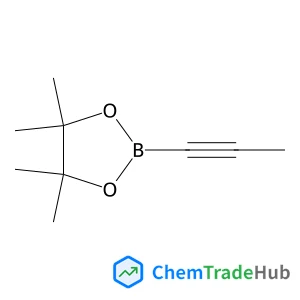
4,4,5,5-Tetramethyl-2-(1-propyn-1-YL)-1,3,2-dioxaborolane
CAS Number:
347389-75-7
Molecular Formula:
C9H15BO2

Recommended Suppliers



Disclaimer
This page provides academic journal information for reference and research purposes only. We are not affiliated with any journal publishers and do not handle publication submissions. For publication-related inquiries, please contact the respective journal publishers directly.
If you notice any inaccuracies in the information displayed, please contact us at support@chemtradehub.com. We will promptly review and address your concerns.