












Base-promoted tandem synthesis of 2-azaaryl indoline
Literature Information
Publication Date
2023-11-07
DOI
10.1039/D3OB01444D
Impact Factor
3.876
Authors
Shuguang Chen, Jiahong Tan, Hao Wu, Quansheng Zhao, Yongjia Shang
View Original
Abstract
A novel tandem method to synthesize 2-azaaryl indoline promoted by LiN(SiMe3)2 from 2-azaaryl methyl amine and 2-fluoro benzyl bromides was developed. Mechanistic investigation indicated that this tandem cyclization was initiated by selective benzyl C-SN2 substitution followed by an intramolecular SNAr reaction. Diverse 2-azaaryl indoles could also be obtained via simple functional transformations.
Related Literature
Selective isomerization–carbonylation of a terpene trisubstituted double bond
Hanna Busch, Florian Stempfle, Sandra Heß, Etienne Grau, Stefan Mecking
2014-09-03
Communication
DOI: 10.1039/C4GC01233J
Desulfurization of diesel fuel with nickel boride in situ generated in an ionic liquid
Chenhua Shu, Tonghua Sun, Qingbin Guo, Jinping Jia, Ziyang Lou
2014-06-09
Paper
DOI: 10.1039/C4GC00695J
Structuration of ionic liquids in a poly(butylene-adipate-co-terephthalate) matrix: its influence on the water vapour permeability and mechanical properties
Valeria Bugatti, Bluma Guenther Soares
2014-07-09
Communication
DOI: 10.1039/C4GC00969J
Towards non-toxic solvents for membrane preparation: a review
A. Figoli, T. Marino, S. Simone, E. Di Nicolò, X.-M. Li, T. He, S. Tornaghi, E. Drioli
2014-07-03
Tutorial Review
DOI: 10.1039/C4GC00613E
Carbon-coated magnetic palladium: applications in partial oxidation of alcohols and coupling reactions
R. B. Nasir Baig, Mallikarjuna N. Nadagouda, Rajender S. Varma
2014-07-10
Paper
DOI: 10.1039/C4GC00748D
Very efficient conversion of glucose to 5-hydroxymethylfurfural in DBU-based ionic liquids with benzenesulfonate anion
Lingqiao Wu, Jinliang Song, Binbin Zhang, Baowen Zhou, Huacong Zhou, Honglei Fan, Yingying Yang, Buxing Han
2014-05-20
Paper
DOI: 10.1039/C4GC00311J
Lysinol: a renewably resourced alternative to petrochemical polyamines and aminoalcohols
Pranit S. Metkar, Mark A. Scialdone, Kenneth G. Moloy
2014-08-06
Paper
DOI: 10.1039/C4GC01167H
Understanding the role of water during ionic liquid pretreatment of lignocellulose: co-solvent or anti-solvent?
Kanagasabai Balamurugan, Noppadon Sathitsuksanoh, Sonny Zhang, Venkatesan Subramanian
2014-05-28
Paper
DOI: 10.1039/C4GC00373J
Hydrogenation of levulinic acid to γ-valerolactone by Ni and MoOx co-loaded carbon catalysts
Shota Kanno, Kenichi Kon
2014-06-05
Paper
DOI: 10.1039/C4GC00735B
Palladium nanoparticles supported on triazine functionalised mesoporous covalent organic polymers as efficient catalysts for Mizoroki–Heck cross coupling reaction
Pillaiyar Puthiaraj
2014-06-12
Paper
DOI: 10.1039/C4GC00412D
You might also like
Compound Q&A
How should 2-Methylbenzene-1,4-diamine dihydrochloride (CAS: 615-45-2) be stored?
2-Methylbenzene-1,4-diamine dihydrochloride (CAS: 615-45-2) should be stored in ...
615-45-22-Methylbenzene-1,4-...
Compound Q&A
Is (1S,4S)-2,5-Diazabicyclo[2.2.1]heptane dihydrobromide (CAS: 132747-20-7) safe?
(1S,4S)-2,5-Diazabicyclo[2.2.1]heptane dihydrobromide is generally considered sa...
132747-20-7(1S,4S)-2,5-Diazabic...
Compound Q&A
What industries use (6-Chloropyridazin-3-YL)methanamine (CAS: 871826-15-2)?
(6-Chloropyridazin-3-YL)methanamine finds applications in the pharmaceutical ind...
871826-15-2(6-Chloropyridazin-3...
Compound Q&A
What are the main uses of 2-Fluoro-3-methylphenol (CAS: 77772-72-6)?
2-Fluoro-3-methylphenol is primarily used in the synthesis of pharmaceuticals, p...
77772-72-62-Fluoro-3-methylphe...
Compound Q&A
What precautions should be taken when handling 3-Methoxy-4-nitrobenzonitrile (CAS: 177476-75-4)?
When handling 3-Methoxy-4-nitrobenzonitrile, it is important to wear appropriate...
177476-75-43-Methoxy-4-nitroben...
Compound Q&A
What precautions should be taken when handling 1,3-Oxazolo[4,5-b]pyridine-2(3H)-thione (CAS: 211949-57-4)?
When handling 1,3-Oxazolo[4,5-b]pyridine-2(3H)-thione (CAS: 211949-57-4), it is ...
211949-57-4[1,3]Oxazolo[4,5-b]p...
Compound Q&A
What regulatory guidelines apply to 4-Ethynylbenzamide (CAS: 90347-86-7)?
4-Ethynylbenzamide (CAS: 90347-86-7) falls under various regulatory guidelines i...
90347-86-74-Ethynylbenzamide
Compound Q&A
What are the main uses of 3-(2-Ethylphenyl)-2-thioxo-4-imidazolidinone (CAS: 186822-57-1)?
3-(2-Ethylphenyl)-2-thioxo-4-imidazolidinone is primarily used as an intermediat...
186822-57-13-(2-Ethylphenyl)-2-...
Compound Q&A
What is (2-Fluoro-6-methoxyphenyl)acetic acid (CAS: 500912-19-6)?
(2-Fluoro-6-methoxyphenyl)acetic acid, also known as 4-fluoro-3-methoxybenzoic a...
500912-19-6(2-Fluoro-6-methoxyp...
Compound Q&A
What is the market or research trend for 2-[4-(Hydroxymethyl)phenoxy]ethanol (CAS: 102196-18-9)?
Market trends for 2-[4-(Hydroxymethyl)phenoxy]ethanol (CAS: 102196-18-9) indicat...
102196-18-92-[4-(Hydroxymethyl)...
Source Journal
Organic & Biomolecular Chemistry

CiteScore:
3.4
Self-citation Rate:
10.3%
Articles per Year:
1041
Organic & Biomolecular Chemistry (OBC) publishes original and high impact research and reviews in organic chemistry. We welcome research that shows new or significantly improved protocols or methodologies in total synthesis, synthetic methodology or physical and theoretical organic chemistry as well as research that shows a significant advance in the organic chemistry or molecular design aspects of chemical biology, catalysis, supramolecular and macromolecular chemistry, theoretical chemistry, mechanism-oriented physical organic chemistry, medicinal chemistry or natural products. Articles published in the journal should report new work which makes a highly-significant impact in the field. Routine and incremental work is generally not suitable for publication in the journal. More details about key areas of our scope are below. In all cases authors should include in their article clear rationale for why their research has been carried out.
Recommended Compounds
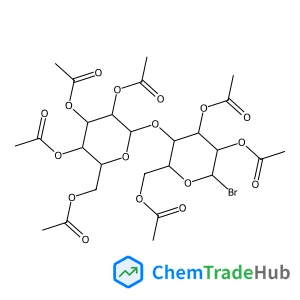
2,3,6-Tri-O-acetyl-4-O-(2,3,4,6-tetra-O-acetyl-beta-D-galactopyranosyl)-alpha-D-glucopyranosyl bromide
CAS Number:
4753-07-5
Molecular Formula:
C26H35BrO17
![5-Bromo-3-isopropyl-1H-pyrrolo[2,3-b]pyridine structure](https://static.chemtradehub.com/structs/125/1256819-54-1-8620.webp "5-Bromo-3-isopropyl-1H-pyrrolo[2,3-b]pyridine structure")
Recommended Suppliers







Disclaimer
This page provides academic journal information for reference and research purposes only. We are not affiliated with any journal publishers and do not handle publication submissions. For publication-related inquiries, please contact the respective journal publishers directly.
If you notice any inaccuracies in the information displayed, please contact us at support@chemtradehub.com. We will promptly review and address your concerns.