













Front cover
Literature Information
Publication Date
2023-11-09
DOI
10.1039/D3NR90215C
Impact Factor
7.79
Authors
View Original
Abstract
A graphical abstract is available for this content
Related Literature
Manipulating the proton transfer process in molecular complexes: synthesis and spectroscopic studies
Sumit Kumar Panja, Nidhi Dwivedi, Satyen Saha
2016-07-18
Paper
DOI: 10.1039/C6CP03797F
Triple decker sandwiches and related compounds of the first row transition metals with cyclopentadienyl and hexafluorobenzene rings: remarkable effects of fluorine substitution
Shida Gong, Qiong Luo, Xiangfei Feng, Qian-shu Li, Yaoming Xie, Henry F. Schaefer III
2015-06-08
Paper
DOI: 10.1039/C5CP01648G
The crystal structure and chemical state of aluminum-doped hydroxyapatite by experimental and first principles calculation studies
Ming Wang, Liping Wang, Chao Shi, Tian Sun, Yingchun Zhu
2016-07-11
Paper
DOI: 10.1039/C6CP03230C
Towards an accurate specific reaction parameter density functional for water dissociation on Ni(111): RPBE versus PW91
Bin Jiang, Hua Guo
2016-07-12
Paper
DOI: 10.1039/C6CP03707K
Coupling effect between the structure and surface characteristics of electrospun carbon nanofibres on the electrochemical activity towards the VO2+/VO2+ redox couple
Guanjie Wei, Zhenguo Gao, Zengfu Wei, Xinzhuang Fan, Jianguo Liu, Chuanwei Yan
2015-07-07
Paper
DOI: 10.1039/C5CP02952J
Excited state structural evolution during charge-transfer reactions in betaine-30
W. Ruchira Silva, Renee R. Frontiera
2016-01-04
Paper
DOI: 10.1039/C5CP06195D
Separation of benzene from mixtures with water, methanol, ethanol, and acetone: highlighting hydrogen bonding and molecular clustering influences in CuBTC
Rajamani Krishna
2015-07-07
Paper
DOI: 10.1039/C5CP02726H
Effect of Zn2+ ions on the assembly of amylin oligomers: insight into the molecular mechanisms
2016-07-06
Paper
DOI: 10.1039/C6CP04105A
Non-radiative processes in protonated diazines, pyrimidine bases and an aromatic azine
Gustavo A. Pino, Géraldine Feraud, Claude Dedonder, Christophe Jouvet
2016-04-13
Paper
DOI: 10.1039/C6CP01345G
You might also like
Compound Q&A
What is Ethyl 3-cyclohexylpropanoate (CAS: 10094-36-7)?
Ethyl 3-cyclohexylpropanoate is a clear, colorless to light yellow liquid with a...
10094-36-7Ethyl 3-cyclohexylpr...
Compound Q&A
How should waste containing 2-(Hydroxymethyl)-5-(methoxycarbonyl)-6-methyl-4-(2-nitrophenyl)nicotinic acid (CAS: 34783-31-8) be handled?
Waste containing 2-(Hydroxymethyl)-5-(methoxycarbonyl)-6-methyl-4-(2-nitrophenyl...
34783-31-82-(Hydroxymethyl)-5-...
Compound Q&A
How should waste containing 2,4,6-Tris(pentafluoroethyl)-1,3,5-triazine (CAS: 858-46-8) be handled?
Waste containing 2,4,6-Tris(pentafluoroethyl)-1,3,5-triazine (CAS: 858-46-8) sho...
858-46-82,4,6-Tris(pentafluo...
Compound Q&A
What precautions should be taken when handling Chloroac-nle-oh (CAS: 56787-36-1)?
When handling Chloroac-nle-oh (CAS: 56787-36-1), it is essential to wear appropr...
56787-36-1Chloroac-nle-oh
Compound Q&A
What industries use Ethyl 6-phenylimidazo[2,1-b][1,3]thiazole-3-carboxylate (CAS: 752244-05-6)?
Ethyl 6-phenylimidazo[2,1-b][1,3]thiazole-3-carboxylate is primarily used in the...
752244-05-6Ethyl 6-phenylimidaz...
Compound Q&A
Are there alternatives to alpha-(2-Bromophenyl)benzylamine (CAS: 55095-15-3) in synthesis?
Alternatives to alpha-(2-Bromophenyl)benzylamine (CAS: 55095-15-3) in synthesis ...
55095-15-3alpha-(2-Bromophenyl...
Compound Q&A
How should waste containing 2-Chloro-5-methoxypyridine (CAS: 139585-48-1) be handled?
Waste containing 2-Chloro-5-methoxypyridine (CAS: 139585-48-1) should be managed...
139585-48-12-Chloro-5-methoxypy...
Compound Q&A
What industries use 1-(4-Methoxyphenyl)-2,5-dimethyl-1H-pyrrole (CAS: 5044-27-9)?
1-(4-Methoxyphenyl)-2,5-dimethyl-1H-pyrrole (CAS: 5044-27-9) is used in various ...
5044-27-91-(4-Methoxyphenyl)-...
Compound Q&A
Are there alternatives to 3-Bromo-5-(N-Boc)aminomethylisoxazole (CAS: 903131-45-3) in synthesis?
There are alternative reagents and compounds that can be used in the synthesis o...
903131-45-33-Bromo-5-(N-Boc)ami...
Compound Q&A
What is Tungsten(IV) oxide (CAS: 12036-22-5)?
Tungsten(IV) oxide, also known as tungsten dioxide, is a chemical compound with ...
12036-22-5Tungsten(IV) oxide
Source Journal
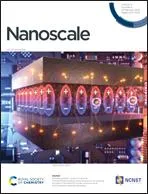
Nanoscale
CiteScore:
12.1
Self-citation Rate:
5.2%
Articles per Year:
1681
Nanoscale is a high-impact international journal, publishing high-quality research across nanoscience and nanotechnology. Nanoscale publishes a full mix of research articles on experimental and theoretical work, including reviews, communications, and full papers. Highly interdisciplinary, Nanoscale appeals to scientists, researchers and professionals interested in nanoscience and nanotechnology, quantum materials and quantum technology, including the areas of physics, chemistry, biology, medicine, materials, energy/environment, information technology, detection science, healthcare and drug discovery, and electronics. For publication in Nanoscale, papers must report high-quality reproducible new work that will be of significant general interest to the journal's wide international readership. Nanoscale is a collaborative venture between the Royal Society of Chemistry Publishing and a leading nanoscience research centre, the National Center for Nanoscience and Technology (NCNST) in Beijing, China. image block The journal publishes weekly issues, complementing and building on the nano content already published across the Royal Society of Chemistry Publishing journal portfolio. Since its launch in late 2009, Nanoscale has established itself as a platform for high-quality, cross-community research that bridges the various disciplines involved with nanoscience and nanotechnology, publishing important research from leading international research groups.
Recommended Compounds



Recommended Suppliers





Disclaimer
This page provides academic journal information for reference and research purposes only. We are not affiliated with any journal publishers and do not handle publication submissions. For publication-related inquiries, please contact the respective journal publishers directly.
If you notice any inaccuracies in the information displayed, please contact us at support@chemtradehub.com. We will promptly review and address your concerns.