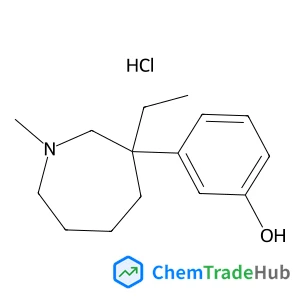
3-(3-Ethyl-1-methyl-3-azepanyl)phenol hydrochloride (1:1)
CAS Number:
59263-76-2
Molecular Formula:
C15H24ClNO
Ziting Guo, Qingmei Xiao, Jinchao Huang, Shengwen Zhong
Herein, single-walled carbon nanotubes (SWNTs) with few defects and high aspect ratios were fabricated using a MgO-loaded Fe–Mo alloy as a catalyst for catalytic cracking of methane at 1000 °C. The metal impurities in SWNTs were removed via acid washing, and a SWNT (slurry) conductive agent was prepared by adding a dispersant (polyvinylpyrrolidone) to SWNTs and subjected to ultrasonic dispersion. Additionally, the addition of 2 wt% SWNTs (slurry) to the LiNi0.5Co0.2Mn0.3O2 cathode was sufficient to form an electronically conductive network, which improved the electronic conductivity of the cathode and optimized the battery performance at high rate currents. The results show that batteries fabricated using SWNTs (slurry) as a conductive additive in the LiNi0.5Co0.2Mn0.3O2 cathode exhibit excellent conductivity, with a specific capacity of 174.05 mA h g−1 at a first discharge at 0.1 C and a high specific discharge capacity of 112.5 mA h g−1 at 5 C. Additionally, the capacity retention of 100 cycles at 0.5 C was 98.75%, and their charge transfer impedance was minimized.
Claire V. Crowther, Viola Sanderlin, Mark A. Hayes, Gillian H. Gile
DOI: 10.1039/C9AN01186B
Dongpo Xu, Mingxia Gao, Chunhui Deng, Xiangmin Zhang
DOI: 10.1039/C6AN00361C
Chen Zhou, Yingmei Chen, Pengxiang Shang, Yuwu Chi
DOI: 10.1039/C6AN00664G
Xiao-xiao Niu, Qin-chao Xu, An-zhen Li, Yang-jie Li, Xiao-tai Zhang, Guo-wen Xing
DOI: 10.1039/C9AN01940E
Hamid Abdollahi, Paul J. Gemperline
DOI: 10.1039/C8AN00615F
Bingbing Gao, Xin Li, Yaqiong Yang, Jianlin Chu, Bingfang He
DOI: 10.1039/C9AN01275C
Liqing Gu, Renã A. S. Robinson
DOI: 10.1039/C6AN00417B
Jie Gao, Yingxu Chen, Weihao Ji, Zhonghong Gao, Jingdong Zhang
DOI: 10.1039/C9AN01606F
Nirmal Goswami, Huang-Hao Yang, Jianping Xie
DOI: 10.1039/C6AN00773B
When handling 4-(2-Furylmethyl)thiomorpholine 1,1-dioxide (CAS: 79206-94-3), it ...
When handling 4-Chloro-N-[2-(4-morpholinyl)ethyl]benzamide (CAS: 71320-77-9), it...
Waste containing this compound (CAS: 62921-74-8) should be handled according to ...
Waste containing (S)-Methyl 2-amino-3-cyclohexylpropanoate should be collected i...
This compound can be synthesized using a multi-step process involving the conjug...
There are several alternatives to (2E)-3-(3,4-Dichlorophenyl)acrylic acid in syn...
Ethyl 6-(2-nitrophenyl)imidazo[2,1-b][1,3]thiazole-3-carboxylate (CAS: 925437-84...
Waste containing 2-(1,3-Thiazol-2-yl)ethanamine (CAS: 18453-07-1) should be coll...
Methyl 5-iodo-2-methylbenzoate can be synthesized through the iodination of meth...
5-Chloro[1,2,4]triazolo[1,5-a]pyridine is commonly synthesized via the condensat...

NJC (New Journal of Chemistry) is a broad-based primary journal encompassing all branches of chemistry and its sub-disciplines. It contains full research articles, communications, perspectives and focus articles. This well-established journal, owned by the Centre National de la Recherche Scientifique (CNRS) of France, has been co-published with the Royal Society of Chemistry since January 1998. NJC is the forum for the publication of high-quality, original and significant work that opens new directions in chemistry or other scientific disciplines. In addition to having a significant chemical component, work published in NJC must demonstrate that it will have an impact on areas of research other than that of the reported work.