![Ethyl 4-[8-chloro(5,5,6,6,7-~2~H_5_)-5,6-dihydro-11H-benzo[5,6]cyclohepta[1,2-b]pyridin-11-ylidene]-1-piperidinecarboxylate structure](https://static.chemtradehub.com/structs/102/1020719-57-6-37e2.webp "Ethyl 4-[8-chloro(5,5,6,6,7-~2~H_5_)-5,6-dihydro-11H-benzo[5,6]cyclohepta[1,2-b]pyridin-11-ylidene]-1-piperidinecarboxylate structure")
Ethyl 4-[8-chloro(5,5,6,6,7-~2~H_5_)-5,6-dihydro-11H-benzo[5,6]cyclohepta[1,2-b]pyridin-11-ylidene]-1-piperidinecarboxylate
CAS Number:
1020719-57-6
Molecular Formula:
C22H18D5ClN2O2
Fátima Guerrero, Andrés Carmona, Victoria Vidal, Ana Franco, Alejandro Martín-Malo, Elena M. Sánchez-Fernández, Carolina Carrillo-Carrión
A selenium-containing metal–organic framework with remarkable antioxidant capacity and ROS-scavenging activity was constructed by a controlled de novo encapsulation approach of a glycoconjugate mimetic, specifically a sp2-iminoglycolipid bearing a selenoureido fragment (DSeU), within a zeolitic-imidazolate framework exoskeleton. Biocompatible and homogeneous nanosized particles of ∼70 nm (DSeU@ZIF8) were obtained, which could be efficiently internalized in cells, overcoming the poor solubility in biological media and limited bioavailability of glycolipids. The ZIF-particle served as nanocarrier for the intracellular delivery of the selenocompound to cells, promoted by the acidic pH inside endosomes/lysosomes. As demonstrated by in vitro studies, the designed DSeU@ZIF8 nanoparticles displayed a high antioxidant activity at low doses; lower intracellular ROS levels were observed upon the uptake of DSeU@ZIF8 by human endothelial cells. Even more interesting was the finding that these DSeU@ZIF8 particles were able to reverse to a certain level the oxidative stress induced in cells by pre-treatment with an oxidizing agent. This possibility of modulating the oxidative stress in living cells may have important implications in the treatment of diverse pathological complications that are generally accompanied with elevated ROS levels.

Journal of Chemical Sciences

Bioorganic & Medicinal Chemistry

NDT & E International

Acta Metallurgica Sinica-English Letters

Polycyclic Aromatic Compounds

Journal of Asian Natural Products Research

Critical Reviews in Solid State and Materials Sciences

Chinese Journal of Chemistry

Topics in Catalysis

Colloid Journal
Po-Yu Tsai, Dock-Chil Che, Masaaki Nakamura, King-Chuen Lin, Toshio Kasai
DOI: 10.1039/C0CP01089H
Kunhui Liu, Di Song, Shaolei Zhao, Sufan Wang, Chunfan Yang, Hongmei Su
DOI: 10.1039/C0CP01192D
Rapela R. Maphanga, Dean C. Sayle, Thi X. T. Sayle, Phuti E. Ngoepe
DOI: 10.1039/C0CP00274G
Viktoriya Poterya, Juraj Fedor, Andriy Pysanenko, Ondřej Tkáč, Jozef Lengyel, Michal Fárník
DOI: 10.1039/C0CP01518K
Nicholas A. Besley, Frans A. Asmuruf
DOI: 10.1039/C002207A
Pingya Luo, Rong Zeng, Pedro J. S. B. Caridade, António J. C. Varandas
DOI: 10.1039/B927542H
Jingjing Zheng, Donald G. Truhlar
DOI: 10.1039/C0CP00549E
Grant J. McIntosh, Peter J. Swedlund, Tilo Söhnel
DOI: 10.1039/C0CP01664K
Yan-Wen Tan, Haw Yang
DOI: 10.1039/C0CP02412K
When handling lithium chloride hydrate (1:1:1) (CAS: 16712-20-2), it is importan...
4-(4H-1,2,4-Triazol-4-yl)piperidine is generally considered safe for use in phar...
Waste containing 1,3-Thiazole-2-carboxamide (CAS: 16733-85-0) should be collecte...
5-(Difluoromethyl)-2-fluorobenzonitrile (CAS: 934175-58-3) is subject to regulat...
Methyl 3-acetamido-2-thiophenecarboxylate can be synthesized by the reaction of ...
4-Isoquinolinecarbonitrile is a chemical compound with the CAS number 34846-65-6...
Store Methyl 1H-1,2,3-triazole-4-carboxylate (CAS: 877309-59-6) in a cool, dry p...
6-Bromo[1,3]thiazolo[5,4-b]pyridin-2-amine (CAS: 1160791-13-8) is subject to the...
(2S,3S)-2-Ammonio-3-(3,4-dihydroxyphenyl)-3-hydroxypropanoate (CAS: 23651-95-8) ...
7-Bromo-3-methyl-3,4-dihydroquinazolin-4-one is a solid with a crystalline form....

Nanoscale Horizons is a leading journal for the publication of exceptionally high-quality, innovative nanoscience and nanotechnology. The journal places an emphasis on original research that demonstrates a new concept or a new way of thinking (a conceptual advance), rather than primarily reporting technological improvements. However, outstanding articles featuring truly breakthrough developments such as record performance alone may also be published in the journal. For work to be published it must be of significant general interest to our community-spanning readership. Topics covered in the journal include, but are not limited to: Synthesis of nanostructured and nanoscale materials Quantum materials 2D materials Layered materials Layered quantum materials Characterisation of functional nanoscale materials and bio-assemblies Properties of nanoscale materials Self-assembly and molecular organisation Complex hybrid nanostructures Nanocomposites, nanoparticles, nanocrystalline materials, and nanoclusters Nanotubes, molecular nanowires and nanocrystals Molecular nanoscience Nanocatalysis Theoretical modelling Single-molecules Plasmonics Nanoelectronics and molecular electronics Nanophotonics Nanochips, nanosensors, nanofluidics and nanofabrication Carbon-based nanoscale materials and devices Biomimetic materials Nanobiotechnology/bionanomaterials Nanomedicine Regulatory approaches and risk assessment
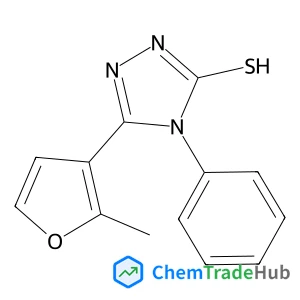
![8-Bromo-6-fluoro[1,2,4]triazolo[1,5-a]pyridin-2-amine structure](https://static.chemtradehub.com/structs/125/1257705-51-3-9f4a.webp "8-Bromo-6-fluoro[1,2,4]triazolo[1,5-a]pyridin-2-amine structure")