












Dietary intervention with edible film-coated multistrain probiotic Lacticaseibacilli in nondairy food matrices significantly increased the recovery of fecal viable Lacticaseibacilli and improved the performance of several colonic biomarkers among slightly malnourished preschool children
Literature Information
Publication Date
2023-12-15
DOI
10.1039/D3FO02829A
Impact Factor
5.396
Authors
Mosab Gad, Amr S. Elbahnasawy, Asmaa A. Ramadan, Gamal Abdel Naser Yamamah, Laila Hussein
View Original
Abstract
Probiotic enriched dairy products are widely consumed in Western countries for their beneficial effects on the gastrointestinal tract and overall health. The present study aims to investigate the beneficial effects of probiotic Lacticaseibacilli (LAB) strains in non-dairy food matrices. A blend of edible film-coated probiotic LAB, L. plantarum, L. paracasei, and L. rhamnosus, were incorporated into plain biscuits and dry dates. Design of the randomized controlled study: Children of both sexes (mean age 55.7 ± 14.5 months) attending kindergarten in Tersa, a poor urban Giza district, were recruited and randomized into 5 groups of equal numbers. Treatment groups: (1) placebo biscuits, (2) functional probiotic biscuits (0.18 billion colony forming units (cfu) of LAB) (3) functional probiotic + inulin biscuits (0.2 billion cfu of LAB + 2 g of chicory inulin); (4) placebo dates and (5) functional probiotic dates (0.3 billion cfu of viable multistrain LAB). The supplements were served 5 days a week and each child had to consume 21 servings of the supplement. The primary outcome was an increase in the fecal recovery of viable LAB after the intake of 21 servings (T1) compared to the respective baseline counts (T0). The secondary outcomes include the determination of fecal short-chain fatty acids (SCFA) and secretory immunoglobulin A (s-Ig A) using ELISA and fecal ammonia excretion. Results: Statistically significant % increases in the recoveries of fecal viable LAB were found among the children consuming 21 servings of supplements 2, 3, and 5 compared to the respective count at T0. Similar significant increases were found in the fecal concentrations of SCFA and s-Ig A among the children consuming 21 servings of supplements 2, 3 and 5 compared to the respective counts at T0. On the other hand, the concentration of toxic ammonia excretion decreased significantly in the feces of all children consuming probiotic-containing supplements (groups 2, 3, and 5) at T1 compared to the respective concentrations obtained at T0. Conclusion: Multistrain microencapsulated probiotic Lacticaseibacilli in functional biscuits and dry dates successfully tolerated the acidic gastric transit and exerted their bioactive action on the colonic microbiome. The synbiotic supplement exhibited a higher production rate of colonic SCFA. Probiotic-enriched products that confer definitive health benefits are convenient and do not need to be kept under refrigeration. Manipulating the composition and function of the microbiome in childhood through probiotic/+ prebiotic interventions is cost-effective with long-term beneficial health outcomes. This study was approved by the Medical Research Ethics Committee, National Research Center and registered as Clinical Trial 16/422. Written informed consent was obtained from the mothers of all participating children.
Related Literature
Temperature-triggered capture of dispersed particles using deposited Laponite with grafted poly(N-isopropylacrylamide) chains
Jennifer M. Saunders, Brian R. Saunders
2005-06-10
Communication
DOI: 10.1039/B504252F
Synthesis of a caged glutamate for efficient one- and two-photon photorelease on living cells
Olesya D. Fedoryak, Jai-Yoon Sul, Philip G. Haydon, Graham C. R. Ellis-Davies
2005-06-13
Communication
DOI: 10.1039/B504922A
Interfacial sensing: surface assembled molecular receptors
2005-06-27
40th Anniversary Article
DOI: 10.1039/B504446B
A binary hydrogen bonding motif based on homochiral recognition: crystal structures and hydrogen bonding networks of meso-(R,S)-bis(trifluorolactate)s
Satoshi Takahashi, Toshimasa Katagiri, Kenji Uneyama
2005-06-10
Communication
DOI: 10.1039/B504676A
Synthesis and characterization of the first trimetallic nitride templated pyrrolidino endohedral metallofullerenes
Ting Cai, Zhongxin Ge, Erick B. Iezzi, Thomas E. Glass, Kim Harich, Harry W. Gibson, Harry C. Dorn
2005-06-15
Communication
DOI: 10.1039/B503333K
Rich chemistry of nitroso compounds
Hisashi Yamamoto, Norie Momiyama
2005-06-24
Feature Article
DOI: 10.1039/B503212C
You might also like
Compound Q&A
What is Ethyl 3-cyclohexylpropanoate (CAS: 10094-36-7)?
Ethyl 3-cyclohexylpropanoate is a clear, colorless to light yellow liquid with a...
10094-36-7Ethyl 3-cyclohexylpr...
Compound Q&A
How should waste containing 2-(Hydroxymethyl)-5-(methoxycarbonyl)-6-methyl-4-(2-nitrophenyl)nicotinic acid (CAS: 34783-31-8) be handled?
Waste containing 2-(Hydroxymethyl)-5-(methoxycarbonyl)-6-methyl-4-(2-nitrophenyl...
34783-31-82-(Hydroxymethyl)-5-...
Compound Q&A
How should waste containing 2,4,6-Tris(pentafluoroethyl)-1,3,5-triazine (CAS: 858-46-8) be handled?
Waste containing 2,4,6-Tris(pentafluoroethyl)-1,3,5-triazine (CAS: 858-46-8) sho...
858-46-82,4,6-Tris(pentafluo...
Compound Q&A
What precautions should be taken when handling Chloroac-nle-oh (CAS: 56787-36-1)?
When handling Chloroac-nle-oh (CAS: 56787-36-1), it is essential to wear appropr...
56787-36-1Chloroac-nle-oh
Compound Q&A
What industries use Ethyl 6-phenylimidazo[2,1-b][1,3]thiazole-3-carboxylate (CAS: 752244-05-6)?
Ethyl 6-phenylimidazo[2,1-b][1,3]thiazole-3-carboxylate is primarily used in the...
752244-05-6Ethyl 6-phenylimidaz...
Compound Q&A
Are there alternatives to alpha-(2-Bromophenyl)benzylamine (CAS: 55095-15-3) in synthesis?
Alternatives to alpha-(2-Bromophenyl)benzylamine (CAS: 55095-15-3) in synthesis ...
55095-15-3alpha-(2-Bromophenyl...
Compound Q&A
How should waste containing 2-Chloro-5-methoxypyridine (CAS: 139585-48-1) be handled?
Waste containing 2-Chloro-5-methoxypyridine (CAS: 139585-48-1) should be managed...
139585-48-12-Chloro-5-methoxypy...
Compound Q&A
What industries use 1-(4-Methoxyphenyl)-2,5-dimethyl-1H-pyrrole (CAS: 5044-27-9)?
1-(4-Methoxyphenyl)-2,5-dimethyl-1H-pyrrole (CAS: 5044-27-9) is used in various ...
5044-27-91-(4-Methoxyphenyl)-...
Compound Q&A
Are there alternatives to 3-Bromo-5-(N-Boc)aminomethylisoxazole (CAS: 903131-45-3) in synthesis?
There are alternative reagents and compounds that can be used in the synthesis o...
903131-45-33-Bromo-5-(N-Boc)ami...
Compound Q&A
What is Tungsten(IV) oxide (CAS: 12036-22-5)?
Tungsten(IV) oxide, also known as tungsten dioxide, is a chemical compound with ...
12036-22-5Tungsten(IV) oxide
Source Journal
Food & Function
CiteScore:
10.1
Self-citation Rate:
3.9%
Articles per Year:
758
Food & Function provides a unique venue for physicists, chemists, biochemists, nutritionists and other food scientists to publish novel, cutting-edge, original research focussing on food, its nutrients and their relation to human health and nutrition. We welcome research describing the: Physical properties and structure of food and how this relates to sensory perception and human health Biochemical and physiological actions of food components Interactions between foods, gut microbiota and human physiology Nutritional and biological evaluation of food Clinical and population studies using food or food components Development of biomarkers of food intake and effects on human health We also welcome systematic reviews and meta-analyses of existing studies in the literature, provided these are objective and scientifically valid Food in this context is defined as materials of plant, animal or mineral origin, which are consumed orally (by humans) for pleasure and to sustain growth and vital processes. Examples of research topics that are of interest to be published in Food & Function are: Chemistry and physics of food components and digestion processes Relationship between the physical properties/structure of food and nutrition and human health - for example, impact of food matrix or processing on nutrient release and uptake Molecular properties and physiological effects of food components (nutrients, fibres, essential micronutrients, phytochemicals, bioactives, food substitutes, novel ingredients, allergens, flavours and fragrances) Nutritional and health effects of food including bioavailability and metabolism assessment of food components (nutrients, micronutrients and other microconstituents) Efficacy and mechanisms of food constituents in the body - including biomarkers of intakes, exposure and effects Impacts of foods/food components on gut microorganisms and human physiology - For example impact of fermented foods Role of nutrition and diet in human disease prevention and development Cellular and molecular effects/mechanisms of food/food components image block The following types of research are not within the scope of Food & Function: Research relating to traditional herbal medicines, medicinal plants or active compounds extracted from such plants (materials that are primarily consumed as medicine, i.e. the intended purpose is primarily to treat, cure or prevent a non-deficiency disease) or relating to foods not recognised as human diet contributors Animal nutrition research that is not primarily designed as a model to benefit human nutrition (for example, studies of growth/accretion, heat stress, weaning, ruminant digestion, meat quality, etc.) Treatments administered by non-oral routes such as injection (subcutaneous, intramuscular, intraperitoneal, etc.), dermal/transdermal, rectal, inhalation, nasal, etc. Exceptions are when such routes of administration are used for mechanistic/control purposes in the experimental design Pharmacological/pharmaceutical approaches: Encapsulation, emulsification and/or pure controlled release of compounds or bioactives that do not come directly from edible foods, such as dietary supplements - these are better suited to a pharmaceutical journal In vitro or in vivo studies with poorly defined (insufficiently characterised) extracts and studies without appropriate controls will not be considered Cells studies not considering the metabolism of food components ingested – for example, irrelevant exposure of cells to compounds not present in the body after absorption Manuscripts with only a fully theoretical/bioinformatic approach and without appropriate support from analytical evidence will not be considered for publication Studies focussing solely on food engineering, preservation and sustainable technologies – these can be published in our companion journal Sustainable Food Technology Pure food analysis - these can be published in Analytical Methods
Recommended Compounds
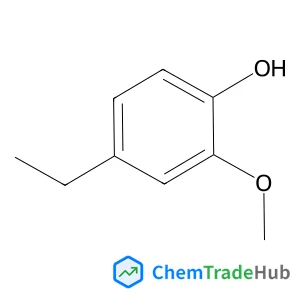

![[2',6'-bis(propan-2-yloxy)-[1,1'-biphenyl]-3-yl]dicyclohexylphosphane structure](https://static.chemtradehub.com/structs/787/787618-22-8-dda2.webp "[2',6'-bis(propan-2-yloxy)-[1,1'-biphenyl]-3-yl]dicyclohexylphosphane structure")
[2',6'-bis(propan-2-yloxy)-[1,1'-biphenyl]-3-yl]dicyclohexylphosphane
CAS Number:
787618-22-8
Molecular Formula:
C30H43O2P

Recommended Suppliers







Disclaimer
This page provides academic journal information for reference and research purposes only. We are not affiliated with any journal publishers and do not handle publication submissions. For publication-related inquiries, please contact the respective journal publishers directly.
If you notice any inaccuracies in the information displayed, please contact us at support@chemtradehub.com. We will promptly review and address your concerns.