












Inside back cover
Literature Information
Publication Date
2023-03-15
DOI
10.1039/D3CP90073H
Impact Factor
3.676
Authors
View Original
Abstract
A graphical abstract is available for this content
Recommended Journals
Related Literature
Robust indirect band gap and anisotropy of optical absorption in B-doped phosphorene
Zhi-Feng Wu, Peng-Fei Gao, Lei Guo, Jun Kang, Dang-Qi Fang, Yang Zhang, Ming-Gang Xia, Sheng-Li Zhang, Yu-Hua Wen
2017-11-13
Paper
DOI: 10.1039/C7CP05404A
Control of chemical chaos through medium viscosity in a batch ferroin-catalysed Belousov–Zhabotinsky reaction
Marcello A. Budroni, Ilaria Calabrese, Ylenia Miele, Mauro Rustici, Nadia Marchettini, Federico Rossi
2017-11-16
Paper
DOI: 10.1039/C7CP06601E
Reversible switching of the spin state in a manganese phthalocyanine molecule by atomic nitrogen
Z. Y. Li, M. Jibran, A. Pratt, Y. Yamauchi, B. Wang
2017-11-22
Paper
DOI: 10.1039/C7CP06641D
Characterizing protein–protein-interaction in high-concentration monoclonal antibody systems with the quartz crystal microbalance
Josef Hartl, Astrid Peschel, Diethelm Johannsmann, Patrick Garidel
2017-11-13
Paper
DOI: 10.1039/C7CP05711C
Probing the conformational dynamics of photosystem I in unconfined and confined spaces
Shyamtanu Chattoraj, Somen Nandi, Abhijit Saha, Kankan Bhattacharyya
2017-11-23
Paper
DOI: 10.1039/C7CP07375E
The benchmark of 31P NMR parameters in phosphate: a case study on structurally constrained and flexible phosphate
Jiří Fukal, Ondřej Páv, Miloš Buděšínský, Jakub Šebera
2017-11-13
Paper
DOI: 10.1039/C7CP06969C
Protonation of N2O and NO2 in a solid phase
Irina V. Stoyanova
2017-11-23
Paper
DOI: 10.1039/C7CP04474G
Adsorption and diffusion of hydrogen and oxygen in FCC-Co: a first-principles study
Wusong Liu, Jian Zhou
2017-11-20
Paper
DOI: 10.1039/C7CP07208B
Hydrogen sorption efficiency of titanium decorated calix[4]pyrroles
Sandeep Kumar, Rohit Y. Sathe, T. J. Dhilip Kumar
2017-11-20
Paper
DOI: 10.1039/C7CP06781J
You might also like
Compound Q&A
What are the main uses of 1H-Indazole-6-carbonitrile (CAS: 141290-59-7)?
1H-Indazole-6-carbonitrile finds applications in pharmaceuticals, where it serve...
141290-59-71H-Indazole-6-carbon...
Compound Q&A
How should waste containing Dioctyl (2E)-2-butenedioate (CAS: 2997-85-5) be handled?
Waste containing Dioctyl (2E)-2-butenedioate (CAS: 2997-85-5) should be collecte...
2997-85-5Dioctyl (2E)-2-buten...
Compound Q&A
What industries use Sodium [(1,2-benzoxazol-3-ylmethyl)sulfonyl]azanide (CAS: 68291-98-5)?
Sodium [(1,2-benzoxazol-3-ylmethyl)sulfonyl]azanide is primarily used in pharmac...
68291-98-5Sodium [(1,2-benzoxa...
Compound Q&A
Are there alternatives to Dimethyl 4-(4,4,5,5-tetramethyl-1,3,2-dioxaborolan-2-yl)-2,6-pyridinedicarboxylate (CAS: 741709-66-0) in synthesis?
Dimethyl 4-(4,4,5,5-tetramethyl-1,3,2-dioxaborolan-2-yl)-2,6-pyridinedicarboxyla...
741709-66-0Dimethyl 4-(4,4,5,5-...
Compound Q&A
How should waste containing 2-Fluoro-6-hydrazinopyridine (CAS: 80714-39-2) be handled?
Waste containing 2-Fluoro-6-hydrazinopyridine (CAS: 80714-39-2) should be manage...
80714-39-22-Fluoro-6-hydrazino...
Compound Q&A
What is 6-Formyl-2-pyridinecarboxylic acid (CAS: 499214-11-8)?
6-Formyl-2-pyridinecarboxylic acid is an organic compound with the molecular for...
499214-11-86-Formyl-2-pyridinec...
Compound Q&A
What is the market or research trend for 3-(3,4-dimethoxyphenyl)-2,5-dimethyl-N-(2-morpholin-4-ylethyl)pyrazolo[1,5-a]pyrimidin-7-amine (CAS: 900874-91-1)?
Research trends for this compound indicate a focus on its potential applications...
900874-91-13-(3,4-dimethoxyphen...
Compound Q&A
How is 9H-Tribenzo[b,d,f]azepine (CAS: 29875-73-8) typically synthesized?
9H-Tribenzo[b,d,f]azepine is typically synthesized via a multi-step process invo...
29875-73-89H-Tribenzo[b,d,f]az...
Compound Q&A
How is 1-Cyclopropyl-7-ethoxy-6-fluoro-8-methoxy-4-oxo-1,4-dihydro-3-quinolinecarboxylic acid (CAS: 1797982-51-4) typically synthesized?
1-Cyclopropyl-7-ethoxy-6-fluoro-8-methoxy-4-oxo-1,4-dihydro-3-quinolinecarboxyli...
1797982-51-41-Cyclopropyl-7-etho...
Compound Q&A
How should waste containing Methyl 3-oxo-1,2,3,4-tetrahydro-6-quinoxalinecarboxylate (CAS: 671820-52-3) be handled?
Waste containing Methyl 3-oxo-1,2,3,4-tetrahydro-6-quinoxalinecarboxylate (CAS: ...
671820-52-3Methyl 3-oxo-1,2,3,4...
Source Journal
Physical Chemistry Chemical Physics

CiteScore:
5.5
Self-citation Rate:
10.3%
Articles per Year:
3036
Physical Chemistry Chemical Physics (PCCP) is an international journal co-owned by 19 physical chemistry and physics societies from around the world. This journal publishes original, cutting-edge research in physical chemistry, chemical physics and biophysical chemistry. To be suitable for publication in PCCP, articles must include significant innovation and/or insight into physical chemistry; this is the most important criterion that reviewers and Editors will judge against when evaluating submissions. The journal has a broad scope and welcomes contributions spanning experiment, theory, computation and data science. Topical coverage includes spectroscopy, dynamics, kinetics, statistical mechanics, thermodynamics, electrochemistry, catalysis, surface science, quantum mechanics, quantum computing and machine learning. Interdisciplinary research areas such as polymers and soft matter, materials, nanoscience, energy, surfaces/interfaces, and biophysical chemistry are welcomed if they demonstrate significant innovation and/or insight into physical chemistry. Joined experimental/theoretical studies are particularly appreciated when complementary and based on up-to-date approaches.
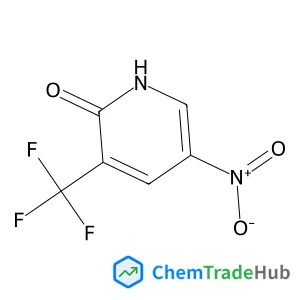
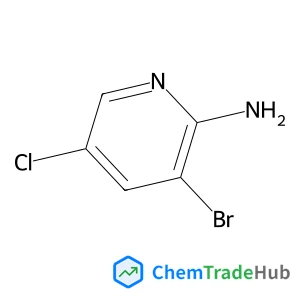
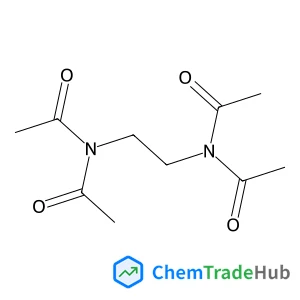
Recommended Compounds
Recommended Suppliers





Disclaimer
This page provides academic journal information for reference and research purposes only. We are not affiliated with any journal publishers and do not handle publication submissions. For publication-related inquiries, please contact the respective journal publishers directly.
If you notice any inaccuracies in the information displayed, please contact us at support@chemtradehub.com. We will promptly review and address your concerns.