



Contents list
Literature Information
Publication Date
2023-03-08
DOI
10.1039/D3CP90069J
Impact Factor
3.676
Authors
View Original
Abstract
The first page of this article is displayed as the abstract.
Recommended Journals

Pharmacological Reviews

Proceedings of the National Academy of Sciences of the United States of America

Helvetica Chimica Acta

Journal of Organometallic Chemistry

Russian Chemical Reviews

Journal of Heterocyclic Chemistry

Journal of Physics and Chemistry of Solids

Planta Medica

Journal of Medicinal Chemistry

Israel Journal of Chemistry
Related Literature
Robust indirect band gap and anisotropy of optical absorption in B-doped phosphorene
Zhi-Feng Wu, Peng-Fei Gao, Lei Guo, Jun Kang, Dang-Qi Fang, Yang Zhang, Ming-Gang Xia, Sheng-Li Zhang, Yu-Hua Wen
2017-11-13
Paper
DOI: 10.1039/C7CP05404A
Dynamics of poly(vinyl butyral) studied using dielectric spectroscopy and 1H NMR relaxometry
Silvia Pizzanelli, Daniele Prevosto, Massimiliano Labardi, Tommaso Guazzini, Simona Bronco, Claudia Forte, Lucia Calucci
2017-11-13
Paper
DOI: 10.1039/C7CP02595E
Detection of the electronic structure of iron-(iii)-oxo oligomers forming in aqueous solutions
Katrin Kraffert, Marvin N. Pohl, Ralph Kraehnert, Franziska Emmerling, Bernd Winter
2017-11-13
Paper
DOI: 10.1039/C7CP06945F
Controlling the H to T′ structural phase transition via chalcogen substitution in MoTe2 monolayers
Joshua Young, Thomas L. Reinecke
2017-11-16
Paper
DOI: 10.1039/C7CP05634F
Theoretical exploration of the potential applications of Sc-based MXenes
Xiang Kan, Bin Amin, Yong Zhao
2017-11-16
Paper
DOI: 10.1039/C7CP06224A
Correction: Formic acid catalyzed isomerization of protonated cytosine: a lower barrier reaction for tautomer production of potential biological importance
Lingxia Jin, Mengdan Lv, Mengting Zhao, Rui Wang, Caibin Zhao, Jiufu Lu, Ling Wang, Wenliang Wang, Yawen Wei
2017-12-04
Correction
DOI: 10.1039/C7CP90270K
Solvent effects on excitation energies obtained using the state-specific TD-DFT method with a polarizable continuum model based on constrained equilibrium thermodynamics
Ting-Jun Bi, Long-Kun Xu, Fan Wang, Mei-Jun Ming, Xiang-Yuan Li
2017-11-10
Paper
DOI: 10.1039/C7CP05673G
Influences of polarity and hydration cycles on imbibition hysteresis in silica nanochannels
Carlos Torres-Verdín, Matthew T. Balhoff
2017-11-14
Paper
DOI: 10.1039/C7CP05833K
Understanding the interplay between the solvent and nuclear rearrangements in the negative solvatochromism of a push–pull flexible quinolinium cation
Tommaso Giovannini, Alberto Baiardi, Benedetta Carlotti, Fausto Elisei, Chiara Cappelli
2017-11-22
Paper
DOI: 10.1039/C7CP07104C
You might also like
Compound Q&A
What are the main uses of 1H-Indazole-6-carbonitrile (CAS: 141290-59-7)?
1H-Indazole-6-carbonitrile finds applications in pharmaceuticals, where it serve...
141290-59-71H-Indazole-6-carbon...
Compound Q&A
How should waste containing Dioctyl (2E)-2-butenedioate (CAS: 2997-85-5) be handled?
Waste containing Dioctyl (2E)-2-butenedioate (CAS: 2997-85-5) should be collecte...
2997-85-5Dioctyl (2E)-2-buten...
Compound Q&A
What industries use Sodium [(1,2-benzoxazol-3-ylmethyl)sulfonyl]azanide (CAS: 68291-98-5)?
Sodium [(1,2-benzoxazol-3-ylmethyl)sulfonyl]azanide is primarily used in pharmac...
68291-98-5Sodium [(1,2-benzoxa...
Compound Q&A
Are there alternatives to Dimethyl 4-(4,4,5,5-tetramethyl-1,3,2-dioxaborolan-2-yl)-2,6-pyridinedicarboxylate (CAS: 741709-66-0) in synthesis?
Dimethyl 4-(4,4,5,5-tetramethyl-1,3,2-dioxaborolan-2-yl)-2,6-pyridinedicarboxyla...
741709-66-0Dimethyl 4-(4,4,5,5-...
Compound Q&A
How should waste containing 2-Fluoro-6-hydrazinopyridine (CAS: 80714-39-2) be handled?
Waste containing 2-Fluoro-6-hydrazinopyridine (CAS: 80714-39-2) should be manage...
80714-39-22-Fluoro-6-hydrazino...
Compound Q&A
What is 6-Formyl-2-pyridinecarboxylic acid (CAS: 499214-11-8)?
6-Formyl-2-pyridinecarboxylic acid is an organic compound with the molecular for...
499214-11-86-Formyl-2-pyridinec...
Compound Q&A
What is the market or research trend for 3-(3,4-dimethoxyphenyl)-2,5-dimethyl-N-(2-morpholin-4-ylethyl)pyrazolo[1,5-a]pyrimidin-7-amine (CAS: 900874-91-1)?
Research trends for this compound indicate a focus on its potential applications...
900874-91-13-(3,4-dimethoxyphen...
Compound Q&A
How is 9H-Tribenzo[b,d,f]azepine (CAS: 29875-73-8) typically synthesized?
9H-Tribenzo[b,d,f]azepine is typically synthesized via a multi-step process invo...
29875-73-89H-Tribenzo[b,d,f]az...
Compound Q&A
How is 1-Cyclopropyl-7-ethoxy-6-fluoro-8-methoxy-4-oxo-1,4-dihydro-3-quinolinecarboxylic acid (CAS: 1797982-51-4) typically synthesized?
1-Cyclopropyl-7-ethoxy-6-fluoro-8-methoxy-4-oxo-1,4-dihydro-3-quinolinecarboxyli...
1797982-51-41-Cyclopropyl-7-etho...
Compound Q&A
How should waste containing Methyl 3-oxo-1,2,3,4-tetrahydro-6-quinoxalinecarboxylate (CAS: 671820-52-3) be handled?
Waste containing Methyl 3-oxo-1,2,3,4-tetrahydro-6-quinoxalinecarboxylate (CAS: ...
671820-52-3Methyl 3-oxo-1,2,3,4...
Source Journal
Physical Chemistry Chemical Physics

CiteScore:
5.5
Self-citation Rate:
10.3%
Articles per Year:
3036
Physical Chemistry Chemical Physics (PCCP) is an international journal co-owned by 19 physical chemistry and physics societies from around the world. This journal publishes original, cutting-edge research in physical chemistry, chemical physics and biophysical chemistry. To be suitable for publication in PCCP, articles must include significant innovation and/or insight into physical chemistry; this is the most important criterion that reviewers and Editors will judge against when evaluating submissions. The journal has a broad scope and welcomes contributions spanning experiment, theory, computation and data science. Topical coverage includes spectroscopy, dynamics, kinetics, statistical mechanics, thermodynamics, electrochemistry, catalysis, surface science, quantum mechanics, quantum computing and machine learning. Interdisciplinary research areas such as polymers and soft matter, materials, nanoscience, energy, surfaces/interfaces, and biophysical chemistry are welcomed if they demonstrate significant innovation and/or insight into physical chemistry. Joined experimental/theoretical studies are particularly appreciated when complementary and based on up-to-date approaches.
Recommended Compounds
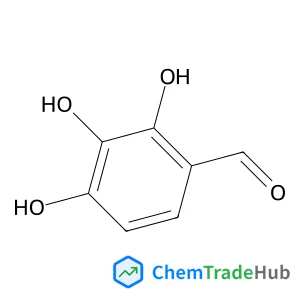
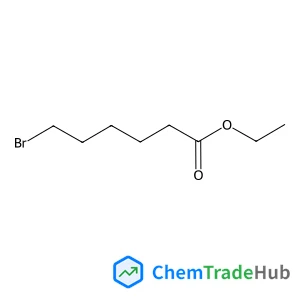
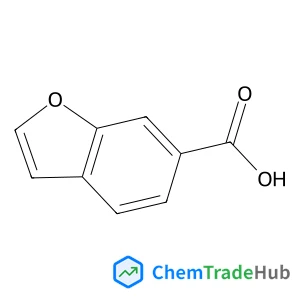

Recommended Suppliers




Disclaimer
This page provides academic journal information for reference and research purposes only. We are not affiliated with any journal publishers and do not handle publication submissions. For publication-related inquiries, please contact the respective journal publishers directly.
If you notice any inaccuracies in the information displayed, please contact us at support@chemtradehub.com. We will promptly review and address your concerns.