


![2-{[4-(2-Methoxyethyl)phenoxy]methyl}oxirane structure](https://static.chemtradehub.com/structs/567/56718-70-8-f037.webp "2-{[4-(2-Methoxyethyl)phenoxy]methyl}oxirane structure")
Probing the conformational dynamics of an Ago–RNA complex in water/methanol solution
Literature Information
Publication Date
2023-12-15
DOI
10.1039/D3CP05530B
Impact Factor
3.676
Authors
Alessandro Grottesi
View Original
Abstract
Argonaute (Ago) proteins mediate target recognition guiding miRNA to bind complementary mRNA primarily in the seed region. However, additional pairing can occur beyond the seed, forming a supplementary duplex that can contribute to the guide–target affinity. In order to shed light on the connection, between protein–RNA interactions and miRNA–mRNA seed and supplementary duplex mobility, we carried out molecular dynamics simulations at the microsecond time-scale using a different approach compared to the ones normally used. Until now, theoretical investigations with classical MD on Ago–RNA complexes have been focused primarily on pure water solvent, which mimics the natural environment of biological molecules. Here, we explored the conformational space of a human Ago2 (hAgo2) bound to the seed + supplementary miRNA–mRNA duplex, using the solvent environment as a molecular probe. MD simulations have been performed in a mixture of water/MeOH at a molar ratio of 70 : 30 as well as in pure water for comparison. Our findings revealed that the mixed solvent promotes protein RNA association, principally enhancing salt–linkages between basic amino acid side-chains and acidic phosphates of the sugar–phosphate backbone. The primary effect registered was the restriction of supplementary duplex flexibility and the stabilization of the miRNA 3′ terminus. Interestingly, we observed that the influence of the solvent appears to have almost no impact on the conformation of the seed duplex.
Recommended Journals

Coloration Technology

Photochemical & Photobiological Sciences

Current Pharmaceutical Biotechnology

Angewandte Chemie International Edition

European Journal of Organic Chemistry

Environmental Toxicology and Pharmacology

Faraday Discussions

Contact Lens & Anterior Eye

Mini-Reviews in Medicinal Chemistry

Journal of Enzyme inhibition and Medicinal Chemistry
Related Literature
Selected transport properties of 2HF–KF using molecular dynamics
Christian Simon, Thierry Cartailler, Pierre Turq
2001-07-03
Paper
DOI: 10.1039/B100944N
Clinoptilolite–heulandite polymorphism: structural features from computer simulation
A. Rabdel Ruiz-Salvador, Ariel Gómez, Dewi W. Lewis, C. Richard A. Catlow, L. Marleny Rodríguez-Albelo, Luis Montero, Gerardo Rodríguez-Fuentes
2000-03-31
Paper
DOI: 10.1039/A909671J
Perfect families of mixed crystals: the ‘‘ordered’’ crystalline forms of n-alkanes
Fazil Rajabalee, Valérie Metivaud, Harry A. J. Oonk, Denise Mondieig, Peter Waldner
2000-03-09
Paper
DOI: 10.1039/A909731G
Excited state and free radical properties of Rhodamine 123: a laser flash photolysis and radiolysis study
Paper
DOI: 10.1039/A807013J
Supramolecular aggregates formed by L-glutamic acid-oligomers: SANS and SAXS studies of the hydrogen bonded self-assembly
M. Ishida, M. Takai, H. Okabayashi, H. Masuda, M. Furusaka, C. J. O'Connor
2001-07-12
Paper
DOI: 10.1039/B100717N
Antimony and bismuth oxide cluster ions
Jörg Opitz-Coutureau, André Fielicke, Bernhard Kaiser, Klaus Rademann
2001-07-02
Paper
DOI: 10.1039/B103009B
Electrodeposition of a thin germanium film on gold from a room temperature ionic liquid
2001-07-02
Paper
DOI: 10.1039/B102232F
Studies on the phase behavior of perfluoropolyether carboxylic acids and their salts: Observation of a stunning temperature-dependent color effect for the birefringence in the pyridinium salt system
J. Würtz, J. Meyer, H. Hoffmann
2001-07-04
Paper
DOI: 10.1039/B102776J
You might also like
Compound Q&A
Are there alternatives to 1-(4-Chlorophenyl)-N-hydroxymethanimine (CAS: 3848-36-0) in synthesis?
When considering alternatives to 1-(4-Chlorophenyl)-N-hydroxymethanimine (CAS: 3...
3848-36-01-(4-Chlorophenyl)-N...
Compound Q&A
How should (1R,9S,10S,12S,14E,16S,19R,20R,21S,22R)-3,9,21-Trihydroxy-5,10,12,14,16,20,22-heptamethyl-23,24-dioxatetracyclo[17.3.1.1~6,9~.0~2,7~]tetracosa-2,5,7,14-tetraen-4-one (CAS: 183202-73-5) be stored?
This compound should be stored in a cool, dry place away from direct sunlight. I...
183202-73-5(1R,9S,10S,12S,14E,1...
Compound Q&A
How is 3-(4-Bromophenyl)-5-(2-fluorophenyl)-1,2,4-oxadiazole (CAS: 419553-16-5) typically synthesized?
3-(4-Bromophenyl)-5-(2-fluorophenyl)-1,2,4-oxadiazole is synthesized through a m...
419553-16-53-(4-Bromophenyl)-5-...
Compound Q&A
How is 5-Chloro-2-(4-chlorophenyl)-4-methyl-6-[3-(1-piperidinyl)propoxy]pyrimidine (CAS: 1639220-19-1) typically synthesized?
5-Chloro-2-(4-chlorophenyl)-4-methyl-6-[3-(1-piperidinyl)propoxy]pyrimidine (CAS...
1639220-19-15-Chloro-2-(4-chloro...
Compound Q&A
What industries use 2-Chloro-4-(difluoromethoxy)pyridine (CAS: 1206978-15-5)?
2-Chloro-4-(difluoromethoxy)pyridine is used in the pharmaceutical industry for ...
1206978-15-52-Chloro-4-(difluoro...
Compound Q&A
What regulatory guidelines apply to 3-Chloro-6-methylpyridazine (CAS: 1121-79-5)?
3-Chloro-6-methylpyridazine (CAS: 1121-79-5) is classified under the Globally Ha...
1121-79-53-Chloro-6-methylpyr...
Compound Q&A
Are there alternatives to Methyl 4,5-dimethyl-2-nitrobenzoate in synthesis?
Several alternatives can be used in the synthesis of Methyl 4,5-dimethyl-2-nitro...
90922-74-0Methyl 4,5-dimethyl-...
Compound Q&A
Are there alternatives to (2E,2'E)-3,3'-(1,4-Phenylene)bisacrylaldehyde in synthesis?
Alternatives to (2E,2'E)-3,3'-(1,4-Phenylene)bisacrylaldehyde include other acry...
63405-68-5(2E,2'E)-3,3'-(1,4-P...
Compound Q&A
What is 3-Amino-5-chloropyridin-2-ol hydrochloride (CAS: 1261906-29-9)?
3-Amino-5-chloropyridin-2-ol hydrochloride is an organic compound with the CAS n...
1261906-29-93-Amino-5-chloropyri...
Compound Q&A
What precautions should be taken when handling 6,7-Difluoro-2,3-dihydro-4H-chromen-4-one (CAS: 1092349-93-3)?
When handling 6,7-Difluoro-2,3-dihydro-4H-chromen-4-one, it is essential to wear...
1092349-93-36,7-Difluoro-2,3-dih...
Source Journal
Physical Chemistry Chemical Physics

CiteScore:
5.5
Self-citation Rate:
10.3%
Articles per Year:
3036
Physical Chemistry Chemical Physics (PCCP) is an international journal co-owned by 19 physical chemistry and physics societies from around the world. This journal publishes original, cutting-edge research in physical chemistry, chemical physics and biophysical chemistry. To be suitable for publication in PCCP, articles must include significant innovation and/or insight into physical chemistry; this is the most important criterion that reviewers and Editors will judge against when evaluating submissions. The journal has a broad scope and welcomes contributions spanning experiment, theory, computation and data science. Topical coverage includes spectroscopy, dynamics, kinetics, statistical mechanics, thermodynamics, electrochemistry, catalysis, surface science, quantum mechanics, quantum computing and machine learning. Interdisciplinary research areas such as polymers and soft matter, materials, nanoscience, energy, surfaces/interfaces, and biophysical chemistry are welcomed if they demonstrate significant innovation and/or insight into physical chemistry. Joined experimental/theoretical studies are particularly appreciated when complementary and based on up-to-date approaches.
Recommended Compounds
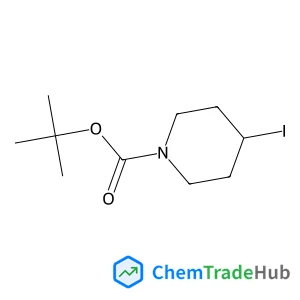
2-Methyl-2-propanyl 4-iodo-1-piperidinecarboxylate
CAS Number:
301673-14-3
Molecular Formula:
C10H18INO2

![10-(1-Azabicyclo[2.2.2]oct-3-ylmethyl)-10H-phenothiazine structure](https://static.chemtradehub.com/structs/292/29216-28-2-1d81.webp "10-(1-Azabicyclo[2.2.2]oct-3-ylmethyl)-10H-phenothiazine structure")
10-(1-Azabicyclo[2.2.2]oct-3-ylmethyl)-10H-phenothiazine
CAS Number:
29216-28-2
Molecular Formula:
C20H22N2S
Recommended Suppliers





Disclaimer
This page provides academic journal information for reference and research purposes only. We are not affiliated with any journal publishers and do not handle publication submissions. For publication-related inquiries, please contact the respective journal publishers directly.
If you notice any inaccuracies in the information displayed, please contact us at support@chemtradehub.com. We will promptly review and address your concerns.