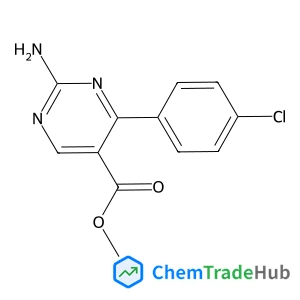
Methyl 2-amino-4-(4-chlorophenyl)-5-pyrimidinecarboxylate
CAS Number:
1133115-56-6
Molecular Formula:
C12H10ClN3O2
Xin Zhang, Guan Wang, Jia Liu, Shiyi Zuo, Meichen Li, Shuang Yang, Yachen Gao
We propose a switchable and tunable terahertz metasurface polarization converter based on graphene. The metasurface is composed of a bottom gold film, a lower SiO2 layer, an intermediate N-type graphene layer, an upper SiO2 layer, and a top layer of square graphene resonant rings. By using the CST Microwave Studio, we studied their polarization conversion properties. The results show that the metasurface enables a versatile range of functions, including x-to-y linear polarization conversion within the frequency range of 4.23–7 THz, the transformation of linearly polarized waves into right-hand circularly polarized and left-hand circularly polarized waves. Moreover, at 3.873 THz, the metasurface can exhibit circular dichroism (CD) with a high CD value of 0.7. Based on the effect, a strategy to detect three representative avian influenza viruses was proposed and tested, which implies that the metasurface can be applied in biosensing.
Clara Granzotto, Ken Sutherland, Young Ah Goo
DOI: 10.1039/D1AN00228G
Michihiko Nakano, Masafumi Inaba, Junya Suehiro
DOI: 10.1039/D0AN02349C
Samuel A. Vilchez Mercedes, Ian Eder, Mona Ahmed, Ninghao Zhu
DOI: 10.1039/D1AN01802G
Muhammad A. Sami, Muhammad Tayyab, Priya Parikh, Harshitha Govindaraju
DOI: 10.1039/D0AN02451A
Jane Y. Zhang, Andrew T. Bender, David S. Boyle
DOI: 10.1039/D0AN01988G
Sheying Dong, Yaqi An, Mengnan Qu
DOI: 10.1039/D1AN00193K
Qing Cai, Zhixin Li, Liangzhen Xu, Bin Qiu, Cheng Li, Zhenyu Lin
DOI: 10.1039/D1AN00257K
Xin Xing Zhang, Qiu Yan Zhu, Jiao Yang Lu, Fu Rui Zhang, Wei Tao Huang, Xue Zhi Ding, Li Qiu Xia
DOI: 10.1039/C8AN01565A
Yali Wang, Yuan Zhang, Lijun Yang, Huiyuan Wu, Nathaniel Finney
DOI: 10.1039/D1AN00147G
2-Methylbenzene-1,4-diamine dihydrochloride (CAS: 615-45-2) should be stored in ...
(1S,4S)-2,5-Diazabicyclo[2.2.1]heptane dihydrobromide is generally considered sa...
(6-Chloropyridazin-3-YL)methanamine finds applications in the pharmaceutical ind...
2-Fluoro-3-methylphenol is primarily used in the synthesis of pharmaceuticals, p...
When handling 3-Methoxy-4-nitrobenzonitrile, it is important to wear appropriate...
When handling 1,3-Oxazolo[4,5-b]pyridine-2(3H)-thione (CAS: 211949-57-4), it is ...
4-Ethynylbenzamide (CAS: 90347-86-7) falls under various regulatory guidelines i...
3-(2-Ethylphenyl)-2-thioxo-4-imidazolidinone is primarily used as an intermediat...
(2-Fluoro-6-methoxyphenyl)acetic acid, also known as 4-fluoro-3-methoxybenzoic a...
Market trends for 2-[4-(Hydroxymethyl)phenoxy]ethanol (CAS: 102196-18-9) indicat...

Physical Chemistry Chemical Physics (PCCP) is an international journal co-owned by 19 physical chemistry and physics societies from around the world. This journal publishes original, cutting-edge research in physical chemistry, chemical physics and biophysical chemistry. To be suitable for publication in PCCP, articles must include significant innovation and/or insight into physical chemistry; this is the most important criterion that reviewers and Editors will judge against when evaluating submissions. The journal has a broad scope and welcomes contributions spanning experiment, theory, computation and data science. Topical coverage includes spectroscopy, dynamics, kinetics, statistical mechanics, thermodynamics, electrochemistry, catalysis, surface science, quantum mechanics, quantum computing and machine learning. Interdisciplinary research areas such as polymers and soft matter, materials, nanoscience, energy, surfaces/interfaces, and biophysical chemistry are welcomed if they demonstrate significant innovation and/or insight into physical chemistry. Joined experimental/theoretical studies are particularly appreciated when complementary and based on up-to-date approaches.