












Does a halogen bond require positive potential on the acid and negative potential on the base?
Literature Information
Publication Date
2023-02-20
DOI
10.1039/D3CP00379E
Impact Factor
3.676
Authors
View Original
Abstract
It is usually expected that formation of a halogen bond (XB) requires that a region of positive electrostatic potential associated with a σ or π-hole on the Lewis acid will interact with the negative potential of the base, either a lone pair or π-bond region. Quantum calculations of model systems suggest this not to be necessary. The placement of electron-withdrawing substituents on the base can reverse the sign of the potential in its lone pair or π-bond region to positive, and this base can nonetheless engage in a XB with the positive σ-hole of a Lewis acid. The reverse scenario is also possible in certain circumstances, as a negatively charged σ-hole can form a XB with the negative lone pair region of a base. Despite these classical Coulombic repulsions, the overall electrostatic interaction is attractive in these XBs, albeit only weakly so. The strengths of these bonds are surprisingly insensitive to changes in the partner molecule. For example, even a wide range in the depth of the σ-hole of the approaching acid yields only a minimal change in the strength of the XB to a base with a positive potential.
Related Literature
Biological application of water-based electrochemically synthesized CuO leaf-like arrays: SERS response modulated by the positional isomerism and interface type
E. Proniewicz, S. Vantasin, T. K. Olszewski, B. Boduszek, Y. Ozaki
2017-11-13
Paper
DOI: 10.1039/C7CP06001G
Effects of the c-Si/a-SiO2 interfacial atomic structure on its band alignment: an ab initio study
Fan Zheng, Hieu H. Pham, Lin-Wang Wang
2017-11-13
Paper
DOI: 10.1039/C7CP05879A
Mutual diffusion governed by kinetics and thermodynamics in the partially miscible mixture methanol + cyclohexane
Tatjana Janzen, Aliaksandr Mialdun, Gabriela Guevara-Carrion, Jadran Vrabec, Maogang He, Valentina Shevtsova
2017-11-14
Paper
DOI: 10.1039/C7CP06515A
Computational screening of functional groups for capture of toxic industrial chemicals in porous materials
David Fairen-Jimenez, Randall Q. Snurr
2017-11-13
Paper
DOI: 10.1039/C7CP06521C
Controlling the H to T′ structural phase transition via chalcogen substitution in MoTe2 monolayers
Joshua Young, Thomas L. Reinecke
2017-11-16
Paper
DOI: 10.1039/C7CP05634F
Theoretical aspects of femtosecond double-pump single-molecule spectroscopy. I. Weak-field regime
Elisa Palacino-González, Maxim F. Gelin, Wolfgang Domcke
2017-11-20
Paper
DOI: 10.1039/C7CP04809B
Stability and spectral properties of the dication Ne 2+2
H. Hogreve
2017-11-23
Paper
DOI: 10.1039/C7CP07194A
Probing halogen–halogen interactions in solution
V. Ayzac, M. Raynal, B. Isare, J. Idé, P. Brocorens, R. Lazzaroni, T. Etienne, A. Monari, X. Assfeld, L. Bouteiller
2017-11-22
Paper
DOI: 10.1039/C7CP06996K
Reversibly photo-switchable wettability of stearic acid monolayer modified bismuth-based micro-/nanomaterials
Hao Yang, Xiaojing Hu, Chunping Su, Yunling Liu, Rong Chen
2017-11-06
Paper
DOI: 10.1039/C7CP05848A
Steering on-surface reactions with self-assembly strategy
Jingxin Dai, Kai Wu
2017-11-13
Perspective
DOI: 10.1039/C7CP06177C
You might also like
Compound Q&A
What are the main uses of 1H-Indazole-6-carbonitrile (CAS: 141290-59-7)?
1H-Indazole-6-carbonitrile finds applications in pharmaceuticals, where it serve...
141290-59-71H-Indazole-6-carbon...
Compound Q&A
How should waste containing Dioctyl (2E)-2-butenedioate (CAS: 2997-85-5) be handled?
Waste containing Dioctyl (2E)-2-butenedioate (CAS: 2997-85-5) should be collecte...
2997-85-5Dioctyl (2E)-2-buten...
Compound Q&A
What industries use Sodium [(1,2-benzoxazol-3-ylmethyl)sulfonyl]azanide (CAS: 68291-98-5)?
Sodium [(1,2-benzoxazol-3-ylmethyl)sulfonyl]azanide is primarily used in pharmac...
68291-98-5Sodium [(1,2-benzoxa...
Compound Q&A
Are there alternatives to Dimethyl 4-(4,4,5,5-tetramethyl-1,3,2-dioxaborolan-2-yl)-2,6-pyridinedicarboxylate (CAS: 741709-66-0) in synthesis?
Dimethyl 4-(4,4,5,5-tetramethyl-1,3,2-dioxaborolan-2-yl)-2,6-pyridinedicarboxyla...
741709-66-0Dimethyl 4-(4,4,5,5-...
Compound Q&A
How should waste containing 2-Fluoro-6-hydrazinopyridine (CAS: 80714-39-2) be handled?
Waste containing 2-Fluoro-6-hydrazinopyridine (CAS: 80714-39-2) should be manage...
80714-39-22-Fluoro-6-hydrazino...
Compound Q&A
What is 6-Formyl-2-pyridinecarboxylic acid (CAS: 499214-11-8)?
6-Formyl-2-pyridinecarboxylic acid is an organic compound with the molecular for...
499214-11-86-Formyl-2-pyridinec...
Compound Q&A
What is the market or research trend for 3-(3,4-dimethoxyphenyl)-2,5-dimethyl-N-(2-morpholin-4-ylethyl)pyrazolo[1,5-a]pyrimidin-7-amine (CAS: 900874-91-1)?
Research trends for this compound indicate a focus on its potential applications...
900874-91-13-(3,4-dimethoxyphen...
Compound Q&A
How is 9H-Tribenzo[b,d,f]azepine (CAS: 29875-73-8) typically synthesized?
9H-Tribenzo[b,d,f]azepine is typically synthesized via a multi-step process invo...
29875-73-89H-Tribenzo[b,d,f]az...
Compound Q&A
How is 1-Cyclopropyl-7-ethoxy-6-fluoro-8-methoxy-4-oxo-1,4-dihydro-3-quinolinecarboxylic acid (CAS: 1797982-51-4) typically synthesized?
1-Cyclopropyl-7-ethoxy-6-fluoro-8-methoxy-4-oxo-1,4-dihydro-3-quinolinecarboxyli...
1797982-51-41-Cyclopropyl-7-etho...
Compound Q&A
How should waste containing Methyl 3-oxo-1,2,3,4-tetrahydro-6-quinoxalinecarboxylate (CAS: 671820-52-3) be handled?
Waste containing Methyl 3-oxo-1,2,3,4-tetrahydro-6-quinoxalinecarboxylate (CAS: ...
671820-52-3Methyl 3-oxo-1,2,3,4...
Source Journal
Physical Chemistry Chemical Physics

CiteScore:
5.5
Self-citation Rate:
10.3%
Articles per Year:
3036
Physical Chemistry Chemical Physics (PCCP) is an international journal co-owned by 19 physical chemistry and physics societies from around the world. This journal publishes original, cutting-edge research in physical chemistry, chemical physics and biophysical chemistry. To be suitable for publication in PCCP, articles must include significant innovation and/or insight into physical chemistry; this is the most important criterion that reviewers and Editors will judge against when evaluating submissions. The journal has a broad scope and welcomes contributions spanning experiment, theory, computation and data science. Topical coverage includes spectroscopy, dynamics, kinetics, statistical mechanics, thermodynamics, electrochemistry, catalysis, surface science, quantum mechanics, quantum computing and machine learning. Interdisciplinary research areas such as polymers and soft matter, materials, nanoscience, energy, surfaces/interfaces, and biophysical chemistry are welcomed if they demonstrate significant innovation and/or insight into physical chemistry. Joined experimental/theoretical studies are particularly appreciated when complementary and based on up-to-date approaches.
Recommended Compounds
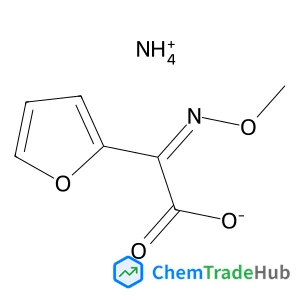
Ammonium (Z)-2-(furan-2-yl)-2-(methoxyimino)acetate
CAS Number:
97148-39-5
Molecular Formula:
C7H10N2O4
Recommended Suppliers




Disclaimer
This page provides academic journal information for reference and research purposes only. We are not affiliated with any journal publishers and do not handle publication submissions. For publication-related inquiries, please contact the respective journal publishers directly.
If you notice any inaccuracies in the information displayed, please contact us at support@chemtradehub.com. We will promptly review and address your concerns.