












Triplet generation at the CdTe quantum dot/anthracene interface mediated by hot and thermalized electron exchange for enhanced production of singlet oxygen
Literature Information
Publication Date
2023-03-04
DOI
10.1039/D3CP00021D
Impact Factor
3.676
Authors
Zhen Chi, Jia Xu, Shida Luo, Xia Ran, Xiaojuan Wang, Pingan Liu, Yulu He, Yanmin Kuang, Lijun Guo
View Original
Abstract
Triplet energy transfer (TET) from semiconductor quantum dots (QDs) to molecular triplets has potential applications in photon up-conversion and singlet oxygen generation. Here, we have constructed a complex consisting of CdTe QDs as the donor and 9-anthracenecarboxylic acid (ACA) as the triplet acceptor, and studied the TET pathways and enhanced singlet oxygen generation properties. The results from steady-state and time-resolved spectroscopy demonstrate efficient TET with a total efficiency of over 80% from photoexcited CdTe QDs to ACA. Dynamical analysis clearly indicates two distinctive TET channels – hot electron exchange and thermalized electron exchange – mediating the TET process in the CdTe QDs–ACA complex. The TET efficiencies from hot electron exchange at high energetic levels and thermalized electron exchange on the lowest exciton state can reach ∼27% and ∼85%, respectively, following 530 nm excitation. This efficient TET endows the CdTe QDs–ACA complex with a good capability of generating singlet oxygen species with a yield of up to ∼59%. These findings contribute further insights to the mechanisms of interfacial TET processes and are significant in designing efficient TET systems based on semiconductor nanoparticles and triplet molecules.
Recommended Journals
Related Literature
Correction: Formic acid catalyzed isomerization of protonated cytosine: a lower barrier reaction for tautomer production of potential biological importance
Lingxia Jin, Mengdan Lv, Mengting Zhao, Rui Wang, Caibin Zhao, Jiufu Lu, Ling Wang, Wenliang Wang, Yawen Wei
2017-12-04
Correction
DOI: 10.1039/C7CP90270K
Path-integral simulation of graphene monolayers under tensile stress
Carlos P. Herrero, Rafael Ramírez
2017-11-13
Paper
DOI: 10.1039/C7CP06821B
Hydrogen sorption efficiency of titanium decorated calix[4]pyrroles
Sandeep Kumar, Rohit Y. Sathe, T. J. Dhilip Kumar
2017-11-20
Paper
DOI: 10.1039/C7CP06781J
Impacts of cloud water droplets on the OH production rate from peroxide photolysis
M. T. C. Martins-Costa, J. M. Anglada, J. S. Francisco, Manuel F. Ruiz-López
2017-11-09
Paper
DOI: 10.1039/C7CP06813A
Characterizing protein–protein-interaction in high-concentration monoclonal antibody systems with the quartz crystal microbalance
Josef Hartl, Astrid Peschel, Diethelm Johannsmann, Patrick Garidel
2017-11-13
Paper
DOI: 10.1039/C7CP05711C
Construction of magnetically separable NiAl LDH/Fe3O4–RGO nanocomposites with enhanced photocatalytic performance under visible light
Jie Ni, Jinjuan Xue, LinFang Xie, Jing Shen, Guangyu He, Haiqun Chen
2017-11-13
Paper
DOI: 10.1039/C7CP06682A
Lithium diffusion study in Li2MnO3 and Li1.17Ni0.17Mn0.67O2: a combined experimental and computational approach
Mridula Dixit Bharadwaj, Annigere S. Prakash
2017-11-22
Paper
DOI: 10.1039/C7CP06458F
Role of halogen⋯halogen interactions in the 2D crystallization of n-semiconductors at the liquid–solid interface
Zongxia Guo, Ping Yu, Kai Sun, Shengbin Lei, Yuanping Yi, Zhibo Li
2017-09-25
Communication
DOI: 10.1039/C7CP06027K
Analytical solution of the PELDOR inverse problem using the integral Mellin transform
Alexander G. Maryasov
2017-11-16
Paper
DOI: 10.1039/C7CP04059H
Electrochemical aspects of photocatalysis: Au@FeS2 nanocomposite for removal of industrial pollutant
Gurpreet Kaur, Pooja D., Manjeet Kumar, Anup Thakur, Rajni Bala, Akshay Kumar
2017-11-16
Paper
DOI: 10.1039/C7CP06289C
You might also like
Compound Q&A
What are the main uses of 1H-Indazole-6-carbonitrile (CAS: 141290-59-7)?
1H-Indazole-6-carbonitrile finds applications in pharmaceuticals, where it serve...
141290-59-71H-Indazole-6-carbon...
Compound Q&A
How should waste containing Dioctyl (2E)-2-butenedioate (CAS: 2997-85-5) be handled?
Waste containing Dioctyl (2E)-2-butenedioate (CAS: 2997-85-5) should be collecte...
2997-85-5Dioctyl (2E)-2-buten...
Compound Q&A
What industries use Sodium [(1,2-benzoxazol-3-ylmethyl)sulfonyl]azanide (CAS: 68291-98-5)?
Sodium [(1,2-benzoxazol-3-ylmethyl)sulfonyl]azanide is primarily used in pharmac...
68291-98-5Sodium [(1,2-benzoxa...
Compound Q&A
Are there alternatives to Dimethyl 4-(4,4,5,5-tetramethyl-1,3,2-dioxaborolan-2-yl)-2,6-pyridinedicarboxylate (CAS: 741709-66-0) in synthesis?
Dimethyl 4-(4,4,5,5-tetramethyl-1,3,2-dioxaborolan-2-yl)-2,6-pyridinedicarboxyla...
741709-66-0Dimethyl 4-(4,4,5,5-...
Compound Q&A
How should waste containing 2-Fluoro-6-hydrazinopyridine (CAS: 80714-39-2) be handled?
Waste containing 2-Fluoro-6-hydrazinopyridine (CAS: 80714-39-2) should be manage...
80714-39-22-Fluoro-6-hydrazino...
Compound Q&A
What is 6-Formyl-2-pyridinecarboxylic acid (CAS: 499214-11-8)?
6-Formyl-2-pyridinecarboxylic acid is an organic compound with the molecular for...
499214-11-86-Formyl-2-pyridinec...
Compound Q&A
What is the market or research trend for 3-(3,4-dimethoxyphenyl)-2,5-dimethyl-N-(2-morpholin-4-ylethyl)pyrazolo[1,5-a]pyrimidin-7-amine (CAS: 900874-91-1)?
Research trends for this compound indicate a focus on its potential applications...
900874-91-13-(3,4-dimethoxyphen...
Compound Q&A
How is 9H-Tribenzo[b,d,f]azepine (CAS: 29875-73-8) typically synthesized?
9H-Tribenzo[b,d,f]azepine is typically synthesized via a multi-step process invo...
29875-73-89H-Tribenzo[b,d,f]az...
Compound Q&A
How is 1-Cyclopropyl-7-ethoxy-6-fluoro-8-methoxy-4-oxo-1,4-dihydro-3-quinolinecarboxylic acid (CAS: 1797982-51-4) typically synthesized?
1-Cyclopropyl-7-ethoxy-6-fluoro-8-methoxy-4-oxo-1,4-dihydro-3-quinolinecarboxyli...
1797982-51-41-Cyclopropyl-7-etho...
Compound Q&A
How should waste containing Methyl 3-oxo-1,2,3,4-tetrahydro-6-quinoxalinecarboxylate (CAS: 671820-52-3) be handled?
Waste containing Methyl 3-oxo-1,2,3,4-tetrahydro-6-quinoxalinecarboxylate (CAS: ...
671820-52-3Methyl 3-oxo-1,2,3,4...
Source Journal
Physical Chemistry Chemical Physics

CiteScore:
5.5
Self-citation Rate:
10.3%
Articles per Year:
3036
Physical Chemistry Chemical Physics (PCCP) is an international journal co-owned by 19 physical chemistry and physics societies from around the world. This journal publishes original, cutting-edge research in physical chemistry, chemical physics and biophysical chemistry. To be suitable for publication in PCCP, articles must include significant innovation and/or insight into physical chemistry; this is the most important criterion that reviewers and Editors will judge against when evaluating submissions. The journal has a broad scope and welcomes contributions spanning experiment, theory, computation and data science. Topical coverage includes spectroscopy, dynamics, kinetics, statistical mechanics, thermodynamics, electrochemistry, catalysis, surface science, quantum mechanics, quantum computing and machine learning. Interdisciplinary research areas such as polymers and soft matter, materials, nanoscience, energy, surfaces/interfaces, and biophysical chemistry are welcomed if they demonstrate significant innovation and/or insight into physical chemistry. Joined experimental/theoretical studies are particularly appreciated when complementary and based on up-to-date approaches.
Recommended Compounds
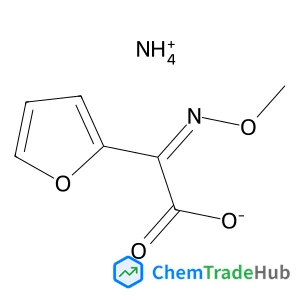
Ammonium (Z)-2-(furan-2-yl)-2-(methoxyimino)acetate
CAS Number:
97148-39-5
Molecular Formula:
C7H10N2O4

Recommended Suppliers






Disclaimer
This page provides academic journal information for reference and research purposes only. We are not affiliated with any journal publishers and do not handle publication submissions. For publication-related inquiries, please contact the respective journal publishers directly.
If you notice any inaccuracies in the information displayed, please contact us at support@chemtradehub.com. We will promptly review and address your concerns.