


Water-soluble fullerenol-mediated electron transfer in molecular systems toward enhanced solar hydrogen production
Literature Information
Publication Date
2023-12-26
DOI
10.1039/D3CC05705D
Impact Factor
6.222
Authors
View Original
Abstract
We present here that visible-light-induced electron transfer from an excited dye to an in situ generated Pt cocatalyst can be promoted by employing water-soluble fullerenol (C60(OH)24) as an electron mediator, and as a result, the fullerenol-based molecular system shows a 3 times higher H2 evolution activity than C60(OH)24-free system.
Recommended Journals

Critical Reviews in Solid State and Materials Sciences

Bioorganic & Medicinal Chemistry

Medicinal Chemistry Research

Biocatalysis and Biotransformation

Chinese Journal of Chemistry

Atomization and Sprays

Polycyclic Aromatic Compounds

Journal of Asian Natural Products Research

Acta Metallurgica Sinica-English Letters

Journal of Chemical Sciences
Related Literature
A kinetic study of the decomposition of the cubic perovskite-type oxide BaxSr1−xCo0.8Fe0.2O3−δ (BSCF) (x = 0.1 and 0.5)
David N. Mueller, Roger A. De Souza, Daniel Roehrens, Joachim Mayer, Manfred Martin
2010-06-24
Paper
DOI: 10.1039/C0CP00004C
Proton mobility through a second order phase transition: theoretical and experimental study of LaNbO4
Harald Fjeld, Kazuaki Toyoura, Reidar Haugsrud, Truls Norby
2010-06-24
Paper
DOI: 10.1039/C002851G
Photochemistry of carbon monoxide and methanol in water and nitric acid hydrate ices: A NEXAFS study
C. Laffon, J. Lasne, F. Bournel, K. Schulte, S. Lacombe, Ph. Parent
2010-07-26
Paper
DOI: 10.1039/C0CP00229A
One-dimensional supramolecular surface structures: 1,4-diisocyanobenzene on Au(111) surfaces
Jorge A. Boscoboinik, Florencia C. Calaza, Zeesham Habeeb, Dennis W. Bennett, Dario J. Stacchiola, Martin A. Purino, Wilfred T. Tysoe
2010-08-16
Paper
DOI: 10.1039/C003239E
Dynamic nuclear polarization coupling factors calculated from molecular dynamics simulations of a nitroxide radical in water
Deniz Sezer, M. J. Prandolini, Thomas F. Prisner
2009-07-06
Paper
DOI: 10.1039/B905709A
The reduced [2Fe-2S] clusters in adrenodoxin and Arthrospira platensisferredoxin share spin density with proteinnitrogens, probed using 2D ESEEM
Sergei A. Dikanov, Rimma I. Samoilova, Reinhard Kappl, Antony R. Crofts, Jürgen Hüttermann
2009-07-01
Paper
DOI: 10.1039/B904597J
Density functional theory calculations on magnetic properties of actinide compounds
Eugene Heifets, David Sedmidubsky
2010-08-16
Paper
DOI: 10.1039/C0CP00372G
Tandem extraction strategy for separation of metallic and semiconducting SWCNTs using condensed benzenoid molecules: effects of molecular morphology and solvent
Cai-Hong Liu, Yi-Yang Liu, Yong-Hui Zhang, Rui-Rui Wei, Hao-Li Zhang
2009-06-10
Paper
DOI: 10.1039/B901517E
You might also like
Compound Q&A
What precautions should be taken when handling 2-Chloro-1,2-bis(4-methylphenyl)ethanone (CAS: 71193-32-3)?
When handling 2-Chloro-1,2-bis(4-methylphenyl)ethanone (CAS: 71193-32-3), it is ...
71193-32-32-Chloro-1,2-bis(4-m...
Compound Q&A
What industries use 4-Ethoxy-3-(5-methyl-4-oxo-7-propyl-1,4-dihydroimidazo[5,1-f][1,2,4]triazin-2-yl)benzenesulfonyl chloride (CAS: 224789-26-8)?
4-Ethoxy-3-(5-methyl-4-oxo-7-propyl-1,4-dihydroimidazo[5,1-f][1,2,4]triazin-2-yl...
224789-26-84-Ethoxy-3-(5-methyl...
Compound Q&A
How should Methyl 3-Oxo-4-Androsten-17-Carboxylate (CAS: 2681-55-2) be stored?
Methyl 3-Oxo-4-Androsten-17-Carboxylate (CAS: 2681-55-2) should be stored in a c...
2681-55-2Methyl 3-Oxo-4-Andro...
Compound Q&A
What are the main uses of (R)-3-Amino-4-(3-hexylphenylamino)-4-oxobutylphosphonic acid (CAS: 909725-61-7)?
(R)-3-Amino-4-(3-hexylphenylamino)-4-oxobutylphosphonic acid is primarily used i...
909725-61-7(R)-3-Amino-4-(3-hex...
Compound Q&A
What regulatory guidelines apply to 2-Methyl-2-propanyl 3-amino-3-carbamoyl-1-azetidinecarboxylate (CAS: 1254120-14-3)?
2-Methyl-2-propanyl 3-amino-3-carbamoyl-1-azetidinecarboxylate (CAS: 1254120-14-...
1254120-14-32-Methyl-2-propanyl ...
Compound Q&A
Are there alternatives to (E)-4-(tert-Butoxy)-4-oxobut-2-enoic acid (CAS: 135355-96-3) in synthesis?
There are alternative reagents that can be used in synthesis instead of (E)-4-(t...
135355-96-3(E)-4-(tert-Butoxy)-...
Compound Q&A
What are the physical and chemical properties of [2-(3-Chlorophenyl)-1,3-thiazol-4-yl]methanol (CAS: 121202-20-8)?
[2-(3-Chlorophenyl)-1,3-thiazol-4-yl]methanol (CAS: 121202-20-8) is a crystallin...
121202-20-8[2-(3-Chlorophenyl)-...
Compound Q&A
What is the market or research trend for Methyl (2S)-[(4S)-2,2-dimethyl-1,3-dioxolan-4-yl]{[(4-methylphenyl)sulfonyl]oxy}acetate (CAS: 166249-17-8)?
The market and research trends for Methyl (2S)-[(4S)-2,2-dimethyl-1,3-dioxolan-4...
166249-17-8Methyl (2S)-[(4S)-2,...
Compound Q&A
What is the market or research trend for 1-Bromo-2-isocyanatoethane (CAS: 42865-19-0)?
The market for 1-Bromo-2-isocyanatoethane (CAS: 42865-19-0) is driven by its use...
42865-19-01-Bromo-2-isocyanato...
Compound Q&A
What are the main uses of 4-Nitro-D-phenylalanine hydrochloride (CAS: 147065-06-3)?
4-Nitro-D-phenylalanine hydrochloride (CAS: 147065-06-3) is primarily used in re...
147065-06-34-Nitro-D-phenylalan...
Source Journal
Chemical Communications

CiteScore:
8.6
Self-citation Rate:
4.7%
Articles per Year:
2458
ChemComm publishes urgent research which is of outstanding significance and interest to experts in the field, while also appealing to the journal’s broad chemistry readership. Our communication format is ideally suited to short, urgent studies that are of such importance that they require accelerated publication. Our scope covers all topics in chemistry, and research at the interface of chemistry and other disciplines (such as materials science, nanoscience, physics, engineering and biology) where there is a significant novelty in the chemistry aspects. Major topic areas covered include: Analytical Chemistry Catalysis Chemical Biology and medicinal chemistry Computational Chemistry and Machine Learning Energy and sustainable chemistry Environmental Chemistry Green Chemistry Inorganic Chemistry Materials Chemistry Nanoscience Organic Chemistry Physical Chemistry Polymer Chemistry Supramolecular Chemistry
Recommended Compounds
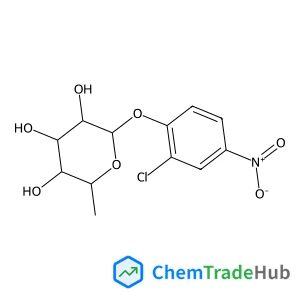
2-Chloro-4-nitrophenyl 6-deoxy-alpha-L-galactopyranoside
CAS Number:
157843-41-9
Molecular Formula:
C12H14ClNO7
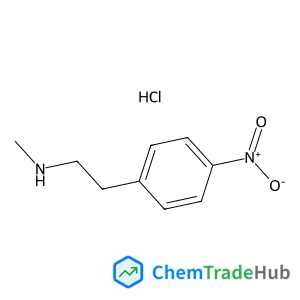
N-Methyl-2-(4-nitrophenyl)ethanamine hydrochloride (1:1)
CAS Number:
166943-39-1
Molecular Formula:
C9H13ClN2O2
Recommended Suppliers



Disclaimer
This page provides academic journal information for reference and research purposes only. We are not affiliated with any journal publishers and do not handle publication submissions. For publication-related inquiries, please contact the respective journal publishers directly.
If you notice any inaccuracies in the information displayed, please contact us at support@chemtradehub.com. We will promptly review and address your concerns.