












Bidentate selenium-based chalcogen bond catalyzed cationic polymerization of p-methoxystyrene
Literature Information
Publication Date
2024-01-02
DOI
10.1039/D3CC05516G
Impact Factor
6.222
Authors
Hao Chen, Hongjun Fu, Ji Xian, Xiaobo Pan, Jincai Wu
View Original
Abstract
The application of selenium-based non-covalent bond catalysis in living cationic polymerization has rarely been reported. In this work, the cationic polymerization of p-methoxystyrene (pMOS) was performed using a bidentate selenium bond catalyst – a new water-tolerant Lewis acid catalyst. A polymer with controllable molecular weight and narrow molecular weight distribution can be obtained at room temperature, with a maximum molecular weight of 23.3 kDa. This selenium bond compound can also catalyze the controllable cationic polymerization of p-methoxy styrene under environmental conditions. By changing the monomer feeding ratio, a secondary feeding experiment and DFT analysis, it is shown that the selenium bond catalyst can induce polymer chain growth by reversibly activating dormant covalent bonds (C–OH).
Related Literature
Kinetics of the chemically activated HSO5 radical under atmospheric conditions – a master-equation study
Núria González-García, Matthias Olzmann
2010-08-16
Paper
DOI: 10.1039/C0CP00284D
O2 adsorption and dissociation on neutral, positively and negatively charged Aun (n = 5–79) clusters
Josep Manel Ricart, Gianfranco Pacchioni
2010-07-08
Paper
DOI: 10.1039/C004110F
Refractive indices for molecular crystals from the response of X-ray constrained Hartree–Fock wavefunctions
Dylan Jayatilaka, Parthapratim Munshi, Michael J. Turner, Judith A. K. Howard, Mark A. Spackman
2009-06-10
Paper
DOI: 10.1039/B906072C
One-dimensional supramolecular surface structures: 1,4-diisocyanobenzene on Au(111) surfaces
Jorge A. Boscoboinik, Florencia C. Calaza, Zeesham Habeeb, Dennis W. Bennett, Dario J. Stacchiola, Martin A. Purino, Wilfred T. Tysoe
2010-08-16
Paper
DOI: 10.1039/C003239E
Intermediate motions and dipolar couplings as studied by Lee–Goldburg cross-polarization NMR: Hartmann–Hahn matching profiles
Marcio Fernando Cobo, Kateřina Maliňáková, Detlef Reichert, Kay Saalwächter, Eduardo Ribeiro deAzevedo
2009-07-14
Paper
DOI: 10.1039/B907674C
Hot plasmonic interactions: a new look at the photothermal efficacy of gold nanoparticles
Ekaterina Y. Lukianova-Hleb, Lindsey J. E. Anderson, Seunghyun Lee
2010-08-16
Paper
DOI: 10.1039/C0CP00499E
Tandem extraction strategy for separation of metallic and semiconducting SWCNTs using condensed benzenoid molecules: effects of molecular morphology and solvent
Cai-Hong Liu, Yi-Yang Liu, Yong-Hui Zhang, Rui-Rui Wei, Hao-Li Zhang
2009-06-10
Paper
DOI: 10.1039/B901517E
Rhodamines in the gas phase: cations, neutrals, anions, and adducts with metal cations
Konstantin Chingin, Roman M. Balabin, Konstantin Barylyuk, Huanwen Chen, Vladimir Frankevich, Renato Zenobi
2010-08-10
Paper
DOI: 10.1039/C000807A
Density functional triple jumping
Jia Deng, Andrew T. B. Gilbert, Peter M. W. Gill
2010-07-07
Paper
DOI: 10.1039/C0CP00242A
Electronic structure of the tyrosine D radical and the water-splitting complex from pulsed ENDOR spectroscopy on photosystem II single crystals
Christian Teutloff, Susanne Pudollek, Sven Keßen, Matthias Broser, Athina Zouni, Robert Bittl
2009-07-14
Paper
DOI: 10.1039/B908093G
You might also like
Compound Q&A
What precautions should be taken when handling 2-Chloro-1,2-bis(4-methylphenyl)ethanone (CAS: 71193-32-3)?
When handling 2-Chloro-1,2-bis(4-methylphenyl)ethanone (CAS: 71193-32-3), it is ...
71193-32-32-Chloro-1,2-bis(4-m...
Compound Q&A
What industries use 4-Ethoxy-3-(5-methyl-4-oxo-7-propyl-1,4-dihydroimidazo[5,1-f][1,2,4]triazin-2-yl)benzenesulfonyl chloride (CAS: 224789-26-8)?
4-Ethoxy-3-(5-methyl-4-oxo-7-propyl-1,4-dihydroimidazo[5,1-f][1,2,4]triazin-2-yl...
224789-26-84-Ethoxy-3-(5-methyl...
Compound Q&A
How should Methyl 3-Oxo-4-Androsten-17-Carboxylate (CAS: 2681-55-2) be stored?
Methyl 3-Oxo-4-Androsten-17-Carboxylate (CAS: 2681-55-2) should be stored in a c...
2681-55-2Methyl 3-Oxo-4-Andro...
Compound Q&A
What are the main uses of (R)-3-Amino-4-(3-hexylphenylamino)-4-oxobutylphosphonic acid (CAS: 909725-61-7)?
(R)-3-Amino-4-(3-hexylphenylamino)-4-oxobutylphosphonic acid is primarily used i...
909725-61-7(R)-3-Amino-4-(3-hex...
Compound Q&A
What regulatory guidelines apply to 2-Methyl-2-propanyl 3-amino-3-carbamoyl-1-azetidinecarboxylate (CAS: 1254120-14-3)?
2-Methyl-2-propanyl 3-amino-3-carbamoyl-1-azetidinecarboxylate (CAS: 1254120-14-...
1254120-14-32-Methyl-2-propanyl ...
Compound Q&A
Are there alternatives to (E)-4-(tert-Butoxy)-4-oxobut-2-enoic acid (CAS: 135355-96-3) in synthesis?
There are alternative reagents that can be used in synthesis instead of (E)-4-(t...
135355-96-3(E)-4-(tert-Butoxy)-...
Compound Q&A
What are the physical and chemical properties of [2-(3-Chlorophenyl)-1,3-thiazol-4-yl]methanol (CAS: 121202-20-8)?
[2-(3-Chlorophenyl)-1,3-thiazol-4-yl]methanol (CAS: 121202-20-8) is a crystallin...
121202-20-8[2-(3-Chlorophenyl)-...
Compound Q&A
What is the market or research trend for Methyl (2S)-[(4S)-2,2-dimethyl-1,3-dioxolan-4-yl]{[(4-methylphenyl)sulfonyl]oxy}acetate (CAS: 166249-17-8)?
The market and research trends for Methyl (2S)-[(4S)-2,2-dimethyl-1,3-dioxolan-4...
166249-17-8Methyl (2S)-[(4S)-2,...
Compound Q&A
What is the market or research trend for 1-Bromo-2-isocyanatoethane (CAS: 42865-19-0)?
The market for 1-Bromo-2-isocyanatoethane (CAS: 42865-19-0) is driven by its use...
42865-19-01-Bromo-2-isocyanato...
Compound Q&A
What are the main uses of 4-Nitro-D-phenylalanine hydrochloride (CAS: 147065-06-3)?
4-Nitro-D-phenylalanine hydrochloride (CAS: 147065-06-3) is primarily used in re...
147065-06-34-Nitro-D-phenylalan...
Source Journal
Chemical Communications

CiteScore:
8.6
Self-citation Rate:
4.7%
Articles per Year:
2458
ChemComm publishes urgent research which is of outstanding significance and interest to experts in the field, while also appealing to the journal’s broad chemistry readership. Our communication format is ideally suited to short, urgent studies that are of such importance that they require accelerated publication. Our scope covers all topics in chemistry, and research at the interface of chemistry and other disciplines (such as materials science, nanoscience, physics, engineering and biology) where there is a significant novelty in the chemistry aspects. Major topic areas covered include: Analytical Chemistry Catalysis Chemical Biology and medicinal chemistry Computational Chemistry and Machine Learning Energy and sustainable chemistry Environmental Chemistry Green Chemistry Inorganic Chemistry Materials Chemistry Nanoscience Organic Chemistry Physical Chemistry Polymer Chemistry Supramolecular Chemistry
Recommended Compounds
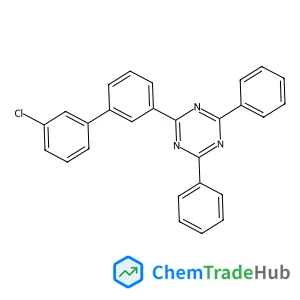
2-(3'-Chlorobiphenyl-3-yl)-4,6-diphenyl-1,3,5-triazine
CAS Number:
1443049-83-9
Molecular Formula:
C27H18ClN3
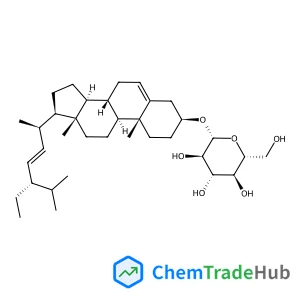
(3beta,22E)-Stigmasta-5,22-dien-3-yl beta-D-glucopyranoside
CAS Number:
19716-26-8
Molecular Formula:
C35H58O6
Recommended Suppliers





Disclaimer
This page provides academic journal information for reference and research purposes only. We are not affiliated with any journal publishers and do not handle publication submissions. For publication-related inquiries, please contact the respective journal publishers directly.
If you notice any inaccuracies in the information displayed, please contact us at support@chemtradehub.com. We will promptly review and address your concerns.