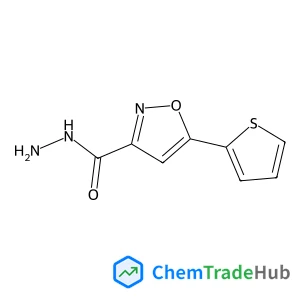
![1-(1-Benzyl-1,2,3,6-tetrahydropyridin-4-yl)-1H-benzo[d]imidazol-2(3H)-one structure](https://static.chemtradehub.com/structs/603/60373-71-9-7dfb.webp "1-(1-Benzyl-1,2,3,6-tetrahydropyridin-4-yl)-1H-benzo[d]imidazol-2(3H)-one structure")
1-(1-Benzyl-1,2,3,6-tetrahydropyridin-4-yl)-1H-benzo[d]imidazol-2(3H)-one
CAS Number:
60373-71-9
Molecular Formula:
C19H19N3O
Zi-Hao Liu, Jian Xiao, Qian-Qian Zhai, Xi Tang, Li-Jun Xu, Zhi-Yuan Zhuang, Ya-Wen Wang, Yu Peng
A nickel-catalyzed reductive tandem cyclization of the elaborated β-bromo acetal with a dibenzoxepin scaffold was invented to strategically construct the remaining two rings in linoxepin. The generated diasterodivergent intermediates could be easily converted to both enantiomers of this unique cyclolignan molecule via facile oxidations, thus realizing enantiodivergent total synthesis of linoxepin for the first time.
Eliano Diana, Karl Gatterer, Sidney F. A. Kettle
DOI: 10.1039/C5CP05566K
Sean P. Platt, Isaac K. Attah, M. S. El-Shall, Saadullah G. Aziz
DOI: 10.1039/C5CP06502J
Blane D. Green, Alexander J. Badini, Richard A. O'Brien, James H. Davis, Jr., Kevin N. West
DOI: 10.1039/C5CP06101F
Jan-Hendrik Pöhls
DOI: 10.1039/C5CP06575E
Mohammad Ali Kamyabi, Fatemeh Soleymani-Bonoti, Rahman Bikas, Hassan Hosseini-Monfared, Nematollah Arshadi, Milosz Siczek, Tadeusz Lis
DOI: 10.1039/C5CP04695E
C. Hintze, F. Schütze, M. Drescher, S. Mecking
DOI: 10.1039/C5CP05749C
Saikat Das, Suraj Nagpure, Ravinder K. Garlapalli, Qingliu Wu, Syed Z. Islam, Joseph Strzalka, Stephen E. Rankin
DOI: 10.1039/C5CP05178A
Defang Duan, Fubo Tian, Yunxian Liu, Xiaoli Huang, Da Li, Hongyu Yu, Yanbin Ma, Bingbing Liu, Tian Cui
DOI: 10.1039/C5CP05218A
Stefanie A. Mewes, Jan-Michael Mewes, Andreas Dreuw
DOI: 10.1039/C5CP07077E
Manika Dandapat, Debabrata Mandal
DOI: 10.1039/C5CP05282C
Waste containing 6-Chloro-5-(2'-hydroxy-3'-methoxy-4-biphenylyl)-3-(3-methoxyphe...
(3alpha,5alpha)-3-Hydroxypregnane-11,20-dione is primarily used in the pharmaceu...
The market for 4-Amino-6-chloro-2-pyridinecarboxylic acid (CAS: 546141-56-4) is ...
Alternatives to (2-Benzoylethyl)trimethylammonium chloride (CAS: 24472-88-6) in ...
N-[4-Nitro-3-(trifluoromethyl)phenyl]acetamide (CAS: 393-12-4) is generally safe...
Alternative reagents such as other phosphates or similar functional groups can b...
There are alternatives to N,N'-Bis(3-aminopropyl)-1,3-propanediamine (CAS: 4605-...
When handling Aluminium trihexadecanoate, it is important to use appropriate per...
(1,1-Dioxido-3-oxo-1,2-benzothiazol-2(3H)-yl)acetic acid is a chemical compound ...
Several alternatives to 5,5-dimethyloxolan-2-one (CAS: 3123-97-5) can be used in...

ChemComm publishes urgent research which is of outstanding significance and interest to experts in the field, while also appealing to the journal’s broad chemistry readership. Our communication format is ideally suited to short, urgent studies that are of such importance that they require accelerated publication. Our scope covers all topics in chemistry, and research at the interface of chemistry and other disciplines (such as materials science, nanoscience, physics, engineering and biology) where there is a significant novelty in the chemistry aspects. Major topic areas covered include: Analytical Chemistry Catalysis Chemical Biology and medicinal chemistry Computational Chemistry and Machine Learning Energy and sustainable chemistry Environmental Chemistry Green Chemistry Inorganic Chemistry Materials Chemistry Nanoscience Organic Chemistry Physical Chemistry Polymer Chemistry Supramolecular Chemistry