![[2',6'-bis(propan-2-yloxy)-[1,1'-biphenyl]-3-yl]dicyclohexylphosphane structure](https://static.chemtradehub.com/structs/787/787618-22-8-dda2.webp "[2',6'-bis(propan-2-yloxy)-[1,1'-biphenyl]-3-yl]dicyclohexylphosphane structure")
[2',6'-bis(propan-2-yloxy)-[1,1'-biphenyl]-3-yl]dicyclohexylphosphane
CAS Number:
787618-22-8
Molecular Formula:
C30H43O2P
Yangjing Bai, Li Ma, Yingchun Huang, Shiying Lang, Wenjie Fan, Gongyan Liu
Inefficient biofilm clearance and the risk of drug resistance pose significant challenges for antibiotic eye drops in the treatment of bacterial keratitis (BK). Recently, silver nanoparticles (AgNPs) have emerged as promising alternatives to antibiotics due to their potent antibacterial activity and minimal drug resistance. However, concerns regarding the potential biotoxicity of aggregated AgNPs in tissues have limited their practical application. In this study, polyzwitterion-functionalized AgNPs with excellent dispersion stability in the ocular physiological environment were chosen to prepare antibacterial eye drops. Zwitterionic AgNPs were synthesized using a copolymer, poly(sulfobetaine methacrylate-co-dopamine methacrylamide) (PSBDA), as a stabilizer and a reducing agent. The resulting antibacterial eye drops, named ZP@Ag-drops, demonstrated outstanding biocompatibility in in vitro cytotoxicity tests and in vivo rabbit eye instillation experiments, attributed to the zwitterionic PSBDA surface. Furthermore, the ZP@Ag-drops exhibited strong antibacterial activity against multiple pathogenic bacteria, particularly in penetrating and eradicating biofilms, due to the synergistic bactericidal effect of the released Ag+ and reactive oxygen species (ROS). Importantly, in vivo BK rabbit models showed that the ZP@Ag-drops effectively inhibited corneal infection and prevented ocular tissue damage, surpassing the therapeutic effect of commercial levofloxacin eye drops (LEV-drops). Overall, this study presents a promising alternative option for the effective treatment of BK using antibacterial eye drops.

Journal of Enzyme inhibition and Medicinal Chemistry

Faraday Discussions

Environmental Toxicology and Pharmacology

Foundations of Chemistry

CrystEngComm

Nature Reviews Drug Discovery

Physical Chemistry Chemical Physics

Photochemical & Photobiological Sciences

Coloration Technology

European Journal of Organic Chemistry
Tao Yang, Lloyd Muzangwa, Dorian S. N. Parker, Ralf I. Kaiser, Alexander M. Mebel
DOI: 10.1039/C4CP04612A
Yanjun Xiao, Keya Zhou, Junna Wang, Stefan L. Schweizer, Alexander Sprafke, Jung-Ho Lee
DOI: 10.1039/C4CP04396K
Surya K. Ghosh, Andrey G. Cherstvy
DOI: 10.1039/C4CP03599B
Prince Ravat, Martin Baumgarten
DOI: 10.1039/C4CP03522D
Sudip Pan, Ashutosh Gupta, Subhajit Mandal, Diego Moreno, Gabriel Merino, Pratim K. Chattaraj
DOI: 10.1039/C4CP03856H
Zoe Watson, Shahar Keinan
DOI: 10.1039/C4CP04043K
Xue-Bing Yin, Zheng-Hua Tan, Xin Guo
DOI: 10.1039/C4CP04151H
Dalal Noureldine, Tayirjan Isimjan, Bin Lin, Silvano Del Gobbo, Mutalifu Abulikemu, Mohamed Nejib Hedhili, Dalaver H. Anjum, Kazuhiro Takanabe
DOI: 10.1039/C4CP04365K
V. Venuti, F. D'Amico, A. Gessini, F. Castiglione, C. Punta, L. Melone, V. Crupi, D. Majolino, F. Trotta, C. Masciovecchio
DOI: 10.1039/C4CP04045G
Ethyl 3-cyclohexylpropanoate is a clear, colorless to light yellow liquid with a...
Waste containing 2-(Hydroxymethyl)-5-(methoxycarbonyl)-6-methyl-4-(2-nitrophenyl...
Waste containing 2,4,6-Tris(pentafluoroethyl)-1,3,5-triazine (CAS: 858-46-8) sho...
When handling Chloroac-nle-oh (CAS: 56787-36-1), it is essential to wear appropr...
Ethyl 6-phenylimidazo[2,1-b][1,3]thiazole-3-carboxylate is primarily used in the...
Alternatives to alpha-(2-Bromophenyl)benzylamine (CAS: 55095-15-3) in synthesis ...
Waste containing 2-Chloro-5-methoxypyridine (CAS: 139585-48-1) should be managed...
1-(4-Methoxyphenyl)-2,5-dimethyl-1H-pyrrole (CAS: 5044-27-9) is used in various ...
There are alternative reagents and compounds that can be used in the synthesis o...
Tungsten(IV) oxide, also known as tungsten dioxide, is a chemical compound with ...
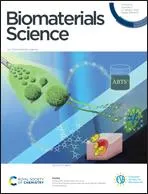
Biomaterials Science is an international high impact journal exploring the science of biomaterials and their translation towards clinical use. Its scope encompasses new concepts in biomaterials design, studies into the interaction of biomaterials with the body, and the use of materials to answer fundamental biological questions. Papers do not necessarily need to report a new biomaterial but should provide novel insight into the biological applications of the biomaterial. Articles that primarily focus on demonstrating novel materials chemistry and bring a molecular picture to bear on a given material’s suitability as a biomaterial are more suited to our companion journal, Journal of Materials Chemistry B. Biomaterials Science publishes primary research and review-type articles in the following areas: molecular design of biomaterials, including translation of emerging chemistries to biomaterials science of cells and materials at the nanoscale and microscale materials as model systems for stem cell and human biology materials for tissue engineering and regenerative medicine (Nano)materials and (nano)systems for therapeutic delivery interactions at the biointerface biologically inspired and biomimetic materials, including bio-inspired self-assembly systems and cell-inspired synthetic tools next-generation biomaterials tools and methods