



Theoretical mechanism study on the electrochemical benzylation of [60]fullerene derivatives
Literature Information
Publication Date
2023-02-01
DOI
10.1039/D2CP06027B
Impact Factor
3.676
Authors
Nana Ma, Wenyue Guo, Tongxin Liu, Guisheng Zhang
View Original
Abstract
The electrochemical methodology is available for the functionalization of fullerenes. However, intricate and ambiguous issues remain to be identified for some electrochemical reactions. In this work, density functional theory (DFT) calculations reveal that the electron delocalization of C60 in fullerobenzofuran (RF5) and the C60-fused lactone (RL6) declines with the electron injection of electrochemistry, and clear active sites can be obtained to react with the electrophilic agent. Furthermore, the selectivity of the addition reaction depends on the Oδ− site, which is inclined to react with the Cδ+ of C60 after electron injection or the Cδ+ of PhCH2+, forming a new C–O bond.
Recommended Journals

Journal of Heterocyclic Chemistry

European Journal of Wood and Wood Products

Organic Preparations and Procedures International

Israel Journal of Chemistry

Fibre Chemistry

Molecular Pharmacology

Journal of Physics and Chemistry of Solids

Russian Chemical Reviews

Proceedings of the National Academy of Sciences of the United States of America

Science
Related Literature
Adsorption and diffusion of hydrogen and oxygen in FCC-Co: a first-principles study
Wusong Liu, Jian Zhou
2017-11-20
Paper
DOI: 10.1039/C7CP07208B
Theoretical aspects of femtosecond double-pump single-molecule spectroscopy. II. Strong-field regime
Elisa Palacino-González, Maxim F. Gelin, Wolfgang Domcke
2017-11-20
Paper
DOI: 10.1039/C7CP04810F
Ultrafast dynamics of ionic liquids in colloidal dispersion
Zhe Ren, Jordan Kelly, C. Prasad Gunathilaka, Thomas Brinzer, Samrat Dutta, Clinton A. Johnson, Sunayana Mitra, Sean Garrett-Roe
2017-11-03
Paper
DOI: 10.1039/C7CP04441K
Escape of anions from geminate recombination in THF due to charge delocalization
Hung-Cheng Chen, Andrew R. Cook, Sadayuki Asaoka, Jeffery S. Boschen, Theresa L. Windus, John R. Miller
2017-11-24
Paper
DOI: 10.1039/C7CP05880B
Termination of Ge surfaces with ultrathin GeS and GeS2 layers via solid-state sulfurization
Courtney Keiser, Shixuan Du, Hong-Jun Gao, Peter Sutter, Eli Sutter
2017-11-29
Paper
DOI: 10.1039/C7CP05990F
Dynamical properties of EMIM-SCN confined in a SiO2 matrix by means of 1H NMR relaxometry
Danuta Kruk, Milosz Wojciechowski, Yogendra Lal Verma, Sujeet Kumar Chaurasia, Rajendra Kumar Singh
2017-12-01
Paper
DOI: 10.1039/C7CP06174A
Ion chemistry at elevated ion–molecule interaction energies in a selected ion flow-drift tube: reactions of H3O+, NO+ and O2+ with saturated aliphatic ketones
Anatolii Spesyvyi, David Smith, Patrik Španěl
2017-11-16
Paper
DOI: 10.1039/C7CP05795D
Detection of the electronic structure of iron-(iii)-oxo oligomers forming in aqueous solutions
Katrin Kraffert, Marvin N. Pohl, Ralph Kraehnert, Franziska Emmerling, Bernd Winter
2017-11-13
Paper
DOI: 10.1039/C7CP06945F
Reversible switching of the spin state in a manganese phthalocyanine molecule by atomic nitrogen
Z. Y. Li, M. Jibran, A. Pratt, Y. Yamauchi, B. Wang
2017-11-22
Paper
DOI: 10.1039/C7CP06641D
You might also like
Compound Q&A
What are the main uses of 1H-Indazole-6-carbonitrile (CAS: 141290-59-7)?
1H-Indazole-6-carbonitrile finds applications in pharmaceuticals, where it serve...
141290-59-71H-Indazole-6-carbon...
Compound Q&A
How should waste containing Dioctyl (2E)-2-butenedioate (CAS: 2997-85-5) be handled?
Waste containing Dioctyl (2E)-2-butenedioate (CAS: 2997-85-5) should be collecte...
2997-85-5Dioctyl (2E)-2-buten...
Compound Q&A
What industries use Sodium [(1,2-benzoxazol-3-ylmethyl)sulfonyl]azanide (CAS: 68291-98-5)?
Sodium [(1,2-benzoxazol-3-ylmethyl)sulfonyl]azanide is primarily used in pharmac...
68291-98-5Sodium [(1,2-benzoxa...
Compound Q&A
Are there alternatives to Dimethyl 4-(4,4,5,5-tetramethyl-1,3,2-dioxaborolan-2-yl)-2,6-pyridinedicarboxylate (CAS: 741709-66-0) in synthesis?
Dimethyl 4-(4,4,5,5-tetramethyl-1,3,2-dioxaborolan-2-yl)-2,6-pyridinedicarboxyla...
741709-66-0Dimethyl 4-(4,4,5,5-...
Compound Q&A
How should waste containing 2-Fluoro-6-hydrazinopyridine (CAS: 80714-39-2) be handled?
Waste containing 2-Fluoro-6-hydrazinopyridine (CAS: 80714-39-2) should be manage...
80714-39-22-Fluoro-6-hydrazino...
Compound Q&A
What is 6-Formyl-2-pyridinecarboxylic acid (CAS: 499214-11-8)?
6-Formyl-2-pyridinecarboxylic acid is an organic compound with the molecular for...
499214-11-86-Formyl-2-pyridinec...
Compound Q&A
What is the market or research trend for 3-(3,4-dimethoxyphenyl)-2,5-dimethyl-N-(2-morpholin-4-ylethyl)pyrazolo[1,5-a]pyrimidin-7-amine (CAS: 900874-91-1)?
Research trends for this compound indicate a focus on its potential applications...
900874-91-13-(3,4-dimethoxyphen...
Compound Q&A
How is 9H-Tribenzo[b,d,f]azepine (CAS: 29875-73-8) typically synthesized?
9H-Tribenzo[b,d,f]azepine is typically synthesized via a multi-step process invo...
29875-73-89H-Tribenzo[b,d,f]az...
Compound Q&A
How is 1-Cyclopropyl-7-ethoxy-6-fluoro-8-methoxy-4-oxo-1,4-dihydro-3-quinolinecarboxylic acid (CAS: 1797982-51-4) typically synthesized?
1-Cyclopropyl-7-ethoxy-6-fluoro-8-methoxy-4-oxo-1,4-dihydro-3-quinolinecarboxyli...
1797982-51-41-Cyclopropyl-7-etho...
Compound Q&A
How should waste containing Methyl 3-oxo-1,2,3,4-tetrahydro-6-quinoxalinecarboxylate (CAS: 671820-52-3) be handled?
Waste containing Methyl 3-oxo-1,2,3,4-tetrahydro-6-quinoxalinecarboxylate (CAS: ...
671820-52-3Methyl 3-oxo-1,2,3,4...
Source Journal
Physical Chemistry Chemical Physics

CiteScore:
5.5
Self-citation Rate:
10.3%
Articles per Year:
3036
Physical Chemistry Chemical Physics (PCCP) is an international journal co-owned by 19 physical chemistry and physics societies from around the world. This journal publishes original, cutting-edge research in physical chemistry, chemical physics and biophysical chemistry. To be suitable for publication in PCCP, articles must include significant innovation and/or insight into physical chemistry; this is the most important criterion that reviewers and Editors will judge against when evaluating submissions. The journal has a broad scope and welcomes contributions spanning experiment, theory, computation and data science. Topical coverage includes spectroscopy, dynamics, kinetics, statistical mechanics, thermodynamics, electrochemistry, catalysis, surface science, quantum mechanics, quantum computing and machine learning. Interdisciplinary research areas such as polymers and soft matter, materials, nanoscience, energy, surfaces/interfaces, and biophysical chemistry are welcomed if they demonstrate significant innovation and/or insight into physical chemistry. Joined experimental/theoretical studies are particularly appreciated when complementary and based on up-to-date approaches.
Recommended Compounds

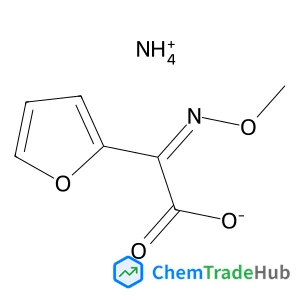
Ammonium (Z)-2-(furan-2-yl)-2-(methoxyimino)acetate
CAS Number:
97148-39-5
Molecular Formula:
C7H10N2O4
Recommended Suppliers







Disclaimer
This page provides academic journal information for reference and research purposes only. We are not affiliated with any journal publishers and do not handle publication submissions. For publication-related inquiries, please contact the respective journal publishers directly.
If you notice any inaccuracies in the information displayed, please contact us at support@chemtradehub.com. We will promptly review and address your concerns.