













Electronic and magnetic properties of charged point defects in monolayer CrI3
Literature Information
Publication Date
2023-02-24
DOI
10.1039/D2CP05657G
Impact Factor
3.676
Authors
View Original
Abstract
The two-dimensional magnetic material CrI3 has gained considerable attention owing to its promising applications in photoelectric and spin-related devices. Recently, various structural defects in CrI3 have been identified; however, the charge states of these defects have been mainly ignored. Here, we report on an investigation of the charged defects in monolayer CrI3, focused on the electronic and magnetic properties of the five most stable point defects using first-principles calculations. For positively charged I vacancies and negatively charged Cr vacancies, a blue- and red-shift of defect states near the Fermi level can be observed because of the atom relaxation. Our results also indicate that, among the five defects, the Cr interstitial defect has the smallest ionization energy of 0.34 eV, which makes its ionization easiest. Furthermore, a 0.2 μB enhancement of the magnetic moment on the nearest Cr atom can be found for the I vacancy and Cr interstitial defect. The investigation contributes to the atomic-scale comparison and understanding of the charged defects of monolayer CrI3.
Related Literature
The promoting effect of tetravalent cerium on the oxygen evolution activity of copper oxide catalysts
Zhu Chen, Coleman X. Kronawitter, Xiaofang Yang, Yao-wen Yeh, Nan Yao, Bruce E. Koel
2017-10-18
Paper
DOI: 10.1039/C7CP05248K
Controlling the H to T′ structural phase transition via chalcogen substitution in MoTe2 monolayers
Joshua Young, Thomas L. Reinecke
2017-11-16
Paper
DOI: 10.1039/C7CP05634F
On the combustion mechanisms of ZrH2 in double-base propellant
Yanjing Yang, Fengqi Zhao, Zhifeng Yuan, Ying Wang, Ting An, Xueli Chen, Chunlei Xuan, Jiankan Zhang
2017-11-20
Paper
DOI: 10.1039/C7CP02593A
Theoretical identification of seven C80 fullerene isomers by XPS and NEXAFS spectroscopy
Xiu-Neng Song, Jing Hu, Sheng-Yu Wang, Yong Ma, Yong Zhou, Chuan-Kui Wang
2017-11-24
Paper
DOI: 10.1039/C7CP06543D
Spin-polarized transport properties in some transition metal dithiolene complexes
Vu Thi Thu Huong, Truong Ba Tai, Jyh-Chiang Jiang
2017-11-17
Paper
DOI: 10.1039/C7CP05962K
Decreased domain size of p-DTS(FBTTh2)2/P(NDI2OD-T2) blend films due to their different solution aggregation behavior at different temperatures
Ke Zhou, Qiaoqiao Zhao, Rui Zhang, Xinxiu Cao, Xinhong Yu, Jiangang Liu, Yanchun Han
2017-11-20
Paper
DOI: 10.1039/C7CP07084E
Carbon vacancies in Ti2CT2 MXenes: defects or a new opportunity?
Xiaohui Wang
2017-11-10
Paper
DOI: 10.1039/C7CP06593K
The benchmark of 31P NMR parameters in phosphate: a case study on structurally constrained and flexible phosphate
Jiří Fukal, Ondřej Páv, Miloš Buděšínský, Jakub Šebera
2017-11-13
Paper
DOI: 10.1039/C7CP06969C
Identifying the structure of 4-chlorophenyl isocyanide adsorbed on Au(111) and Pt(111) surfaces by first-principles simulations of Raman spectra
Wei Hu, Sai Duan, Yujin Zhang, Hao Ren, Jun Jiang
2017-11-16
Paper
DOI: 10.1039/C7CP06329F
You might also like
Compound Q&A
What are the main uses of 1H-Indazole-6-carbonitrile (CAS: 141290-59-7)?
1H-Indazole-6-carbonitrile finds applications in pharmaceuticals, where it serve...
141290-59-71H-Indazole-6-carbon...
Compound Q&A
How should waste containing Dioctyl (2E)-2-butenedioate (CAS: 2997-85-5) be handled?
Waste containing Dioctyl (2E)-2-butenedioate (CAS: 2997-85-5) should be collecte...
2997-85-5Dioctyl (2E)-2-buten...
Compound Q&A
What industries use Sodium [(1,2-benzoxazol-3-ylmethyl)sulfonyl]azanide (CAS: 68291-98-5)?
Sodium [(1,2-benzoxazol-3-ylmethyl)sulfonyl]azanide is primarily used in pharmac...
68291-98-5Sodium [(1,2-benzoxa...
Compound Q&A
Are there alternatives to Dimethyl 4-(4,4,5,5-tetramethyl-1,3,2-dioxaborolan-2-yl)-2,6-pyridinedicarboxylate (CAS: 741709-66-0) in synthesis?
Dimethyl 4-(4,4,5,5-tetramethyl-1,3,2-dioxaborolan-2-yl)-2,6-pyridinedicarboxyla...
741709-66-0Dimethyl 4-(4,4,5,5-...
Compound Q&A
How should waste containing 2-Fluoro-6-hydrazinopyridine (CAS: 80714-39-2) be handled?
Waste containing 2-Fluoro-6-hydrazinopyridine (CAS: 80714-39-2) should be manage...
80714-39-22-Fluoro-6-hydrazino...
Compound Q&A
What is 6-Formyl-2-pyridinecarboxylic acid (CAS: 499214-11-8)?
6-Formyl-2-pyridinecarboxylic acid is an organic compound with the molecular for...
499214-11-86-Formyl-2-pyridinec...
Compound Q&A
What is the market or research trend for 3-(3,4-dimethoxyphenyl)-2,5-dimethyl-N-(2-morpholin-4-ylethyl)pyrazolo[1,5-a]pyrimidin-7-amine (CAS: 900874-91-1)?
Research trends for this compound indicate a focus on its potential applications...
900874-91-13-(3,4-dimethoxyphen...
Compound Q&A
How is 9H-Tribenzo[b,d,f]azepine (CAS: 29875-73-8) typically synthesized?
9H-Tribenzo[b,d,f]azepine is typically synthesized via a multi-step process invo...
29875-73-89H-Tribenzo[b,d,f]az...
Compound Q&A
How is 1-Cyclopropyl-7-ethoxy-6-fluoro-8-methoxy-4-oxo-1,4-dihydro-3-quinolinecarboxylic acid (CAS: 1797982-51-4) typically synthesized?
1-Cyclopropyl-7-ethoxy-6-fluoro-8-methoxy-4-oxo-1,4-dihydro-3-quinolinecarboxyli...
1797982-51-41-Cyclopropyl-7-etho...
Compound Q&A
How should waste containing Methyl 3-oxo-1,2,3,4-tetrahydro-6-quinoxalinecarboxylate (CAS: 671820-52-3) be handled?
Waste containing Methyl 3-oxo-1,2,3,4-tetrahydro-6-quinoxalinecarboxylate (CAS: ...
671820-52-3Methyl 3-oxo-1,2,3,4...
Source Journal
Physical Chemistry Chemical Physics

CiteScore:
5.5
Self-citation Rate:
10.3%
Articles per Year:
3036
Physical Chemistry Chemical Physics (PCCP) is an international journal co-owned by 19 physical chemistry and physics societies from around the world. This journal publishes original, cutting-edge research in physical chemistry, chemical physics and biophysical chemistry. To be suitable for publication in PCCP, articles must include significant innovation and/or insight into physical chemistry; this is the most important criterion that reviewers and Editors will judge against when evaluating submissions. The journal has a broad scope and welcomes contributions spanning experiment, theory, computation and data science. Topical coverage includes spectroscopy, dynamics, kinetics, statistical mechanics, thermodynamics, electrochemistry, catalysis, surface science, quantum mechanics, quantum computing and machine learning. Interdisciplinary research areas such as polymers and soft matter, materials, nanoscience, energy, surfaces/interfaces, and biophysical chemistry are welcomed if they demonstrate significant innovation and/or insight into physical chemistry. Joined experimental/theoretical studies are particularly appreciated when complementary and based on up-to-date approaches.
Recommended Compounds
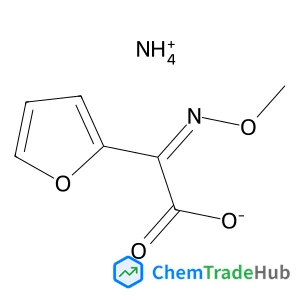
Ammonium (Z)-2-(furan-2-yl)-2-(methoxyimino)acetate
CAS Number:
97148-39-5
Molecular Formula:
C7H10N2O4

![N-[(9H-Fluoren-9-ylmethoxy)carbonyl]serine structure](https://static.chemtradehub.com/structs/737/73724-45-5-b0dc.webp "N-[(9H-Fluoren-9-ylmethoxy)carbonyl]serine structure")
Recommended Suppliers





Disclaimer
This page provides academic journal information for reference and research purposes only. We are not affiliated with any journal publishers and do not handle publication submissions. For publication-related inquiries, please contact the respective journal publishers directly.
If you notice any inaccuracies in the information displayed, please contact us at support@chemtradehub.com. We will promptly review and address your concerns.