












Tunable broadband absorber based on a layered resonant structure with a Dirac semimetal
Literature Information
Publication Date
2023-02-21
DOI
10.1039/D2CP05562G
Impact Factor
3.676
Authors
Wenxin Li, Jing Ma, Huafeng Zhang, Shubo Cheng, Wenxing Yang, Hua Yang, Jianguo Zhang, Xianwen Wu, Pinghui Wu
View Original
Abstract
With the development of science and technology, intermediate infrared technology has gained more and more attention in recent years. In the research described in this paper, a tunable broadband absorber based on a Dirac semimetal with a layered resonant structure was designed, which could achieve high absorption (more than 0.9) of about 8.7 THz in the frequency range of 18–28 THz. It was confirmed that the high absorption of the absorber comes from the strong resonance absorption between the layers, and the resonance of the localised surface plasmon. The absorber has a gold substrate, which is composed of three layers of Dirac semimetal and three layers of optical crystal plates. In addition, the resonance frequency of the absorber can be changed by adjusting the Fermi energy of the Dirac semimetal. The absorber also shows excellent characteristics such as tunability, absorption stability at different polarisation waves and incident angles, and has a high application value for use in radar countermeasures, biotechnology and other fields.
Related Literature
Theoretical aspects of femtosecond double-pump single-molecule spectroscopy. II. Strong-field regime
Elisa Palacino-González, Maxim F. Gelin, Wolfgang Domcke
2017-11-20
Paper
DOI: 10.1039/C7CP04810F
Polysulfide intercalation in bilayer-structured graphitic C3N4: a first-principles study
Sinan Li, Shaobin Yang, Ding Shen, Wen Sun, Xueying Shan, Wei Dong, Yuehui Chen, Xu Zhang, Yongqiang Mao, Shuwei Tang
2017-11-16
Paper
DOI: 10.1039/C7CP05334G
The promoting effect of tetravalent cerium on the oxygen evolution activity of copper oxide catalysts
Zhu Chen, Coleman X. Kronawitter, Xiaofang Yang, Yao-wen Yeh, Nan Yao, Bruce E. Koel
2017-10-18
Paper
DOI: 10.1039/C7CP05248K
Carbon vacancies in Ti2CT2 MXenes: defects or a new opportunity?
Xiaohui Wang
2017-11-10
Paper
DOI: 10.1039/C7CP06593K
Vesicle to micelle transition in the ternary mixture of L121/SDS/D2O: NMR, EPR and SANS studies
G. K. S. Prameela, B. V. N. Phani Kumar, R. Ravikanth Reddy, A. Pan, J. Subramanian, Sugam Kumar, V. K. Aswal, Joachim Kohlbrecher, A. B. Mandal, S. P. Moulik
2017-11-10
Paper
DOI: 10.1039/C7CP06796H
Carbon adsorption on doped cementite surfaces for effective catalytic growth of diamond-like carbon: a first-principles study
Juan Cui, Lei Li, Hao Lu, D. Y. Li, M. F. Yan
2017-11-15
Paper
DOI: 10.1039/C7CP06598A
Signatures of a quantum diffusion limited hydrogen atom tunneling reaction
Morgan E. Balabanoff, Mahmut Ruzi, David T. Anderson
2017-11-30
Paper
DOI: 10.1039/C7CP05064J
Theoretical aspects of femtosecond double-pump single-molecule spectroscopy. I. Weak-field regime
Elisa Palacino-González, Maxim F. Gelin, Wolfgang Domcke
2017-11-20
Paper
DOI: 10.1039/C7CP04809B
Dynamics of poly(vinyl butyral) studied using dielectric spectroscopy and 1H NMR relaxometry
Silvia Pizzanelli, Daniele Prevosto, Massimiliano Labardi, Tommaso Guazzini, Simona Bronco, Claudia Forte, Lucia Calucci
2017-11-13
Paper
DOI: 10.1039/C7CP02595E
The benchmark of 31P NMR parameters in phosphate: a case study on structurally constrained and flexible phosphate
Jiří Fukal, Ondřej Páv, Miloš Buděšínský, Jakub Šebera
2017-11-13
Paper
DOI: 10.1039/C7CP06969C
You might also like
Compound Q&A
What are the main uses of 1H-Indazole-6-carbonitrile (CAS: 141290-59-7)?
1H-Indazole-6-carbonitrile finds applications in pharmaceuticals, where it serve...
141290-59-71H-Indazole-6-carbon...
Compound Q&A
How should waste containing Dioctyl (2E)-2-butenedioate (CAS: 2997-85-5) be handled?
Waste containing Dioctyl (2E)-2-butenedioate (CAS: 2997-85-5) should be collecte...
2997-85-5Dioctyl (2E)-2-buten...
Compound Q&A
What industries use Sodium [(1,2-benzoxazol-3-ylmethyl)sulfonyl]azanide (CAS: 68291-98-5)?
Sodium [(1,2-benzoxazol-3-ylmethyl)sulfonyl]azanide is primarily used in pharmac...
68291-98-5Sodium [(1,2-benzoxa...
Compound Q&A
Are there alternatives to Dimethyl 4-(4,4,5,5-tetramethyl-1,3,2-dioxaborolan-2-yl)-2,6-pyridinedicarboxylate (CAS: 741709-66-0) in synthesis?
Dimethyl 4-(4,4,5,5-tetramethyl-1,3,2-dioxaborolan-2-yl)-2,6-pyridinedicarboxyla...
741709-66-0Dimethyl 4-(4,4,5,5-...
Compound Q&A
How should waste containing 2-Fluoro-6-hydrazinopyridine (CAS: 80714-39-2) be handled?
Waste containing 2-Fluoro-6-hydrazinopyridine (CAS: 80714-39-2) should be manage...
80714-39-22-Fluoro-6-hydrazino...
Compound Q&A
What is 6-Formyl-2-pyridinecarboxylic acid (CAS: 499214-11-8)?
6-Formyl-2-pyridinecarboxylic acid is an organic compound with the molecular for...
499214-11-86-Formyl-2-pyridinec...
Compound Q&A
What is the market or research trend for 3-(3,4-dimethoxyphenyl)-2,5-dimethyl-N-(2-morpholin-4-ylethyl)pyrazolo[1,5-a]pyrimidin-7-amine (CAS: 900874-91-1)?
Research trends for this compound indicate a focus on its potential applications...
900874-91-13-(3,4-dimethoxyphen...
Compound Q&A
How is 9H-Tribenzo[b,d,f]azepine (CAS: 29875-73-8) typically synthesized?
9H-Tribenzo[b,d,f]azepine is typically synthesized via a multi-step process invo...
29875-73-89H-Tribenzo[b,d,f]az...
Compound Q&A
How is 1-Cyclopropyl-7-ethoxy-6-fluoro-8-methoxy-4-oxo-1,4-dihydro-3-quinolinecarboxylic acid (CAS: 1797982-51-4) typically synthesized?
1-Cyclopropyl-7-ethoxy-6-fluoro-8-methoxy-4-oxo-1,4-dihydro-3-quinolinecarboxyli...
1797982-51-41-Cyclopropyl-7-etho...
Compound Q&A
How should waste containing Methyl 3-oxo-1,2,3,4-tetrahydro-6-quinoxalinecarboxylate (CAS: 671820-52-3) be handled?
Waste containing Methyl 3-oxo-1,2,3,4-tetrahydro-6-quinoxalinecarboxylate (CAS: ...
671820-52-3Methyl 3-oxo-1,2,3,4...
Source Journal
Physical Chemistry Chemical Physics

CiteScore:
5.5
Self-citation Rate:
10.3%
Articles per Year:
3036
Physical Chemistry Chemical Physics (PCCP) is an international journal co-owned by 19 physical chemistry and physics societies from around the world. This journal publishes original, cutting-edge research in physical chemistry, chemical physics and biophysical chemistry. To be suitable for publication in PCCP, articles must include significant innovation and/or insight into physical chemistry; this is the most important criterion that reviewers and Editors will judge against when evaluating submissions. The journal has a broad scope and welcomes contributions spanning experiment, theory, computation and data science. Topical coverage includes spectroscopy, dynamics, kinetics, statistical mechanics, thermodynamics, electrochemistry, catalysis, surface science, quantum mechanics, quantum computing and machine learning. Interdisciplinary research areas such as polymers and soft matter, materials, nanoscience, energy, surfaces/interfaces, and biophysical chemistry are welcomed if they demonstrate significant innovation and/or insight into physical chemistry. Joined experimental/theoretical studies are particularly appreciated when complementary and based on up-to-date approaches.
Recommended Compounds
![Sodium 3-[(E)-(4-anilinophenyl)diazenyl]benzenesulfonate structure](https://static.chemtradehub.com/structs/587/587-98-4-035f.webp "Sodium 3-[(E)-(4-anilinophenyl)diazenyl]benzenesulfonate structure")
Sodium 3-[(E)-(4-anilinophenyl)diazenyl]benzenesulfonate
CAS Number:
587-98-4
Molecular Formula:
C18H14N3NaO3S
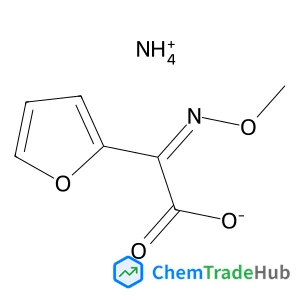
Ammonium (Z)-2-(furan-2-yl)-2-(methoxyimino)acetate
CAS Number:
97148-39-5
Molecular Formula:
C7H10N2O4
Recommended Suppliers





Disclaimer
This page provides academic journal information for reference and research purposes only. We are not affiliated with any journal publishers and do not handle publication submissions. For publication-related inquiries, please contact the respective journal publishers directly.
If you notice any inaccuracies in the information displayed, please contact us at support@chemtradehub.com. We will promptly review and address your concerns.