













Optical trapping and light scattering in atmospheric aerosol science
Literature Information
Publication Date
2023-02-21
DOI
10.1039/D2CP05301B
Impact Factor
3.676
Authors
Aidan Rafferty, Benjamin Vennes, Alison Bain
View Original
Abstract
Aerosol particles are ubiquitous in the atmosphere, and currently contribute a large uncertainty to climate models. Part of the endeavour to reduce this uncertainty takes the form of improving our understanding of aerosol at the microphysical level, thus enabling chemical and physical processes to be more accurately represented in larger scale models. In addition to modeling efforts, there is a need to develop new instruments and methodologies to interrogate the physicochemical properties of aerosol. This perspective presents the development, theory, and application of optical trapping, a powerful tool for single particle investigations of aerosol. After providing an overview of the role of aerosol in Earth's atmosphere and the microphysics of these particles, we present a brief history of optical trapping and a more detailed look at its application to aerosol particles. We also compare optical trapping to other single particle techniques. Understanding the interaction of light with single particles is essential for interpreting experimental measurements. In the final part of this perspective, we provide the relevant formalism for understanding both elastic and inelastic light scattering for single particles. The developments discussed here go beyond Mie theory and include both how particle and beam shape affect spectra. Throughout the entirety of this work, we highlight numerous references and examples, mostly from the last decade, of the application of optical trapping to systems that are relevant to the atmospheric aerosol.
Related Literature
Microscopic understanding of the conformational features of a protein–DNA complex
Sandip Mondal, Kaushik Chakraborty
2017-11-21
Paper
DOI: 10.1039/C7CP05161A
Spin-polarized transport properties in some transition metal dithiolene complexes
Vu Thi Thu Huong, Truong Ba Tai, Jyh-Chiang Jiang
2017-11-17
Paper
DOI: 10.1039/C7CP05962K
Adsorption and diffusion of hydrogen and oxygen in FCC-Co: a first-principles study
Wusong Liu, Jian Zhou
2017-11-20
Paper
DOI: 10.1039/C7CP07208B
Construction of magnetically separable NiAl LDH/Fe3O4–RGO nanocomposites with enhanced photocatalytic performance under visible light
Jie Ni, Jinjuan Xue, LinFang Xie, Jing Shen, Guangyu He, Haiqun Chen
2017-11-13
Paper
DOI: 10.1039/C7CP06682A
Theoretical identification of seven C80 fullerene isomers by XPS and NEXAFS spectroscopy
Xiu-Neng Song, Jing Hu, Sheng-Yu Wang, Yong Ma, Yong Zhou, Chuan-Kui Wang
2017-11-24
Paper
DOI: 10.1039/C7CP06543D
Carbon vacancies in Ti2CT2 MXenes: defects or a new opportunity?
Xiaohui Wang
2017-11-10
Paper
DOI: 10.1039/C7CP06593K
On the underlying mechanisms of the low observed nitrate selectivity in photocatalytic NOx abatement and the importance of the oxygen reduction reaction
Julia Patzsch, Andrea Folli, Donald E. Macphee, Jonathan Z. Bloh
2017-11-27
Paper
DOI: 10.1039/C7CP05960D
Computational screening of functional groups for capture of toxic industrial chemicals in porous materials
David Fairen-Jimenez, Randall Q. Snurr
2017-11-13
Paper
DOI: 10.1039/C7CP06521C
Theoretical interpretation of Warburg's impedance in unsupported electrolytic cells
2017-11-23
Paper
DOI: 10.1039/C7CP07101A
Conformational disorder and solvation properties of the key-residues of a protein in water–ethanol mixed solutions
Dayanidhi Mohanta, Santanu Santra, Madhurima Jana
2017-11-21
Paper
DOI: 10.1039/C7CP06022J
You might also like
Compound Q&A
What are the main uses of 1H-Indazole-6-carbonitrile (CAS: 141290-59-7)?
1H-Indazole-6-carbonitrile finds applications in pharmaceuticals, where it serve...
141290-59-71H-Indazole-6-carbon...
Compound Q&A
How should waste containing Dioctyl (2E)-2-butenedioate (CAS: 2997-85-5) be handled?
Waste containing Dioctyl (2E)-2-butenedioate (CAS: 2997-85-5) should be collecte...
2997-85-5Dioctyl (2E)-2-buten...
Compound Q&A
What industries use Sodium [(1,2-benzoxazol-3-ylmethyl)sulfonyl]azanide (CAS: 68291-98-5)?
Sodium [(1,2-benzoxazol-3-ylmethyl)sulfonyl]azanide is primarily used in pharmac...
68291-98-5Sodium [(1,2-benzoxa...
Compound Q&A
Are there alternatives to Dimethyl 4-(4,4,5,5-tetramethyl-1,3,2-dioxaborolan-2-yl)-2,6-pyridinedicarboxylate (CAS: 741709-66-0) in synthesis?
Dimethyl 4-(4,4,5,5-tetramethyl-1,3,2-dioxaborolan-2-yl)-2,6-pyridinedicarboxyla...
741709-66-0Dimethyl 4-(4,4,5,5-...
Compound Q&A
How should waste containing 2-Fluoro-6-hydrazinopyridine (CAS: 80714-39-2) be handled?
Waste containing 2-Fluoro-6-hydrazinopyridine (CAS: 80714-39-2) should be manage...
80714-39-22-Fluoro-6-hydrazino...
Compound Q&A
What is 6-Formyl-2-pyridinecarboxylic acid (CAS: 499214-11-8)?
6-Formyl-2-pyridinecarboxylic acid is an organic compound with the molecular for...
499214-11-86-Formyl-2-pyridinec...
Compound Q&A
What is the market or research trend for 3-(3,4-dimethoxyphenyl)-2,5-dimethyl-N-(2-morpholin-4-ylethyl)pyrazolo[1,5-a]pyrimidin-7-amine (CAS: 900874-91-1)?
Research trends for this compound indicate a focus on its potential applications...
900874-91-13-(3,4-dimethoxyphen...
Compound Q&A
How is 9H-Tribenzo[b,d,f]azepine (CAS: 29875-73-8) typically synthesized?
9H-Tribenzo[b,d,f]azepine is typically synthesized via a multi-step process invo...
29875-73-89H-Tribenzo[b,d,f]az...
Compound Q&A
How is 1-Cyclopropyl-7-ethoxy-6-fluoro-8-methoxy-4-oxo-1,4-dihydro-3-quinolinecarboxylic acid (CAS: 1797982-51-4) typically synthesized?
1-Cyclopropyl-7-ethoxy-6-fluoro-8-methoxy-4-oxo-1,4-dihydro-3-quinolinecarboxyli...
1797982-51-41-Cyclopropyl-7-etho...
Compound Q&A
How should waste containing Methyl 3-oxo-1,2,3,4-tetrahydro-6-quinoxalinecarboxylate (CAS: 671820-52-3) be handled?
Waste containing Methyl 3-oxo-1,2,3,4-tetrahydro-6-quinoxalinecarboxylate (CAS: ...
671820-52-3Methyl 3-oxo-1,2,3,4...
Source Journal
Physical Chemistry Chemical Physics

CiteScore:
5.5
Self-citation Rate:
10.3%
Articles per Year:
3036
Physical Chemistry Chemical Physics (PCCP) is an international journal co-owned by 19 physical chemistry and physics societies from around the world. This journal publishes original, cutting-edge research in physical chemistry, chemical physics and biophysical chemistry. To be suitable for publication in PCCP, articles must include significant innovation and/or insight into physical chemistry; this is the most important criterion that reviewers and Editors will judge against when evaluating submissions. The journal has a broad scope and welcomes contributions spanning experiment, theory, computation and data science. Topical coverage includes spectroscopy, dynamics, kinetics, statistical mechanics, thermodynamics, electrochemistry, catalysis, surface science, quantum mechanics, quantum computing and machine learning. Interdisciplinary research areas such as polymers and soft matter, materials, nanoscience, energy, surfaces/interfaces, and biophysical chemistry are welcomed if they demonstrate significant innovation and/or insight into physical chemistry. Joined experimental/theoretical studies are particularly appreciated when complementary and based on up-to-date approaches.
Recommended Compounds

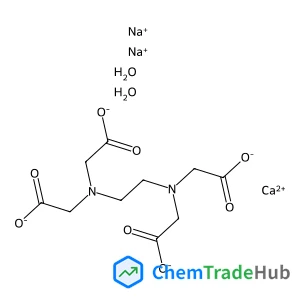
EthylenediaminetetraaceticacidcalciumDisodiumsalthydrate
CAS Number:
23411-34-9
Molecular Formula:
C10H16CaN2Na2O10

Recommended Suppliers





Disclaimer
This page provides academic journal information for reference and research purposes only. We are not affiliated with any journal publishers and do not handle publication submissions. For publication-related inquiries, please contact the respective journal publishers directly.
If you notice any inaccuracies in the information displayed, please contact us at support@chemtradehub.com. We will promptly review and address your concerns.