


Jahn–Teller effects in initial and final states: high-resolution X-ray absorption, photoelectron and Auger spectroscopy of allene
Literature Information
Publication Date
2023-02-17
DOI
10.1039/D2CP05299G
Impact Factor
3.676
Authors
Eva Muchova, Daniel Hollas, David M. P. Holland, Camila Bacellar, Ludmila Leroy, Thomas R. Barillot, Luca Longetti, Marcello Coreno, Monica de Simone, Cesare Grazioli, Majed Chergui, Rebecca A. Ingle
View Original
Abstract
Carbon K-edge resonant Auger spectra of gas-phase allene following excitation of the pre-edge 1s → π* transitions are presented and analysed with the support of EOM-CCSD/cc-pVTZ calculations. X-Ray absorption (XAS), X-ray photoelectron (XPS), valence band and non-resonant Auger spectra are also reanalysed with a series of computational approaches. The results presented demonstrate the importance of including nuclear ensemble effects for simulating X-ray observables and as an effective strategy for capturing Jahn–Teller effects in spectra.
Recommended Journals

Kinetics and Catalysis

Proceedings of the National Academy of Sciences of the United States of America

European Journal of Wood and Wood Products

Journal of Heterocyclic Chemistry

Science

Organic Preparations and Procedures International

Journal of Medicinal Chemistry

Russian Chemical Reviews

Science Progress

Nature
Related Literature
Control of chemical chaos through medium viscosity in a batch ferroin-catalysed Belousov–Zhabotinsky reaction
Marcello A. Budroni, Ilaria Calabrese, Ylenia Miele, Mauro Rustici, Nadia Marchettini, Federico Rossi
2017-11-16
Paper
DOI: 10.1039/C7CP06601E
Estimation of electric field effects on the adsorption of molecular superoxide species on Au based on density functional theory
Saurin H. Rawal, William C. McKee, Ye Xu
2017-11-21
Paper
DOI: 10.1039/C7CP06242G
Theoretical aspects of femtosecond double-pump single-molecule spectroscopy. I. Weak-field regime
Elisa Palacino-González, Maxim F. Gelin, Wolfgang Domcke
2017-11-20
Paper
DOI: 10.1039/C7CP04809B
Characterising the evaporation kinetics of water and semi-volatile organic compounds from viscous multicomponent organic aerosol particles
Stephen Ingram, Chen Cai, Young-Chul Song, David O. Topping, Simon O’Meara, Jonathan P. Reid
2017-11-13
Paper
DOI: 10.1039/C7CP05172G
Analytical solution of the PELDOR inverse problem using the integral Mellin transform
Alexander G. Maryasov
2017-11-16
Paper
DOI: 10.1039/C7CP04059H
On the underlying mechanisms of the low observed nitrate selectivity in photocatalytic NOx abatement and the importance of the oxygen reduction reaction
Julia Patzsch, Andrea Folli, Donald E. Macphee, Jonathan Z. Bloh
2017-11-27
Paper
DOI: 10.1039/C7CP05960D
Ultrafast dynamics of ionic liquids in colloidal dispersion
Zhe Ren, Jordan Kelly, C. Prasad Gunathilaka, Thomas Brinzer, Samrat Dutta, Clinton A. Johnson, Sunayana Mitra, Sean Garrett-Roe
2017-11-03
Paper
DOI: 10.1039/C7CP04441K
Photo-induced radical polarization and liquid-state dynamic nuclear polarization using fullerene nitroxide derivatives
Guoquan Liu, Shu-Hao Liou, Nikolay Enkin, Igor Tkach
2017-11-10
Paper
DOI: 10.1039/C7CP06073D
Microscopic understanding of the conformational features of a protein–DNA complex
Sandip Mondal, Kaushik Chakraborty
2017-11-21
Paper
DOI: 10.1039/C7CP05161A
Dynamics of poly(vinyl butyral) studied using dielectric spectroscopy and 1H NMR relaxometry
Silvia Pizzanelli, Daniele Prevosto, Massimiliano Labardi, Tommaso Guazzini, Simona Bronco, Claudia Forte, Lucia Calucci
2017-11-13
Paper
DOI: 10.1039/C7CP02595E
You might also like
Compound Q&A
What are the main uses of 1H-Indazole-6-carbonitrile (CAS: 141290-59-7)?
1H-Indazole-6-carbonitrile finds applications in pharmaceuticals, where it serve...
141290-59-71H-Indazole-6-carbon...
Compound Q&A
How should waste containing Dioctyl (2E)-2-butenedioate (CAS: 2997-85-5) be handled?
Waste containing Dioctyl (2E)-2-butenedioate (CAS: 2997-85-5) should be collecte...
2997-85-5Dioctyl (2E)-2-buten...
Compound Q&A
What industries use Sodium [(1,2-benzoxazol-3-ylmethyl)sulfonyl]azanide (CAS: 68291-98-5)?
Sodium [(1,2-benzoxazol-3-ylmethyl)sulfonyl]azanide is primarily used in pharmac...
68291-98-5Sodium [(1,2-benzoxa...
Compound Q&A
Are there alternatives to Dimethyl 4-(4,4,5,5-tetramethyl-1,3,2-dioxaborolan-2-yl)-2,6-pyridinedicarboxylate (CAS: 741709-66-0) in synthesis?
Dimethyl 4-(4,4,5,5-tetramethyl-1,3,2-dioxaborolan-2-yl)-2,6-pyridinedicarboxyla...
741709-66-0Dimethyl 4-(4,4,5,5-...
Compound Q&A
How should waste containing 2-Fluoro-6-hydrazinopyridine (CAS: 80714-39-2) be handled?
Waste containing 2-Fluoro-6-hydrazinopyridine (CAS: 80714-39-2) should be manage...
80714-39-22-Fluoro-6-hydrazino...
Compound Q&A
What is 6-Formyl-2-pyridinecarboxylic acid (CAS: 499214-11-8)?
6-Formyl-2-pyridinecarboxylic acid is an organic compound with the molecular for...
499214-11-86-Formyl-2-pyridinec...
Compound Q&A
What is the market or research trend for 3-(3,4-dimethoxyphenyl)-2,5-dimethyl-N-(2-morpholin-4-ylethyl)pyrazolo[1,5-a]pyrimidin-7-amine (CAS: 900874-91-1)?
Research trends for this compound indicate a focus on its potential applications...
900874-91-13-(3,4-dimethoxyphen...
Compound Q&A
How is 9H-Tribenzo[b,d,f]azepine (CAS: 29875-73-8) typically synthesized?
9H-Tribenzo[b,d,f]azepine is typically synthesized via a multi-step process invo...
29875-73-89H-Tribenzo[b,d,f]az...
Compound Q&A
How is 1-Cyclopropyl-7-ethoxy-6-fluoro-8-methoxy-4-oxo-1,4-dihydro-3-quinolinecarboxylic acid (CAS: 1797982-51-4) typically synthesized?
1-Cyclopropyl-7-ethoxy-6-fluoro-8-methoxy-4-oxo-1,4-dihydro-3-quinolinecarboxyli...
1797982-51-41-Cyclopropyl-7-etho...
Compound Q&A
How should waste containing Methyl 3-oxo-1,2,3,4-tetrahydro-6-quinoxalinecarboxylate (CAS: 671820-52-3) be handled?
Waste containing Methyl 3-oxo-1,2,3,4-tetrahydro-6-quinoxalinecarboxylate (CAS: ...
671820-52-3Methyl 3-oxo-1,2,3,4...
Source Journal
Physical Chemistry Chemical Physics

CiteScore:
5.5
Self-citation Rate:
10.3%
Articles per Year:
3036
Physical Chemistry Chemical Physics (PCCP) is an international journal co-owned by 19 physical chemistry and physics societies from around the world. This journal publishes original, cutting-edge research in physical chemistry, chemical physics and biophysical chemistry. To be suitable for publication in PCCP, articles must include significant innovation and/or insight into physical chemistry; this is the most important criterion that reviewers and Editors will judge against when evaluating submissions. The journal has a broad scope and welcomes contributions spanning experiment, theory, computation and data science. Topical coverage includes spectroscopy, dynamics, kinetics, statistical mechanics, thermodynamics, electrochemistry, catalysis, surface science, quantum mechanics, quantum computing and machine learning. Interdisciplinary research areas such as polymers and soft matter, materials, nanoscience, energy, surfaces/interfaces, and biophysical chemistry are welcomed if they demonstrate significant innovation and/or insight into physical chemistry. Joined experimental/theoretical studies are particularly appreciated when complementary and based on up-to-date approaches.
Recommended Compounds
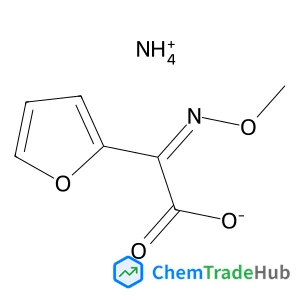
Ammonium (Z)-2-(furan-2-yl)-2-(methoxyimino)acetate
CAS Number:
97148-39-5
Molecular Formula:
C7H10N2O4
Recommended Suppliers







Disclaimer
This page provides academic journal information for reference and research purposes only. We are not affiliated with any journal publishers and do not handle publication submissions. For publication-related inquiries, please contact the respective journal publishers directly.
If you notice any inaccuracies in the information displayed, please contact us at support@chemtradehub.com. We will promptly review and address your concerns.