


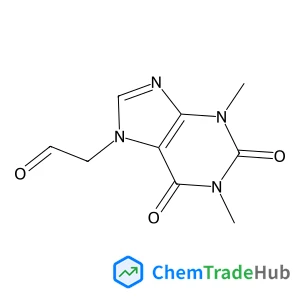
(1,3-Dimethyl-2,6-dioxo-1,2,3,6-tetrahydro-7H-purin-7-yl)acetaldehyde
CAS Number:
5614-53-9
Molecular Formula:
C9H10N4O3
Anum Shahid Malik, Lisa A. Fredin
Computational modeling of metal oxide surfaces provides an important tool to help untangle complex spectroscopy and measured catalytic reactivity. There are many material properties that make rational catalytic design challenging, and computational methods provide a way to evaluate possible structural factors, like surface structure, individually. The mechanism of water oxidation or oxygen evolution is well studied on some anatase surfaces and the rutile TiO2 (110) surface but has not yet been mapped on other low-index Miller rutile surfaces that are present in most experimental nano-titania catalysts. Here first principles calculations provide new insights into water oxidation mechanisms and reactivity of the most common low-index Miller facets of rutile TiO2. The reactivity of three surfaces, (101), (010), and (001), are explored for the first time and the product selectivity of multistep electron transfer on each surface is compared to the well-studied (110) surface. Density functional theory shows that a peroxo, O(p), intermediate is more favorable for water oxidation on all facets. The ˙OH radical formation is favored on the (001) facet resulting in a high overpotential for oxygen evolution reaction (OER). The (101) and (110) facets have low overpotentials, ∼0.3 V, and favor two-electron proton-coupled electron transfer to produce H2O2. The only facet that prefers direct OER is (001), leading to O2 evolution in a four-electron process with an overpotential of 0.53 V. A volcano plot predicts the selectivity and activity of low-index Miller facets of rutile TiO2, revealing the high activity of the peroxo OER mechanism on the (010) facet.

Current Pharmaceutical Biotechnology

Lab on a Chip

Journal of Enzyme inhibition and Medicinal Chemistry

Photochemical & Photobiological Sciences

Mini-Reviews in Medicinal Chemistry

Green Chemistry

Advanced Engineering Materials

Nature Reviews Drug Discovery

Physical Chemistry Chemical Physics

Contact Lens & Anterior Eye
Yogesh Kumar Sonia, Mahesh Kumar Paliwal, Sumanta Kumar Meher
DOI: 10.1039/D0SE01698E
Qiwei Tan, Kun Han, Wang Zhao, Ping Li, Zhiwei Liu, Shengwei Li, Xuanhui Qu
DOI: 10.1039/D0SE01457E
Markus Millinger, Kathleen Meisel
DOI: 10.1039/D0SE01067G
Na Yu, Guang Jiang, Tong Liu, Xi Chen, Mengyu Miao, Yanxiang Zhang, Yao Wang
DOI: 10.1039/D0SE01280G
Fengming Chu, Guozhen Xiao, Guoan Yang
DOI: 10.1039/D0SE01251C
Chaokun Yang, Yanglin Chen, Ye Qu, Jiaxu Zhang, Jianmin Sun
DOI: 10.1039/D0SE01293A
David W. Palm, Christopher P. Muzzillo, Micha Ben-Naim, Imran Khan, Nicolas Gaillard
DOI: 10.1039/D0SE00487A
Maša Hren, Mojca Božič, Darinka Fakin
DOI: 10.1039/D0SE01373K
Jianhua Han, Shaoce Zhang, Qinggong Song, Huiyu Yan, Jianhai Kang, Yanrui Guo
DOI: 10.1039/D0SE01515F
Ao Wang, Nathan L. Chang, Kaiwen Sun, Chaowei Xue, Renate J. Egan, Jianjun Li, Chang Yan, Jialiang Huang, Hui Rong, Charles Ramsden, Xiaojing Hao
DOI: 10.1039/D0SE01734E
When handling 2-Methyl-2-propanyl 5-amino-2-thiophenecarboxylate (CAS: 1498311-5...
5-Bromo-1,2-dichloro-3-fluorobenzene (CAS: 1000572-93-9) is a crystalline solid ...
(2R)-2-Amino-2-(4-bromophenyl)ethanol (CAS: 354153-64-3) should be stored in a c...
Methyl 4-(aminomethyl)tetrahydro-2H-pyran-4-carboxylate hydrochloride (CAS: 3627...
1,4-Dimethyl-1H-pyrazole-5-sulfonyl chloride is primarily used as an intermediat...
Dinaphtho[1,2-b:2',1'-d]furan is generally safe when handled with appropriate pe...
The market for 7-Methyl-7,9-dihydro-1H-purine-2,6,8(3H)-trione (CAS: 612-37-3) i...
2-(4-Chlorophenyl)malonaldehyde (CAS: 205676-17-1) is a colorless or light yello...
2-Methylchrysene (CAS: 3351-32-4) is typically synthesized via the reaction of c...
N-(6-aminopyrimidin-4-yl)acetamide (CAS: 89533-23-3) is generally considered saf...
Physical Chemistry Chemical Physics (PCCP) is an international journal co-owned by 19 physical chemistry and physics societies from around the world. This journal publishes original, cutting-edge research in physical chemistry, chemical physics and biophysical chemistry. To be suitable for publication in PCCP, articles must include significant innovation and/or insight into physical chemistry; this is the most important criterion that reviewers and Editors will judge against when evaluating submissions. The journal has a broad scope and welcomes contributions spanning experiment, theory, computation and data science. Topical coverage includes spectroscopy, dynamics, kinetics, statistical mechanics, thermodynamics, electrochemistry, catalysis, surface science, quantum mechanics, quantum computing and machine learning. Interdisciplinary research areas such as polymers and soft matter, materials, nanoscience, energy, surfaces/interfaces, and biophysical chemistry are welcomed if they demonstrate significant innovation and/or insight into physical chemistry. Joined experimental/theoretical studies are particularly appreciated when complementary and based on up-to-date approaches.
![2-Bromo-7-chloro-4H-pyrrolo[2,3-b]pyrazine structure](https://static.chemtradehub.com/structs/115/1150617-58-5-0b0a.webp "2-Bromo-7-chloro-4H-pyrrolo[2,3-b]pyrazine structure")
methyl]-N,2-dimethyl-2-propanesulfinamide structure](https://static.chemtradehub.com/structs/256/2565792-50-7-8a26.webp "N-[(R)-[3-(Benzyloxy)-2-(dicyclohexylphosphino)phenyl](phenyl)methyl]-N,2-dimethyl-2-propanesulfinamide structure")
![1-{[5-(4,4,5,5-Tetramethyl-1,3,2-dioxaborolan-2-yl)-2-thienyl]methyl}piperidine structure](https://static.chemtradehub.com/structs/121/1218790-44-3-baef.webp "1-{[5-(4,4,5,5-Tetramethyl-1,3,2-dioxaborolan-2-yl)-2-thienyl]methyl}piperidine structure")



