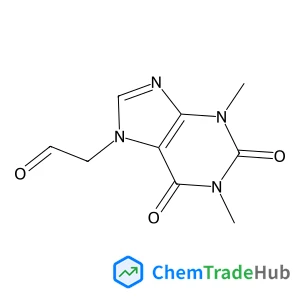
(1,3-Dimethyl-2,6-dioxo-1,2,3,6-tetrahydro-7H-purin-7-yl)acetaldehyde
CAS Number:
5614-53-9
Molecular Formula:
C9H10N4O3
Lei Wang, Dan Wang, Chen-Yu Xu, Lin Cui, Xian-Bin Li, Hong-Bo Sun
Electronic states are significantly correlated with chemical compositions, and the information related to these factors is especially crucial for the manipulation of the properties of matter. However, this key information is usually verified by after-validation methods, which could not be obtained during material processing, for example, in the field of femtosecond laser direct writing inside materials. Here, critical evolution stages of electronic states for monolayer tungsten diselenide (WSe2) around the modification threshold (at a Mott density of ∼1013 cm−2) are observed by broadband femtosecond transient absorption spectroscopy, which is associated with the intense femtosecond-laser-assisted oxygen-doping mechanism. First-principles calculations and control experiments on graphene-covered monolayer WSe2 further confirm this modification mechanism. Our findings reveal a photochemical reaction for monolayer WSe2 under the Mott density condition and provide an electronic state criterion to in situ monitor the degrees of modification in monolayer transition metal dichalcogenides during the femtosecond laser modification.

Acta Metallurgica Sinica-English Letters

Main Group Chemistry

Polycyclic Aromatic Compounds

Heteroatom Chemistry

Journal of Asian Natural Products Research

Biocatalysis and Biotransformation

Journal of Chemical Sciences

Bioorganic & Medicinal Chemistry

Medicinal Chemistry Research

Bioorganic & Medicinal Chemistry Letters
Katsuhiko Satoh
DOI: 10.1039/C9CP03296G
Aniruddh Shrivastava, Sizhe Liu
DOI: 10.1039/C9CP04115J
Fei-Fei Yu, Sha-Sha Ke, Shan-Shan Guan, Hong-Xiang Deng, Yong Guo
DOI: 10.1039/C9CP03580J
Ke Li, Shanlong Li, Lifen Liu, Wei Huang, Yuling Wang, Chunyang Yu, Yongfeng Zhou
DOI: 10.1039/C9CP03798E
E. Tangarife, A. H. Romero, J. Mejía-López
DOI: 10.1039/C9CP01927H
Joel H. Bombile, Shreya Shetty, Michael J. Janik, Scott T. Milner
DOI: 10.1039/C9CP06039A
Chong-Yuan Zhou, Dong Wang, Xue-Qing Gong
DOI: 10.1039/C9CP03408K
Soniya Gahlawat, Jaspreet Singh, Ashok Kumar Yadav, Pravin P. Ingole
DOI: 10.1039/C9CP04132J
Yongnan Xiong, Xiaofan Li, Shifang Xiao, Huiqiu Deng, Bowen Huang, Wenjun Zhu, Wangyu Hu
DOI: 10.1039/C9CP02920F
When handling 2-Methyl-2-propanyl 5-amino-2-thiophenecarboxylate (CAS: 1498311-5...
5-Bromo-1,2-dichloro-3-fluorobenzene (CAS: 1000572-93-9) is a crystalline solid ...
(2R)-2-Amino-2-(4-bromophenyl)ethanol (CAS: 354153-64-3) should be stored in a c...
Methyl 4-(aminomethyl)tetrahydro-2H-pyran-4-carboxylate hydrochloride (CAS: 3627...
1,4-Dimethyl-1H-pyrazole-5-sulfonyl chloride is primarily used as an intermediat...
Dinaphtho[1,2-b:2',1'-d]furan is generally safe when handled with appropriate pe...
The market for 7-Methyl-7,9-dihydro-1H-purine-2,6,8(3H)-trione (CAS: 612-37-3) i...
2-(4-Chlorophenyl)malonaldehyde (CAS: 205676-17-1) is a colorless or light yello...
2-Methylchrysene (CAS: 3351-32-4) is typically synthesized via the reaction of c...
N-(6-aminopyrimidin-4-yl)acetamide (CAS: 89533-23-3) is generally considered saf...

Physical Chemistry Chemical Physics (PCCP) is an international journal co-owned by 19 physical chemistry and physics societies from around the world. This journal publishes original, cutting-edge research in physical chemistry, chemical physics and biophysical chemistry. To be suitable for publication in PCCP, articles must include significant innovation and/or insight into physical chemistry; this is the most important criterion that reviewers and Editors will judge against when evaluating submissions. The journal has a broad scope and welcomes contributions spanning experiment, theory, computation and data science. Topical coverage includes spectroscopy, dynamics, kinetics, statistical mechanics, thermodynamics, electrochemistry, catalysis, surface science, quantum mechanics, quantum computing and machine learning. Interdisciplinary research areas such as polymers and soft matter, materials, nanoscience, energy, surfaces/interfaces, and biophysical chemistry are welcomed if they demonstrate significant innovation and/or insight into physical chemistry. Joined experimental/theoretical studies are particularly appreciated when complementary and based on up-to-date approaches.
![3-(benzotriazol-1-yl)-N-[[2-[(3-bromophenyl)methoxy]phenyl]methylideneamino]propanamide structure](https://static.chemtradehub.com/structs/559/5595-78-8-0a32.webp "3-(benzotriazol-1-yl)-N-[[2-[(3-bromophenyl)methoxy]phenyl]methylideneamino]propanamide structure")