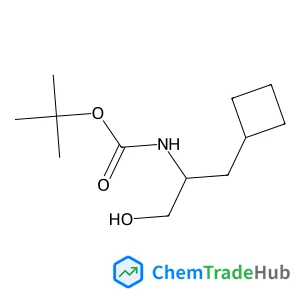
2-Methyl-2-propanyl (1-cyclobutyl-3-hydroxy-2-propanyl)carbamate
CAS Number:
816429-99-9
Molecular Formula:
C12H23NO3
Koshin Takemoto, Jungo Wakasugi, Masaaki Kubota
Lithium–Sulfur (Li–S) batteries have attracted much attention as next-generation batteries due to their high theoretical energy density. However, lithium polysulfide generated during the discharge loses intimate electrical contact with the carbon matrix due to its high solubility in the electrolyte, causing a high charge transfer resistance and slow redox kinetics for the discharge reactions, resulting in a low rate capability. A cathode additive having a strong chemical adsorbing site toward the polysulfide can effectively inhibit their dissolution. We now report a dual additive of lithium titanium oxide (LTO) and sulfurized polyacrylonitrile (SPAN). LTO provides a rapid charge transfer and a fast Li+ ion transfer in the cathode. On the other hand, SPAN helps to enhance the polysulfide adsorption capability. This dual additive system synergistically supplies the cathode with a strong polysulfide adsorption capability and fast redox kinetics. As a result, the dual additive exhibits high discharge capacities of 1430 mA h g−1 at 0.1C and 1200 mA h g−1 at 0.5C at the high-sulfur-loading cathode of 5.0 mg cm−2. Our findings demonstrated the manufacturing of the cathode with a strong polysulfide adsorption capability and a fast redox reaction which could then effectively improve the rate performance of the Li–S batteries.
Jialei Yu, Han Zhu, Jiace Hao, Huilin Li, Huining Li, Shuanglong Lu, Mingliang Du
DOI: 10.1039/D0SE01848A
Avani Chunduri, Nainesh Patel, Dattatray S. Dhawale, Ajayan Vinu, Hind Aljohani
DOI: 10.1039/D0SE01711F
Yangping Li, Dongfang Niu, Xingyan Fu, Zhiliang Zhang, Xinsheng Zhang
DOI: 10.1039/D0SE01283A
Keval K. Sonigara, Jayraj V. Vaghasiya, Jyoti Prasad, Hiren K. Machhi, Mohammad Shaad Ansari, Mohammad Qureshi
DOI: 10.1039/D0SE01527J
Isabelle Heath-Apostolopoulos, Diego Vargas-Ortiz, Liam Wilbraham, Kim E. Jelfs, Martijn A. Zwijnenburg
DOI: 10.1039/D0SE00985G
Na Yu, Guang Jiang, Tong Liu, Xi Chen, Mengyu Miao, Yanxiang Zhang, Yao Wang
DOI: 10.1039/D0SE01280G
Maša Hren, Mojca Božič, Darinka Fakin
DOI: 10.1039/D0SE01373K
Alessio Dessì, Dimitris A. Chalkias, Stefania Bilancia, Aggeliki Karavioti, Elias Stathatos, Lorenzo Zani, Gianna Reginato
DOI: 10.1039/D0SE01610A
Richard Terrett, Zheyin Yu, Zhenxiang Cheng, Gerhard F. Swiegers, Takuya Tsuzuki, Robert Stranger, Ronald J. Pace
DOI: 10.1039/D0SE01633K
Cheol-Hwan Shin, Yi Wei, Gisang Park, Joonhee Kang
DOI: 10.1039/D1SE90006D
When handling 2-Methyl-2-propanyl 5-amino-2-thiophenecarboxylate (CAS: 1498311-5...
5-Bromo-1,2-dichloro-3-fluorobenzene (CAS: 1000572-93-9) is a crystalline solid ...
(2R)-2-Amino-2-(4-bromophenyl)ethanol (CAS: 354153-64-3) should be stored in a c...
Methyl 4-(aminomethyl)tetrahydro-2H-pyran-4-carboxylate hydrochloride (CAS: 3627...
1,4-Dimethyl-1H-pyrazole-5-sulfonyl chloride is primarily used as an intermediat...
Dinaphtho[1,2-b:2',1'-d]furan is generally safe when handled with appropriate pe...
The market for 7-Methyl-7,9-dihydro-1H-purine-2,6,8(3H)-trione (CAS: 612-37-3) i...
2-(4-Chlorophenyl)malonaldehyde (CAS: 205676-17-1) is a colorless or light yello...
2-Methylchrysene (CAS: 3351-32-4) is typically synthesized via the reaction of c...
N-(6-aminopyrimidin-4-yl)acetamide (CAS: 89533-23-3) is generally considered saf...

Physical Chemistry Chemical Physics (PCCP) is an international journal co-owned by 19 physical chemistry and physics societies from around the world. This journal publishes original, cutting-edge research in physical chemistry, chemical physics and biophysical chemistry. To be suitable for publication in PCCP, articles must include significant innovation and/or insight into physical chemistry; this is the most important criterion that reviewers and Editors will judge against when evaluating submissions. The journal has a broad scope and welcomes contributions spanning experiment, theory, computation and data science. Topical coverage includes spectroscopy, dynamics, kinetics, statistical mechanics, thermodynamics, electrochemistry, catalysis, surface science, quantum mechanics, quantum computing and machine learning. Interdisciplinary research areas such as polymers and soft matter, materials, nanoscience, energy, surfaces/interfaces, and biophysical chemistry are welcomed if they demonstrate significant innovation and/or insight into physical chemistry. Joined experimental/theoretical studies are particularly appreciated when complementary and based on up-to-date approaches.