












Theoretical prediction of nanomolar and sequence-selective binding of synthetic supramolecular cucurbit[7]uril to N-terminal Leu-containing tripeptides
Literature Information
Publication Date
2023-02-18
DOI
10.1039/D2CP03818H
Impact Factor
3.676
Authors
Ying Zhao, Fei Li, Fenfen Ma, Junge Zhi, Guanglu Wu
View Original
Abstract
Molecular recognition towards peptides and proteins with high affinity by synthetic supramolecular hosts is important but challenging. In this work, we investigate the molecular recognition of the synthetic cucurbit[7]uril (CB[7]) to 17 designed N-terminal Leu-containing tripeptides in aqueous medium by molecular dynamics (MD) simulation and screen out tripeptides with high binding affinity. It is found that, compared to LGG, only the third residue is Arg (R), the binding affinity of CB[7] to LGR reaches nanomolar level with binding equilibrium constant (Ka) of 1.1 × 10⁹ M−1. The CB[7] recognition to the N-terminal Leu-containing tripeptides is highly sequence dependent; whether changing the sequence order (from LGR to LRG) or increasing the sequence length (from LGR to LGGR), Ka decreases by about three orders of magnitude. Interestingly, substituting N-terminal Leu for its isomer Ile, the binding of CB[7] to tripeptides weakens significantly with Ka decreasing by 3–8 orders of magnitude. Thus CB[7] can effectively distinguish N-terminal Leu-containing tripeptides from N-terminal Ile-containing tripeptides. Importantly, we predict that when R is as C-terminus, regardless of N-terminal residue being of aromatic type or Leu, the binding strength is always close to the nanomolar level. Therefore, R can be introduced to rationally design novel peptides with high binding affinity to CB[7] in practical applications.
Related Literature
Effects of the c-Si/a-SiO2 interfacial atomic structure on its band alignment: an ab initio study
Fan Zheng, Hieu H. Pham, Lin-Wang Wang
2017-11-13
Paper
DOI: 10.1039/C7CP05879A
Theoretical identification of seven C80 fullerene isomers by XPS and NEXAFS spectroscopy
Xiu-Neng Song, Jing Hu, Sheng-Yu Wang, Yong Ma, Yong Zhou, Chuan-Kui Wang
2017-11-24
Paper
DOI: 10.1039/C7CP06543D
Detection of the electronic structure of iron-(iii)-oxo oligomers forming in aqueous solutions
Katrin Kraffert, Marvin N. Pohl, Ralph Kraehnert, Franziska Emmerling, Bernd Winter
2017-11-13
Paper
DOI: 10.1039/C7CP06945F
Spin-polarized transport properties in some transition metal dithiolene complexes
Vu Thi Thu Huong, Truong Ba Tai, Jyh-Chiang Jiang
2017-11-17
Paper
DOI: 10.1039/C7CP05962K
Using ZnO–Cr2O3–ZnO heterostructures to characterize polarization penetration depth through non-polar films
2017-11-24
Paper
DOI: 10.1039/C7CP06059A
Stability and spectral properties of the dication Ne 2+2
H. Hogreve
2017-11-23
Paper
DOI: 10.1039/C7CP07194A
Analytical solution of the PELDOR inverse problem using the integral Mellin transform
Alexander G. Maryasov
2017-11-16
Paper
DOI: 10.1039/C7CP04059H
Termination of Ge surfaces with ultrathin GeS and GeS2 layers via solid-state sulfurization
Courtney Keiser, Shixuan Du, Hong-Jun Gao, Peter Sutter, Eli Sutter
2017-11-29
Paper
DOI: 10.1039/C7CP05990F
Thermally reversible nanoparticle gels with tuneable porosity showing structural colour
P. Cloetens, T. O’Neill, C. P. Grey, E. Eiser
2017-11-28
Paper
DOI: 10.1039/C7CP04835A
You might also like
Compound Q&A
What are the main uses of 1H-Indazole-6-carbonitrile (CAS: 141290-59-7)?
1H-Indazole-6-carbonitrile finds applications in pharmaceuticals, where it serve...
141290-59-71H-Indazole-6-carbon...
Compound Q&A
How should waste containing Dioctyl (2E)-2-butenedioate (CAS: 2997-85-5) be handled?
Waste containing Dioctyl (2E)-2-butenedioate (CAS: 2997-85-5) should be collecte...
2997-85-5Dioctyl (2E)-2-buten...
Compound Q&A
What industries use Sodium [(1,2-benzoxazol-3-ylmethyl)sulfonyl]azanide (CAS: 68291-98-5)?
Sodium [(1,2-benzoxazol-3-ylmethyl)sulfonyl]azanide is primarily used in pharmac...
68291-98-5Sodium [(1,2-benzoxa...
Compound Q&A
Are there alternatives to Dimethyl 4-(4,4,5,5-tetramethyl-1,3,2-dioxaborolan-2-yl)-2,6-pyridinedicarboxylate (CAS: 741709-66-0) in synthesis?
Dimethyl 4-(4,4,5,5-tetramethyl-1,3,2-dioxaborolan-2-yl)-2,6-pyridinedicarboxyla...
741709-66-0Dimethyl 4-(4,4,5,5-...
Compound Q&A
How should waste containing 2-Fluoro-6-hydrazinopyridine (CAS: 80714-39-2) be handled?
Waste containing 2-Fluoro-6-hydrazinopyridine (CAS: 80714-39-2) should be manage...
80714-39-22-Fluoro-6-hydrazino...
Compound Q&A
What is 6-Formyl-2-pyridinecarboxylic acid (CAS: 499214-11-8)?
6-Formyl-2-pyridinecarboxylic acid is an organic compound with the molecular for...
499214-11-86-Formyl-2-pyridinec...
Compound Q&A
What is the market or research trend for 3-(3,4-dimethoxyphenyl)-2,5-dimethyl-N-(2-morpholin-4-ylethyl)pyrazolo[1,5-a]pyrimidin-7-amine (CAS: 900874-91-1)?
Research trends for this compound indicate a focus on its potential applications...
900874-91-13-(3,4-dimethoxyphen...
Compound Q&A
How is 9H-Tribenzo[b,d,f]azepine (CAS: 29875-73-8) typically synthesized?
9H-Tribenzo[b,d,f]azepine is typically synthesized via a multi-step process invo...
29875-73-89H-Tribenzo[b,d,f]az...
Compound Q&A
How is 1-Cyclopropyl-7-ethoxy-6-fluoro-8-methoxy-4-oxo-1,4-dihydro-3-quinolinecarboxylic acid (CAS: 1797982-51-4) typically synthesized?
1-Cyclopropyl-7-ethoxy-6-fluoro-8-methoxy-4-oxo-1,4-dihydro-3-quinolinecarboxyli...
1797982-51-41-Cyclopropyl-7-etho...
Compound Q&A
How should waste containing Methyl 3-oxo-1,2,3,4-tetrahydro-6-quinoxalinecarboxylate (CAS: 671820-52-3) be handled?
Waste containing Methyl 3-oxo-1,2,3,4-tetrahydro-6-quinoxalinecarboxylate (CAS: ...
671820-52-3Methyl 3-oxo-1,2,3,4...
Source Journal
Physical Chemistry Chemical Physics

CiteScore:
5.5
Self-citation Rate:
10.3%
Articles per Year:
3036
Physical Chemistry Chemical Physics (PCCP) is an international journal co-owned by 19 physical chemistry and physics societies from around the world. This journal publishes original, cutting-edge research in physical chemistry, chemical physics and biophysical chemistry. To be suitable for publication in PCCP, articles must include significant innovation and/or insight into physical chemistry; this is the most important criterion that reviewers and Editors will judge against when evaluating submissions. The journal has a broad scope and welcomes contributions spanning experiment, theory, computation and data science. Topical coverage includes spectroscopy, dynamics, kinetics, statistical mechanics, thermodynamics, electrochemistry, catalysis, surface science, quantum mechanics, quantum computing and machine learning. Interdisciplinary research areas such as polymers and soft matter, materials, nanoscience, energy, surfaces/interfaces, and biophysical chemistry are welcomed if they demonstrate significant innovation and/or insight into physical chemistry. Joined experimental/theoretical studies are particularly appreciated when complementary and based on up-to-date approaches.
Recommended Compounds
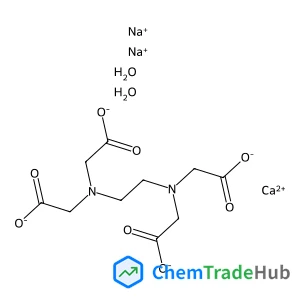
EthylenediaminetetraaceticacidcalciumDisodiumsalthydrate
CAS Number:
23411-34-9
Molecular Formula:
C10H16CaN2Na2O10

Trichloro(3,3,4,4,5,5,6,6,7,7,8,8,8-tridecafluorooctyl)silane
CAS Number:
78560-45-9
Molecular Formula:
C8H4Cl3F13Si
Recommended Suppliers






Disclaimer
This page provides academic journal information for reference and research purposes only. We are not affiliated with any journal publishers and do not handle publication submissions. For publication-related inquiries, please contact the respective journal publishers directly.
If you notice any inaccuracies in the information displayed, please contact us at support@chemtradehub.com. We will promptly review and address your concerns.