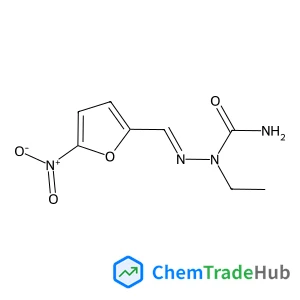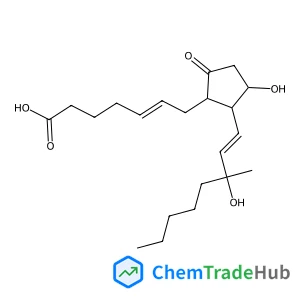
(5Z,11alpha,13E,15R)-11,15-Dihydroxy-15-methyl-9-oxoprosta-5,13-dien-1-oic acid
CAS Number:
55028-70-1
Molecular Formula:
C21H34O5
Yanan Li, Yuanyuan Pan, Yao Cong, Yifan Zhu, Haosong Liu, Yi Wan, Yazhen Yao, Peibin Ding, Mingbo Wu, Han Hu
The potential of carbon materials for electrochemical processes could be largely activated by the delicate regulation of their intrinsic defects, and this prospect could be further enhanced after hybridizing with other functional components. Herein, we, for the first time, systematically combine graphene possessing different intrinsic defects with MoS2 as a host material for sulfur in lithium–sulfur batteries using first-principles calculations. After introducing the intrinsic defects in graphene, the heterostructures provide moderate binding affinity to lithium polysulfides (LiPSs) and facilitate their chemical reactions due to the unsaturated coordination of defective carbon and the charge rearrangement inside the heterostructures. Specifically, graphene with intrinsic defects increases the active sites and improves the conductivity, while MoS2 can not only improve the adsorption for LiPSs, but also provide smooth Li diffusion pathways and catalyze the rapid conversion of LiPSs. Among all the calculated heterostructures, the single vacancy graphene/MoS2 heterostructure is considered to be the most promising sulfur host due to the strongest binding strength to LiPSs (3.10–0.72 eV) and the lowest free energy barrier for the sulfur reduction reaction (1.36 eV), which is attributed to the spin polarization near the carbon defect. This work could afford fruitful insights into the rational design of defect engineering in heterostructures.
Yonggang Yang, Yufang Liu, Dapeng Yang, Hui Li, Kai Jiang, Jinfeng Sun
DOI: 10.1039/C5CP02530C
Robert Pendrill, Olof Engström, Andrea Volpato, Mirco Zerbetto, Antonino Polimeno, Göran Widmalm
DOI: 10.1039/C5CP06288H
Felix E. Feiten, Helmut Kuhlenbeck, Hans-Joachim Freund
DOI: 10.1039/C5CP07390A
Keitel Cervantes-Salguero, Waka Nakanishi, Ibuki Kawamata, Kosuke Minami, Hirokazu Komatsu, Satoshi Murata
DOI: 10.1039/C5CP05765E
J. Karel, F. Bernardi, C. Wang, R. Stinshoff, N.-O. Born, S. Ouardi, U. Burkhardt, G. H. Fecher, C. Felser
DOI: 10.1039/C5CP04944J
Mohammed Ahmed, Ajay K. Singh, Jahur A. Mondal
DOI: 10.1039/C5CP07014G
Hartmut Löwen, Lei Zhu
DOI: 10.1039/C5CP05522A
Elizabeth S. Foreman, Kara M. Kapnas, YiTien Jou, Jarosław Kalinowski, David Feng, Craig Murray
DOI: 10.1039/C5CP04977F
Xueli Guo, Yiwei Tan
DOI: 10.1039/C5CP05531H
When handling 2-Methyl-2-propanyl 5-amino-2-thiophenecarboxylate (CAS: 1498311-5...
5-Bromo-1,2-dichloro-3-fluorobenzene (CAS: 1000572-93-9) is a crystalline solid ...
(2R)-2-Amino-2-(4-bromophenyl)ethanol (CAS: 354153-64-3) should be stored in a c...
Methyl 4-(aminomethyl)tetrahydro-2H-pyran-4-carboxylate hydrochloride (CAS: 3627...
1,4-Dimethyl-1H-pyrazole-5-sulfonyl chloride is primarily used as an intermediat...
Dinaphtho[1,2-b:2',1'-d]furan is generally safe when handled with appropriate pe...
The market for 7-Methyl-7,9-dihydro-1H-purine-2,6,8(3H)-trione (CAS: 612-37-3) i...
2-(4-Chlorophenyl)malonaldehyde (CAS: 205676-17-1) is a colorless or light yello...
2-Methylchrysene (CAS: 3351-32-4) is typically synthesized via the reaction of c...
N-(6-aminopyrimidin-4-yl)acetamide (CAS: 89533-23-3) is generally considered saf...

Physical Chemistry Chemical Physics (PCCP) is an international journal co-owned by 19 physical chemistry and physics societies from around the world. This journal publishes original, cutting-edge research in physical chemistry, chemical physics and biophysical chemistry. To be suitable for publication in PCCP, articles must include significant innovation and/or insight into physical chemistry; this is the most important criterion that reviewers and Editors will judge against when evaluating submissions. The journal has a broad scope and welcomes contributions spanning experiment, theory, computation and data science. Topical coverage includes spectroscopy, dynamics, kinetics, statistical mechanics, thermodynamics, electrochemistry, catalysis, surface science, quantum mechanics, quantum computing and machine learning. Interdisciplinary research areas such as polymers and soft matter, materials, nanoscience, energy, surfaces/interfaces, and biophysical chemistry are welcomed if they demonstrate significant innovation and/or insight into physical chemistry. Joined experimental/theoretical studies are particularly appreciated when complementary and based on up-to-date approaches.
![1-Oxa-8-azaspiro[4.5]decan-3-ol structure](https://static.chemtradehub.com/structs/757/757239-76-2-a0ec.webp "1-Oxa-8-azaspiro[4.5]decan-3-ol structure")