












Design and synthesis of yolk–shell Fe2O3/N-doped carbon nanospindles with rich oxygen vacancies for robust lithium storage
Literature Information
Publication Date
2022-11-15
DOI
10.1039/D2CP03309G
Impact Factor
3.676
Authors
Jianping Lin, Lingfang Ruan, Jiasheng Wu, Wenyu Yang, Xiaohui Huang, Zhiqiang Huang, Shaoming Ying
View Original
Abstract
Ferric oxide (Fe2O3) is an attractive anode material for lithium-ion batteries (LIBs) with a high theoretical capacity of 1005 mA h g−1. However, its practical application is greatly restrained by the rapid capacity fading caused by the large volume expansion upon lithiation. To address this issue, we have designed and synthesized a unique yolk–shell Fe2O3/N-doped carbon hybrid structure (YS-Fe2O3@NC) with rich oxygen vacancies for robust lithium storage. The obtained results show that YS-Fe2O3@NC delivers a high reversible capacity of 578 mA h g−1 after 300 cycles at a current density of 5 A g−1, about 11 times that (53.7 mA h g−1) of pristine Fe2O3. Furthermore, a high specific capacity of 300.5 mA h g−1 even at 10 A g−1 is achieved. The high reversible capacities, excellent rate capability and cycle stability of YS-Fe2O3@NC might be attributed to the elaborate yolk–shell nanoarchitecture. Moreover, electron percolation and a local built-in electric field induced by oxygen vacancies in the Fe2O3 matrix could also enhance the kinetics of Li+ insertion/deinsertion.
Related Literature
Nuclear quantum tunnelling in enzymatic reactions – an enzymologist's perspective
Linus O. Johannissen, Sam Hay, Nigel S. Scrutton
2015-03-27
Perspective
DOI: 10.1039/C5CP00614G
Theoretical study of the coordination behavior of formate and formamidoximate with dioxovanadium(v) cation: implications for selectivity towards uranyl
Nada Mehio, J. Casey Johnson, Vyacheslav S. Bryantsev
2015-10-28
Paper
DOI: 10.1039/C5CP06165B
Probing the effects of 2D confinement on hydrogen dynamics in water and ice adsorbed in graphene oxide sponges
Giovanni Romanelli, Xuan Zhang, Kian Ping Loh, Carla Andreani
2015-10-30
Paper
DOI: 10.1039/C5CP05240H
Theoretical study on the dehydrogenation reaction of dihydrogen bonded phenol–borane-trimethylamine in the excited state
Yonggang Yang, Yufang Liu, Dapeng Yang, Hui Li, Kai Jiang, Jinfeng Sun
2015-08-12
Paper
DOI: 10.1039/C5CP02530C
Nitrogenated, phosphorated and arsenicated monolayer holey graphenes
Mehmet Yagmurcukardes, Engin Torun, Francois M. Peeters, R. Tugrul Senger
2015-12-22
Paper
DOI: 10.1039/C5CP05538E
Evidence for localized moment picture in Mn-based Heusler compounds
J. Karel, F. Bernardi, C. Wang, R. Stinshoff, N.-O. Born, S. Ouardi, U. Burkhardt, G. H. Fecher, C. Felser
2015-11-11
Paper
DOI: 10.1039/C5CP04944J
Measurement and prediction of quantum coherence effects in biological processes
Aurélien de la Lande, Vicent Moliner, Dennis Salahub
2015-09-17
Editorial
DOI: 10.1039/C5CP90134K
Structural and electronic properties of ZnO/GaN heterostructured nanowires from first-principles study
Yang Zhang, Dang-Qi Fang, Sheng-Li Zhang, Rao Huang, Yu-Hua Wen
2015-12-18
Paper
DOI: 10.1039/C5CP06564J
Mixtures of the 1-ethyl-3-methylimidazolium acetate ionic liquid with different inorganic salts: insights into their interactions
Filipe S. Oliveira, Eurico J. Cabrita, Smilja Todorovic, Carlos E. S. Bernardes, Jennifer L. Hodgson, Douglas R. MacFarlane, Luís P. N. Rebelo, Isabel M. Marrucho
2015-12-21
Paper
DOI: 10.1039/C5CP06937H
Effects of Ga–Te interface layer on the potential barrier height of CdTe/GaAs heterointerface
Yanyan Yuan, Wenhua Zhang, Junfa Zhu, Jie Su, Jiawei Li
2015-11-10
Paper
DOI: 10.1039/C5CP04802H
You might also like
Compound Q&A
What precautions should be taken when handling 2-Methyl-2-propanyl 5-amino-2-thiophenecarboxylate (CAS: 1498311-57-1)?
When handling 2-Methyl-2-propanyl 5-amino-2-thiophenecarboxylate (CAS: 1498311-5...
1498311-57-12-Methyl-2-propanyl ...
Compound Q&A
What are the physical and chemical properties of 5-Bromo-1,2-dichloro-3-fluorobenzene (CAS: 1000572-93-9)?
5-Bromo-1,2-dichloro-3-fluorobenzene (CAS: 1000572-93-9) is a crystalline solid ...
1000572-93-95-Bromo-1,2-dichloro...
Compound Q&A
How should (2R)-2-Amino-2-(4-bromophenyl)ethanol (CAS: 354153-64-3) be stored?
(2R)-2-Amino-2-(4-bromophenyl)ethanol (CAS: 354153-64-3) should be stored in a c...
354153-64-3(2R)-2-Amino-2-(4-br...
Compound Q&A
What regulatory guidelines apply to Methyl 4-(aminomethyl)tetrahydro-2H-pyran-4-carboxylate hydrochloride (CAS: 362707-24-2)?
Methyl 4-(aminomethyl)tetrahydro-2H-pyran-4-carboxylate hydrochloride (CAS: 3627...
362707-24-2Methyl 4-(aminomethy...
Compound Q&A
What are the main uses of 1,4-dimethyl-1H-pyrazole-5-sulfonyl chloride (CAS: 1174834-52-6)?
1,4-Dimethyl-1H-pyrazole-5-sulfonyl chloride is primarily used as an intermediat...
1174834-52-61,4-dimethyl-1H-pyra...
Compound Q&A
Is Dinaphtho[1,2-b:2',1'-d]furan (CAS: 239-69-0) safe?
Dinaphtho[1,2-b:2',1'-d]furan is generally safe when handled with appropriate pe...
239-69-0Dinaphtho[1,2-b:2',1...
Compound Q&A
What is the market or research trend for 7-Methyl-7,9-dihydro-1H-purine-2,6,8(3H)-trione (CAS: 612-37-3)?
The market for 7-Methyl-7,9-dihydro-1H-purine-2,6,8(3H)-trione (CAS: 612-37-3) i...
612-37-37-Methyl-7,9-dihydro...
Compound Q&A
What are the physical and chemical properties of 2-(4-Chlorophenyl)malonaldehyde (CAS: 205676-17-1)?
2-(4-Chlorophenyl)malonaldehyde (CAS: 205676-17-1) is a colorless or light yello...
205676-17-12-(4-Chlorophenyl)ma...
Compound Q&A
How is 2-Methylchrysene (CAS: 3351-32-4) typically synthesized?
2-Methylchrysene (CAS: 3351-32-4) is typically synthesized via the reaction of c...
3351-32-42-Methylchrysene
Compound Q&A
Is N-(6-aminopyrimidin-4-yl)acetamide (CAS: 89533-23-3) safe?
N-(6-aminopyrimidin-4-yl)acetamide (CAS: 89533-23-3) is generally considered saf...
89533-23-3N-(6-aminopyrimidin-...
Source Journal
Physical Chemistry Chemical Physics

CiteScore:
5.5
Self-citation Rate:
10.3%
Articles per Year:
3036
Physical Chemistry Chemical Physics (PCCP) is an international journal co-owned by 19 physical chemistry and physics societies from around the world. This journal publishes original, cutting-edge research in physical chemistry, chemical physics and biophysical chemistry. To be suitable for publication in PCCP, articles must include significant innovation and/or insight into physical chemistry; this is the most important criterion that reviewers and Editors will judge against when evaluating submissions. The journal has a broad scope and welcomes contributions spanning experiment, theory, computation and data science. Topical coverage includes spectroscopy, dynamics, kinetics, statistical mechanics, thermodynamics, electrochemistry, catalysis, surface science, quantum mechanics, quantum computing and machine learning. Interdisciplinary research areas such as polymers and soft matter, materials, nanoscience, energy, surfaces/interfaces, and biophysical chemistry are welcomed if they demonstrate significant innovation and/or insight into physical chemistry. Joined experimental/theoretical studies are particularly appreciated when complementary and based on up-to-date approaches.
Recommended Compounds
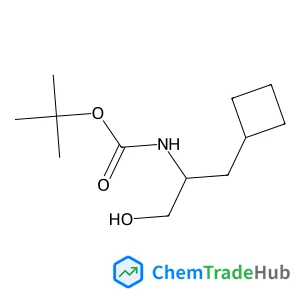
2-Methyl-2-propanyl (1-cyclobutyl-3-hydroxy-2-propanyl)carbamate
CAS Number:
816429-99-9
Molecular Formula:
C12H23NO3
![1-Oxa-8-azaspiro[4.5]decan-3-ol structure](https://static.chemtradehub.com/structs/757/757239-76-2-a0ec.webp "1-Oxa-8-azaspiro[4.5]decan-3-ol structure")
Recommended Suppliers




Disclaimer
This page provides academic journal information for reference and research purposes only. We are not affiliated with any journal publishers and do not handle publication submissions. For publication-related inquiries, please contact the respective journal publishers directly.
If you notice any inaccuracies in the information displayed, please contact us at support@chemtradehub.com. We will promptly review and address your concerns.