












DNMR measurements of an asymmetric odd liquid crystal dimer: determination of the intramolecular angle and the degree of order of the two rigid cores
Literature Information
Publication Date
2022-12-09
DOI
10.1039/D2CP02696A
Impact Factor
3.676
Authors
Nerea Sebastián, Blaz Zupančič, Boštjan Zalar, David O. López, Josep Salud, Victor López de Rioja, Rafael Levit, María Rosario de la Fuente, Nélida Gimeno, María Blanca Ros, Sergio Diez-Berart
View Original
Abstract
In this work, we present a Deuteron Nuclear Magnetic Resonance (DNMR) study of the non-symmetric odd liquid crystal dimer α-(4-cyanobiphenyl-4′-yloxy)-ω-(1-pyrenimine-benzylidene-4′-oxy) heptane (CBO7O.Py), formed by a pro-mesogenic cyanobiphenyl unit and a bulky pyrene-containing unit, linked via alkoxy flexible chain. We have synthesized two partially deuterated samples: one with the deuterium atoms in the cyanobiphenyl moiety (dCBO7O.Py) and the other one with the deuterium atoms in the pyrenimine-benzylidene unit (CBO7O.dPy). We have performed angular distribution analysis in the SmA glassy state, obtaining the degree of order of both rigid cores and an estimation of the internal molecular angle between both structures. With the results from the angular study, we have been able to determine the degree of order of both rigid units in either the N phase and the SmA phase, far enough from the glass transition. Both rigid cores have the same degree of order close to the nematic–isotropic phase transition, but as the compound is cooled down, the degree of order of the cyanobiphenyl moiety is clearly higher than that of the pyrene-containing unit. The critical behaviour of the order parameter of the pyrene-containing moiety is consistent with the fact that, for CBO7O.Py, the N–I phase transition is tricritical, which seems to indicate that the uniaxial order parameter of the dimer is dominated by the degree of order of the pyrene-containing core.
Related Literature
Boronated holey graphene: a case of 2D ferromagnetic metal
Dhani Nafday, Hong Fang, Puru Jena
2019-09-10
Paper
DOI: 10.1039/C9CP02936B
Chemically-driven convective dissolution
M. Jotkar, L. Rongy, A. De Wit
2019-08-14
Paper
DOI: 10.1039/C9CP03044A
Correction: Conformation of bis-nitroxide polarizing agents by multi-frequency EPR spectroscopy
Janne Soetbeer, Peter Gast, Joseph J. Walish, Yanchuan Zhao, Christy George, Chen Yang, Timothy M. Swager, Robert G. Griffin, Guinevere Mathies
2020-02-17
Correction
DOI: 10.1039/D0CP90040K
Measuring the mechanical properties of flexible crystals using bi-modal atomic force microscopy
Madeleine F. Dupont, Edwin Mayes, Kay Latham
2019-09-02
Paper
DOI: 10.1039/C9CP04542B
Two-state diabatic potential energy surfaces of ClH2 based on nonadiabatic couplings with neural networks
Zhengxi Yin, Yafu Guan, Bina Fu, Dong H. Zhang
2019-08-24
Paper
DOI: 10.1039/C9CP03592C
Computational description of key spectroscopic features of zeolite SSZ-13
Alyssa M. Love, Sarah C. Schuenzel, Patrick Wolf, Manos Mavrikakis
2019-08-08
Paper
DOI: 10.1039/C9CP03146D
Theoretical insight into the single-atom catalytic mechanism of CeO2-supported Ag catalysts in CO oxidation
Yongli Shen, Kangjuan Yin, Zihui Xiao
2019-08-26
Paper
DOI: 10.1039/C9CP03201K
Fully coupled (J > 0) time-dependent wave-packet calculations using hyperspherical coordinates for the H + O2 reaction on the CHIPR potential energy surface
Sandip Ghosh, Rahul Sharma, Satrajit Adhikari
2019-08-20
Paper
DOI: 10.1039/C9CP03171E
Formation of a stable biradical triplet state cation versus a closed shell singlet state cation by oxidation of adducts of 3,6-dimethoxycarbazole and polychlorotriphenylmethyl radicals
Alba Cuadrado, Alejandra Gilabert, Lluís Fajarí, Ignasi Sirés, Enric Brillas, Maria Pilar Almajano, Dolores Velasco, Josep M. Anglada, Luis Juliá
2019-08-16
Paper
DOI: 10.1039/C9CP02444A
You might also like
Compound Q&A
What precautions should be taken when handling 2-Methyl-2-propanyl 5-amino-2-thiophenecarboxylate (CAS: 1498311-57-1)?
When handling 2-Methyl-2-propanyl 5-amino-2-thiophenecarboxylate (CAS: 1498311-5...
1498311-57-12-Methyl-2-propanyl ...
Compound Q&A
What are the physical and chemical properties of 5-Bromo-1,2-dichloro-3-fluorobenzene (CAS: 1000572-93-9)?
5-Bromo-1,2-dichloro-3-fluorobenzene (CAS: 1000572-93-9) is a crystalline solid ...
1000572-93-95-Bromo-1,2-dichloro...
Compound Q&A
How should (2R)-2-Amino-2-(4-bromophenyl)ethanol (CAS: 354153-64-3) be stored?
(2R)-2-Amino-2-(4-bromophenyl)ethanol (CAS: 354153-64-3) should be stored in a c...
354153-64-3(2R)-2-Amino-2-(4-br...
Compound Q&A
What regulatory guidelines apply to Methyl 4-(aminomethyl)tetrahydro-2H-pyran-4-carboxylate hydrochloride (CAS: 362707-24-2)?
Methyl 4-(aminomethyl)tetrahydro-2H-pyran-4-carboxylate hydrochloride (CAS: 3627...
362707-24-2Methyl 4-(aminomethy...
Compound Q&A
What are the main uses of 1,4-dimethyl-1H-pyrazole-5-sulfonyl chloride (CAS: 1174834-52-6)?
1,4-Dimethyl-1H-pyrazole-5-sulfonyl chloride is primarily used as an intermediat...
1174834-52-61,4-dimethyl-1H-pyra...
Compound Q&A
Is Dinaphtho[1,2-b:2',1'-d]furan (CAS: 239-69-0) safe?
Dinaphtho[1,2-b:2',1'-d]furan is generally safe when handled with appropriate pe...
239-69-0Dinaphtho[1,2-b:2',1...
Compound Q&A
What is the market or research trend for 7-Methyl-7,9-dihydro-1H-purine-2,6,8(3H)-trione (CAS: 612-37-3)?
The market for 7-Methyl-7,9-dihydro-1H-purine-2,6,8(3H)-trione (CAS: 612-37-3) i...
612-37-37-Methyl-7,9-dihydro...
Compound Q&A
What are the physical and chemical properties of 2-(4-Chlorophenyl)malonaldehyde (CAS: 205676-17-1)?
2-(4-Chlorophenyl)malonaldehyde (CAS: 205676-17-1) is a colorless or light yello...
205676-17-12-(4-Chlorophenyl)ma...
Compound Q&A
How is 2-Methylchrysene (CAS: 3351-32-4) typically synthesized?
2-Methylchrysene (CAS: 3351-32-4) is typically synthesized via the reaction of c...
3351-32-42-Methylchrysene
Compound Q&A
Is N-(6-aminopyrimidin-4-yl)acetamide (CAS: 89533-23-3) safe?
N-(6-aminopyrimidin-4-yl)acetamide (CAS: 89533-23-3) is generally considered saf...
89533-23-3N-(6-aminopyrimidin-...
Source Journal
Physical Chemistry Chemical Physics

CiteScore:
5.5
Self-citation Rate:
10.3%
Articles per Year:
3036
Physical Chemistry Chemical Physics (PCCP) is an international journal co-owned by 19 physical chemistry and physics societies from around the world. This journal publishes original, cutting-edge research in physical chemistry, chemical physics and biophysical chemistry. To be suitable for publication in PCCP, articles must include significant innovation and/or insight into physical chemistry; this is the most important criterion that reviewers and Editors will judge against when evaluating submissions. The journal has a broad scope and welcomes contributions spanning experiment, theory, computation and data science. Topical coverage includes spectroscopy, dynamics, kinetics, statistical mechanics, thermodynamics, electrochemistry, catalysis, surface science, quantum mechanics, quantum computing and machine learning. Interdisciplinary research areas such as polymers and soft matter, materials, nanoscience, energy, surfaces/interfaces, and biophysical chemistry are welcomed if they demonstrate significant innovation and/or insight into physical chemistry. Joined experimental/theoretical studies are particularly appreciated when complementary and based on up-to-date approaches.
Recommended Compounds
![4-Chloro-N-{[4-(dimethylamino)phenyl]carbamoyl}benzenesulfonamide structure](https://static.chemtradehub.com/structs/558/5581-42-0-7dcb.webp "4-Chloro-N-{[4-(dimethylamino)phenyl]carbamoyl}benzenesulfonamide structure")
4-Chloro-N-{[4-(dimethylamino)phenyl]carbamoyl}benzenesulfonamide
CAS Number:
5581-42-0
Molecular Formula:
C15H16ClN3O3S
![2-[2-(2-Methoxyethoxy)ethoxy]-2-methylpropane structure](https://static.chemtradehub.com/structs/527/52788-79-1-71c1.webp "2-[2-(2-Methoxyethoxy)ethoxy]-2-methylpropane structure")
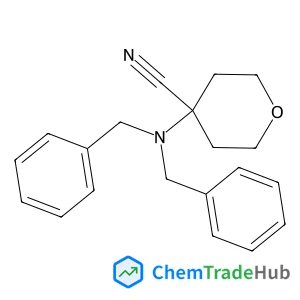
4-(Dibenzylamino)tetrahydro-2H-pyran-4-carbonitrile
CAS Number:
1630906-81-8
Molecular Formula:
C20H22N2O
Recommended Suppliers





Disclaimer
This page provides academic journal information for reference and research purposes only. We are not affiliated with any journal publishers and do not handle publication submissions. For publication-related inquiries, please contact the respective journal publishers directly.
If you notice any inaccuracies in the information displayed, please contact us at support@chemtradehub.com. We will promptly review and address your concerns.