












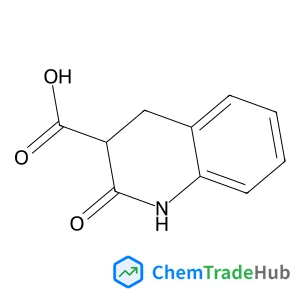
2-Oxo-1,2,3,4-tetrahydro-3-quinolinecarboxylic acid
CAS Number:
246867-17-4
Molecular Formula:
C10H9NO3
Alyssa M. Love, Sarah C. Schuenzel, Patrick Wolf, Manos Mavrikakis
The catalytic properties of zeolites are intimately linked to the distribution and relative positions of Al atoms and defects in the pore network. However, characterizing this distribution is challenging, in particular when different local Al arrangements are considered. In this contribution we use a combination of first principles calculations and experimental measurements to develop a model for the Al-distribution in protonated SSZ-13. We furthermore apply this model to understand trends in OH-IR, 27Al-NMR and 29Si-NMR spectra. We use a Boltzmann distribution to predict the proton position for a given local Al configuration and show that for each configuration several H positions are occupied. Therefore a multi-peak spectrum in OH-IR vibrational spectroscopy is observed for all Al configurations, which is in line with experimentally measured spectra for zeolites at different Si/Al ratios. From NMR spectroscopy we find that the proton position leads to significant shifts in 27Al-NMR and 29Si-NMR spectra due to the modification of the local strain, which is lost when a uniform background charge is introduced. These findings are supported by experimental measurements. Finally we discuss the shortcomings of the presented model in terms of unit cell size and the impact of adjacent unit cells.
Genxi Yu, Yaping Wang, Kai Li, Daming Chen, Liguang Qin, Hui Xu, Jian Chen, Wei Zhang, Peigen Zhang, Zhengming Sun
DOI: 10.1039/D0SE01669A
Isabelle Heath-Apostolopoulos, Diego Vargas-Ortiz, Liam Wilbraham, Kim E. Jelfs, Martijn A. Zwijnenburg
DOI: 10.1039/D1SE90005F
Yanwen Wang, Rong Liang, Chao Qin, Lei Ren, Zhizhen Ye, Liping Zhu
DOI: 10.1039/D0SE01220C
Yangping Li, Dongfang Niu, Xingyan Fu, Zhiliang Zhang, Xinsheng Zhang
DOI: 10.1039/D0SE01283A
Prabakaran Varathan, Rahul S. Menon
DOI: 10.1039/D0SE01214A
Elyas M. Moghaddam, Avishek Goel, Marcin Siedlecki, Karin Michalska, Onursal Yakaboylu, Wiebren de Jong
DOI: 10.1039/D0SE01635G
A. Cano, Paul Arévalo, F. Jurado
DOI: 10.1039/D1SE00078K
Yogesh Kumar Sonia, Mahesh Kumar Paliwal, Sumanta Kumar Meher
DOI: 10.1039/D0SE01698E
Moumita Barman, Soumen Das, Ankita Das, Sampad Mukherjee, Mahmoud Tavakoli, Nillohit Mukherjee, Navonil Bose
DOI: 10.1039/D0SE01433H
Isabel Barraza Alvarez, Yanyu Wu, Joel Sanchez, Yulu Ge, Mario V. Ramos-Garcés, Thomas F. Jaramillo, Jorge L. Colón, Dino Villagrán
DOI: 10.1039/D0SE01134G
When handling 2-Methyl-2-propanyl 5-amino-2-thiophenecarboxylate (CAS: 1498311-5...
5-Bromo-1,2-dichloro-3-fluorobenzene (CAS: 1000572-93-9) is a crystalline solid ...
(2R)-2-Amino-2-(4-bromophenyl)ethanol (CAS: 354153-64-3) should be stored in a c...
Methyl 4-(aminomethyl)tetrahydro-2H-pyran-4-carboxylate hydrochloride (CAS: 3627...
1,4-Dimethyl-1H-pyrazole-5-sulfonyl chloride is primarily used as an intermediat...
Dinaphtho[1,2-b:2',1'-d]furan is generally safe when handled with appropriate pe...
The market for 7-Methyl-7,9-dihydro-1H-purine-2,6,8(3H)-trione (CAS: 612-37-3) i...
2-(4-Chlorophenyl)malonaldehyde (CAS: 205676-17-1) is a colorless or light yello...
2-Methylchrysene (CAS: 3351-32-4) is typically synthesized via the reaction of c...
N-(6-aminopyrimidin-4-yl)acetamide (CAS: 89533-23-3) is generally considered saf...

Physical Chemistry Chemical Physics (PCCP) is an international journal co-owned by 19 physical chemistry and physics societies from around the world. This journal publishes original, cutting-edge research in physical chemistry, chemical physics and biophysical chemistry. To be suitable for publication in PCCP, articles must include significant innovation and/or insight into physical chemistry; this is the most important criterion that reviewers and Editors will judge against when evaluating submissions. The journal has a broad scope and welcomes contributions spanning experiment, theory, computation and data science. Topical coverage includes spectroscopy, dynamics, kinetics, statistical mechanics, thermodynamics, electrochemistry, catalysis, surface science, quantum mechanics, quantum computing and machine learning. Interdisciplinary research areas such as polymers and soft matter, materials, nanoscience, energy, surfaces/interfaces, and biophysical chemistry are welcomed if they demonstrate significant innovation and/or insight into physical chemistry. Joined experimental/theoretical studies are particularly appreciated when complementary and based on up-to-date approaches.
![L-Lysine,N6-[2-[[(1,1-dimethylethoxy)carbonyl]amino]benzoyl]-N2-[(9H-fluoren-9-ylmethoxy)carbonyl]- structure](https://static.chemtradehub.com/structs/159/159322-59-5-c046.webp "L-Lysine,N6-[2-[[(1,1-dimethylethoxy)carbonyl]amino]benzoyl]-N2-[(9H-fluoren-9-ylmethoxy)carbonyl]- structure")
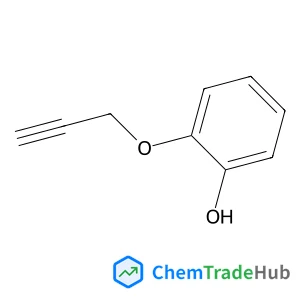
![1-Oxa-8-azaspiro[4.5]decan-3-ol structure](https://static.chemtradehub.com/structs/757/757239-76-2-a0ec.webp "1-Oxa-8-azaspiro[4.5]decan-3-ol structure")




