













Identification of DNA nucleotides by conductance and tunnelling current variation through borophene nanogaps
Literature Information
Publication Date
2022-08-19
DOI
10.1039/D2CP02093A
Impact Factor
3.676
Authors
Milan Kumar Jena, Biswarup Pathak
View Original
Abstract
Rapid and inexpensive DNA sequencing is critical to biomedical research and healthcare for the accomplishment of personalized medicine. Solid-state nanopores and nanogaps have marshalled themselves in the fascinating paradigm of nano-research since the advent of its application in DNA sequencing by analyzing the quantum conductance and electric current signals. In this study, the feasibility of the considered borophene nanogaps for DNA sequencing purposes via the electronic tunnelling current approach was investigated by utilizing combined density functional theory with non-equilibrium Green's function (DFT-NEGF) techniques. The interaction energy (Ei) and the charge density difference (CDD) plots exploit the charge modulation around the nanogap edges due to the presence of each nucleotide. Our results revealed a distinct variation in the tunnelling conductance, as a characteristic fingerprint of each nucleotide at the Fermi level. The calculated tunnelling current variation across the nanogap under an applied bias voltage was also significant due to the effective coupling of nucleotides with the electrode edges. The current was in the picoampere (pA) range, which was fairly higher than the electrical background noise and also experimentally detectable by the canning tunnelling microscopy (STM) technique. Our findings demonstrated that in the borophene nanopore vs. nanogap scenario, the nanogap has several advantages and is a more promising nanobiosensor. Moreover, we also compared our results with various previous experimental and theoretical reports on nanogaps as well as nanopores for gaining better insights.
Related Literature
Adsorption and exchange reactions of iodine molecules at the alumina surface: modelling alumina-iodine reaction mechanisms
Kelsea K. Miller, Armando de Rezende, Daniel Tunega, Michelle L. Pantoya
2022-04-05
Paper
DOI: 10.1039/D1CP05924F
Artificial synthesis of covalent triazine frameworks for local structure and property determination
Catherine Mollart, Sarah Holcroft, Michael J. G. Peach, Adam Rowling, Abbie Trewin
2022-08-13
Communication
DOI: 10.1039/D2CP02430F
Adsorption properties of pyramidal superatomic molecules based on the structural framework of the Au20 cluster
Manli Zhang, Dawen Zhang, Yunhu Hu, Qiyong Zhu, Longjiu Cheng
2022-05-02
Paper
DOI: 10.1039/D2CP01552H
Thermodynamics of hydrogels for applications in atmospheric water harvesting, evaporation, and desalination
2022-04-19
Paper
DOI: 10.1039/D2CP00356B
Semi-empirical and linear-scaling DFT methods to characterize duplex DNA and G-quadruplexes in the presence of interacting small molecules
Sawssen Elleuchi, Khaled Jarraya
2022-03-25
Paper
DOI: 10.1039/D2CP00214K
Electron–phonon coupling and superconductivity in a 2D Tl–Pb compound on Si(111)
R. Heid
2022-04-14
Paper
DOI: 10.1039/D2CP00522K
C2 product formation in the CO2 electroreduction on boron-doped graphene anchored copper clusters
Balázs Barhács, Ewald Janssens
2022-08-29
Paper
DOI: 10.1039/D2CP01316A
Electronic polarization effects on membrane translocation of anti-cancer drugs
Atiyeh (Najla) Hosseini, Mohammad Reza Ejtehadi
2022-04-18
Paper
DOI: 10.1039/D2CP00056C
Temperature dependence in fast-atom diffraction at surfaces
2022-05-09
Paper
DOI: 10.1039/D2CP00829G
Multi-scale simulation of proton diffusion in dislocation cores in BaZrO3
Shaofeng Yue, Junqing Zhao, Yi Sun, Hongwei Niu, Huyang Li, Yuhang Jing, N. R. Aluru
2022-08-26
Paper
DOI: 10.1039/D2CP02989H
You might also like
Compound Q&A
How is Ethyl 4-chlorothieno[2,3-b]pyridine-5-carboxylate (CAS: 59713-58-5) typically synthesized?
Ethyl 4-chlorothieno[2,3-b]pyridine-5-carboxylate (CAS: 59713-58-5) can be synth...
59713-58-5Ethyl 4-chlorothieno...
Compound Q&A
What regulatory guidelines apply to 5-Methyl-1H-indole-3-carbaldehyde (CAS: 52562-50-2)?
5-Methyl-1H-indole-3-carbaldehyde (CAS: 52562-50-2) is subject to various regula...
52562-50-25-Methyl-1H-indole-3...
Compound Q&A
What are the physical and chemical properties of (1,3-Dimethyl-2,4-dioxo-1,2,3,4-tetrahydro-5-pyrimidinyl)boronic acid (CAS: 223418-73-3)?
(1,3-Dimethyl-2,4-dioxo-1,2,3,4-tetrahydro-5-pyrimidinyl)boronic acid is a white...
223418-73-3(1,3-Dimethyl-2,4-di...
Compound Q&A
How should waste containing Sulfocostunolide A (CAS: 1016983-51-9) be handled?
Waste containing Sulfocostunolide A (CAS: 1016983-51-9) should be handled with c...
1016983-51-9Sulfocostunolide A
Compound Q&A
What precautions should be taken when handling Murraxocin (CAS: 88478-44-8)?
When handling Murraxocin (CAS: 88478-44-8), ensure proper personal protective eq...
88478-44-8Murraxocin
Compound Q&A
What are the physical and chemical properties of Formvar (CAS: 63148-64-1)?
Formvar (CAS: 63148-64-1) is an alkyd resin characterized by a high molecular we...
63148-64-1Formvar(R)
Compound Q&A
Is (S)-4-benzyl-2-((benzyloxy)methyl)morpholine (CAS: 205242-66-6) safe?
(S)-4-benzyl-2-((benzyloxy)methyl)morpholine is generally safe when handled with...
205242-66-6(S)-4-benzyl-2-((ben...
Compound Q&A
What industries use Methyl 1-(5-bromo-2-pyrimidinyl)cyclopropanecarboxylate (CAS: 1447607-69-3)?
Methyl 1-(5-bromo-2-pyrimidinyl)cyclopropanecarboxylate (CAS: 1447607-69-3) is p...
1447607-69-3Methyl 1-(5-bromo-2-...
Compound Q&A
Is 2-Methyl-1-phenyl-1-propanamine hydrochloride (CAS: 24290-47-9) safe?
2-Methyl-1-phenyl-1-propanamine hydrochloride (CAS: 24290-47-9) is generally con...
24290-47-92-Methyl-1-phenyl-1-...
Compound Q&A
How is 3-(4-Bromophenyl)-2-methylpropanoic acid (CAS: 66735-01-1) typically synthesized?
3-(4-Bromophenyl)-2-methylpropanoic acid is synthesized through a multi-step pro...
66735-01-13-(4-Bromophenyl)-2-...
Source Journal
Physical Chemistry Chemical Physics

CiteScore:
5.5
Self-citation Rate:
10.3%
Articles per Year:
3036
Physical Chemistry Chemical Physics (PCCP) is an international journal co-owned by 19 physical chemistry and physics societies from around the world. This journal publishes original, cutting-edge research in physical chemistry, chemical physics and biophysical chemistry. To be suitable for publication in PCCP, articles must include significant innovation and/or insight into physical chemistry; this is the most important criterion that reviewers and Editors will judge against when evaluating submissions. The journal has a broad scope and welcomes contributions spanning experiment, theory, computation and data science. Topical coverage includes spectroscopy, dynamics, kinetics, statistical mechanics, thermodynamics, electrochemistry, catalysis, surface science, quantum mechanics, quantum computing and machine learning. Interdisciplinary research areas such as polymers and soft matter, materials, nanoscience, energy, surfaces/interfaces, and biophysical chemistry are welcomed if they demonstrate significant innovation and/or insight into physical chemistry. Joined experimental/theoretical studies are particularly appreciated when complementary and based on up-to-date approaches.
Recommended Compounds
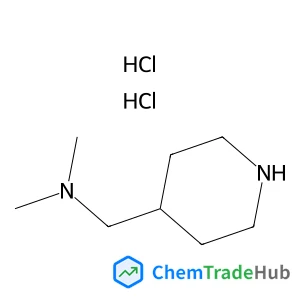
N,N-dimethyl(piperidin-4-yl)methanamine hydrochloride
CAS Number:
172281-72-0
Molecular Formula:
C8H20Cl2N2
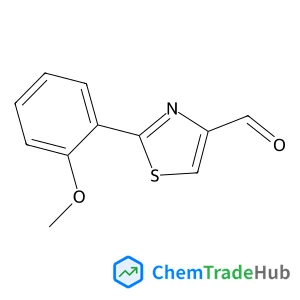
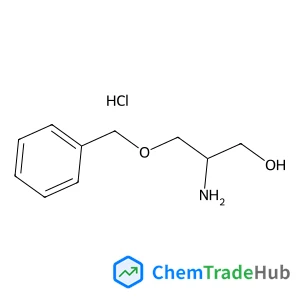
(R)-2-amino-3-(benzyloxy)propan-1-ol hydrochloride
CAS Number:
58577-95-0
Molecular Formula:
C10H16ClNO2

Recommended Suppliers





Disclaimer
This page provides academic journal information for reference and research purposes only. We are not affiliated with any journal publishers and do not handle publication submissions. For publication-related inquiries, please contact the respective journal publishers directly.
If you notice any inaccuracies in the information displayed, please contact us at support@chemtradehub.com. We will promptly review and address your concerns.