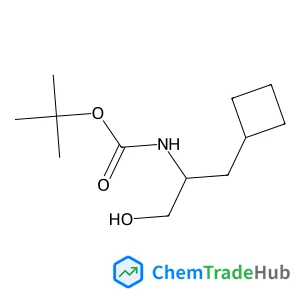
2-Methyl-2-propanyl (1-cyclobutyl-3-hydroxy-2-propanyl)carbamate
CAS Number:
816429-99-9
Molecular Formula:
C12H23NO3
Hua Zhu, Yang Shen, Qianglong Fang, Xiaodong Yang, Liang Chen, Shiqing Xu
With the increasing environmental pollution and energy crisis, it is significant to develop environmentally friendly and adjustable photocatalysts for water splitting. Here we explored the optoelectronic properties of several H-GaN/MgI2 vdW heterostructures by regulating different polarization surfaces and numbers of GaN layers. Our results demonstrate that all structures, except 2L-Ga–GaN/MgI2, exhibit excellent physical stability. Moreover, the band structures and band edge positions demonstrate that only the heterostructure of 3L-Ga–GaN/MgI2 with both suitable band alignment (type-II) and an acceptable band gap (∼1.92 eV) is most satisfactory for water splitting. Additionally, the absorption coefficient of the 3L-Ga–GaN/MgI2 heterostructure can reach over ∼105 cm−1, which has further confirmed its excellent advantage in photocatalysis. Finally, in the case of 6% external strain for the 3L-Ga–GaN/MgI2 heterostructure, a rollover in band alignment (from type-II to type-I) is exhibited. These promising features of the GaN/MgI2 vdW heterostructure give a new paradigm for developing novel efficient and adjustable photocatalytic water-splitting materials.
Nolene Byrne, C. Austen Angell
DOI: 10.1039/B817590J
Andrew G. Leach, Rebecca Cann, Simone Tomasi
DOI: 10.1039/B818744D
Kyung-Chang Seo, Young-Geol Kwon, Dae-Hee Kim, In-Sook Jang, Jin-Won Cho, Sung-Kee Chung
DOI: 10.1039/B821058F
Jing-Fang Huang
DOI: 10.1039/B819658C
Ritu Kataky, Paula Lopes
DOI: 10.1039/B822685G
Xin-Long Wang, Chao Qin, Ya-Qian Lan, Kui-Zhan Shao, Zhong-Min Su, En-Bo Wang
DOI: 10.1039/B815629H
Masatomo Yashima, Takafumi Komatsu
DOI: 10.1039/B817280C
A. Prasanna de Silva, Catherine M. Dobbin, Thomas P. Vance
DOI: 10.1039/B822181B
When handling 2-Methyl-2-propanyl 5-amino-2-thiophenecarboxylate (CAS: 1498311-5...
5-Bromo-1,2-dichloro-3-fluorobenzene (CAS: 1000572-93-9) is a crystalline solid ...
(2R)-2-Amino-2-(4-bromophenyl)ethanol (CAS: 354153-64-3) should be stored in a c...
Methyl 4-(aminomethyl)tetrahydro-2H-pyran-4-carboxylate hydrochloride (CAS: 3627...
1,4-Dimethyl-1H-pyrazole-5-sulfonyl chloride is primarily used as an intermediat...
Dinaphtho[1,2-b:2',1'-d]furan is generally safe when handled with appropriate pe...
The market for 7-Methyl-7,9-dihydro-1H-purine-2,6,8(3H)-trione (CAS: 612-37-3) i...
2-(4-Chlorophenyl)malonaldehyde (CAS: 205676-17-1) is a colorless or light yello...
2-Methylchrysene (CAS: 3351-32-4) is typically synthesized via the reaction of c...
N-(6-aminopyrimidin-4-yl)acetamide (CAS: 89533-23-3) is generally considered saf...

Physical Chemistry Chemical Physics (PCCP) is an international journal co-owned by 19 physical chemistry and physics societies from around the world. This journal publishes original, cutting-edge research in physical chemistry, chemical physics and biophysical chemistry. To be suitable for publication in PCCP, articles must include significant innovation and/or insight into physical chemistry; this is the most important criterion that reviewers and Editors will judge against when evaluating submissions. The journal has a broad scope and welcomes contributions spanning experiment, theory, computation and data science. Topical coverage includes spectroscopy, dynamics, kinetics, statistical mechanics, thermodynamics, electrochemistry, catalysis, surface science, quantum mechanics, quantum computing and machine learning. Interdisciplinary research areas such as polymers and soft matter, materials, nanoscience, energy, surfaces/interfaces, and biophysical chemistry are welcomed if they demonstrate significant innovation and/or insight into physical chemistry. Joined experimental/theoretical studies are particularly appreciated when complementary and based on up-to-date approaches.