












Computational vibrational spectroscopy of molecule–surface interactions: what is still difficult and what can be done about it
Literature Information
Publication Date
2022-05-05
DOI
10.1039/D2CP01389D
Impact Factor
3.676
Authors
Sergei Manzhos, Manabu Ihara
View Original
Abstract
Interactions of molecules with solid surfaces are responsible for key functionalities in a range of currently actively pursued technologies, including heterogeneous catalysis for synthesis or decomposition of molecules, sensitization, surface functionalization and molecular doping, etc. Modeling of such interactions is important, in particular, for the assignment of species and assignment and design of reaction pathways and ultimately for rational design of better functional materials for a range of applications. Key types of calculations involve calculations of adsorption structures and energies, electronic structures, charge transport, vibrational and optical spectra, and reaction dynamics. While some of these calculations are routinely doable for small-size models, other types of calculations, including anharmonic vibrational spectroscopy, accurate optical spectroscopy, quantum reaction dynamics, and calculations on large systems, are still too difficult to be routinely doable. In this Perspective, we specifically focus on issues related to computing accurate vibrational spectra including quantum effects and anharmonicity and coupling of key degrees of freedom. Vibrational spectroscopies are widely used for species assignment on surfaces but computations of vibrational spectra are still dominated by the harmonic approximation. We discuss approaches that can make accurate quantum anharmonic computational spectroscopy easier and enable its wider deployment in applications. We describe advantages and disadvantages of different techniques including perturbation theory, variational, vibrational self-consistent field and vibrational configuration interaction, as well as collocation which we argue has significant potential in this application, allowing computing accurate spectra directly from non-expensive ab initio data and with modest CPU cost. Examples of applications of anharmonic techniques to molecule–surface systems are given.
Related Literature
In situ antimony doping of solution-grown ZnOnanorods
Joe Briscoe, Diego E. Gallardo, Steve Dunn
2009-01-19
Communication
DOI: 10.1039/B820797F
Model systems for flavoenzyme activity: an investigation of the role functionality attached to the C(7) position of the flavin unit has on redox and molecular recognition properties‡
Stuart T. Caldwell, Louis J. Farrugia, Shanika Gunatilaka Hewage, Nadiya Kryvokhyzha, Vincent M. Rotello, Graeme Cooke
2009-02-11
Communication
DOI: 10.1039/B900269N
Fluorophore-cored dendrimers for patterns in metalloprotein sensing
Siriporn Jiwpanich, Britto S. Sandanaraj, S. Thayumanavan
2009-01-05
Communication
DOI: 10.1039/B815263B
Activation of metal-bound η5-C5Me5groups to Diels–Alder addition of 3O2 and other dienophiles
Neil M. Boag, K. Mohan Rao
2009-01-27
Communication
DOI: 10.1039/B818537A
Microwave synthesis of Cr nanowires on polymeric substrate
Daeseob Shim, Seung-Ho Jung, Eun-Ha Kim, Dong-Myung Yoon, Kun-Hong Lee, Soo-Hwan Jeong
2008-12-24
Communication
DOI: 10.1039/B816534C
A robust procedure for the functionalization of gold nanorods and noble metal nanoparticles
Benjamin Thierry, Jane Ng, Tina Krieg, Hans J. Griesser
2009-02-11
Communication
DOI: 10.1039/B820137D
Biomaterials from sugars: ring-opening polymerization of a carbohydrate lactone
Andrew J. P. White, Molly M. Stevens, Charlotte K. Williams
2008-12-18
Communication
DOI: 10.1039/B817658B
Expansion of the sortase-mediated labeling method for site-specific N-terminal labeling of cell surfaceproteins on living cells
Teruyasu Yamamoto
2009-01-07
Communication
DOI: 10.1039/B818792D
Versatile, efficient derivatization of polysiloxanesvia click technology
Ferdinand Gonzaga, Gilbert Yu, Michael A. Brook
2009-02-05
Communication
DOI: 10.1039/B821788B
(H2NC4H8NCH2CH2NH2)2Zn2Sn2Se7: a hybrid ternary semiconductor stabilized by amine molecules acting simultaneously as ligands and counterions
Aggelos Philippidis, Thomas Bakas, Pantelis N. Trikalitis
2009-02-03
Communication
DOI: 10.1039/B821859E
You might also like
Compound Q&A
What precautions should be taken when handling 2-Methyl-2-propanyl 5-amino-2-thiophenecarboxylate (CAS: 1498311-57-1)?
When handling 2-Methyl-2-propanyl 5-amino-2-thiophenecarboxylate (CAS: 1498311-5...
1498311-57-12-Methyl-2-propanyl ...
Compound Q&A
What are the physical and chemical properties of 5-Bromo-1,2-dichloro-3-fluorobenzene (CAS: 1000572-93-9)?
5-Bromo-1,2-dichloro-3-fluorobenzene (CAS: 1000572-93-9) is a crystalline solid ...
1000572-93-95-Bromo-1,2-dichloro...
Compound Q&A
How should (2R)-2-Amino-2-(4-bromophenyl)ethanol (CAS: 354153-64-3) be stored?
(2R)-2-Amino-2-(4-bromophenyl)ethanol (CAS: 354153-64-3) should be stored in a c...
354153-64-3(2R)-2-Amino-2-(4-br...
Compound Q&A
What regulatory guidelines apply to Methyl 4-(aminomethyl)tetrahydro-2H-pyran-4-carboxylate hydrochloride (CAS: 362707-24-2)?
Methyl 4-(aminomethyl)tetrahydro-2H-pyran-4-carboxylate hydrochloride (CAS: 3627...
362707-24-2Methyl 4-(aminomethy...
Compound Q&A
What are the main uses of 1,4-dimethyl-1H-pyrazole-5-sulfonyl chloride (CAS: 1174834-52-6)?
1,4-Dimethyl-1H-pyrazole-5-sulfonyl chloride is primarily used as an intermediat...
1174834-52-61,4-dimethyl-1H-pyra...
Compound Q&A
Is Dinaphtho[1,2-b:2',1'-d]furan (CAS: 239-69-0) safe?
Dinaphtho[1,2-b:2',1'-d]furan is generally safe when handled with appropriate pe...
239-69-0Dinaphtho[1,2-b:2',1...
Compound Q&A
What is the market or research trend for 7-Methyl-7,9-dihydro-1H-purine-2,6,8(3H)-trione (CAS: 612-37-3)?
The market for 7-Methyl-7,9-dihydro-1H-purine-2,6,8(3H)-trione (CAS: 612-37-3) i...
612-37-37-Methyl-7,9-dihydro...
Compound Q&A
What are the physical and chemical properties of 2-(4-Chlorophenyl)malonaldehyde (CAS: 205676-17-1)?
2-(4-Chlorophenyl)malonaldehyde (CAS: 205676-17-1) is a colorless or light yello...
205676-17-12-(4-Chlorophenyl)ma...
Compound Q&A
How is 2-Methylchrysene (CAS: 3351-32-4) typically synthesized?
2-Methylchrysene (CAS: 3351-32-4) is typically synthesized via the reaction of c...
3351-32-42-Methylchrysene
Compound Q&A
Is N-(6-aminopyrimidin-4-yl)acetamide (CAS: 89533-23-3) safe?
N-(6-aminopyrimidin-4-yl)acetamide (CAS: 89533-23-3) is generally considered saf...
89533-23-3N-(6-aminopyrimidin-...
Source Journal
Physical Chemistry Chemical Physics

CiteScore:
5.5
Self-citation Rate:
10.3%
Articles per Year:
3036
Physical Chemistry Chemical Physics (PCCP) is an international journal co-owned by 19 physical chemistry and physics societies from around the world. This journal publishes original, cutting-edge research in physical chemistry, chemical physics and biophysical chemistry. To be suitable for publication in PCCP, articles must include significant innovation and/or insight into physical chemistry; this is the most important criterion that reviewers and Editors will judge against when evaluating submissions. The journal has a broad scope and welcomes contributions spanning experiment, theory, computation and data science. Topical coverage includes spectroscopy, dynamics, kinetics, statistical mechanics, thermodynamics, electrochemistry, catalysis, surface science, quantum mechanics, quantum computing and machine learning. Interdisciplinary research areas such as polymers and soft matter, materials, nanoscience, energy, surfaces/interfaces, and biophysical chemistry are welcomed if they demonstrate significant innovation and/or insight into physical chemistry. Joined experimental/theoretical studies are particularly appreciated when complementary and based on up-to-date approaches.
Recommended Compounds
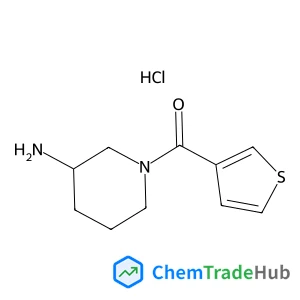
(3-Amino-piperidin-1-yl)-thiophen-3-yl-methanone hydrochloride
CAS Number:
1185316-70-4
Molecular Formula:
C10H15ClN2OS

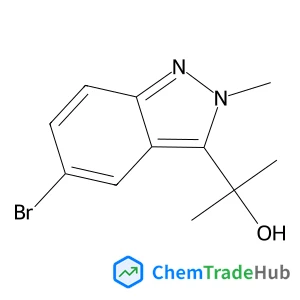
2-(5-Bromo-2-methyl-2H-indazol-3-yl)-2-propanol
CAS Number:
1823787-20-7
Molecular Formula:
C11H13BrN2O
Recommended Suppliers





Disclaimer
This page provides academic journal information for reference and research purposes only. We are not affiliated with any journal publishers and do not handle publication submissions. For publication-related inquiries, please contact the respective journal publishers directly.
If you notice any inaccuracies in the information displayed, please contact us at support@chemtradehub.com. We will promptly review and address your concerns.