












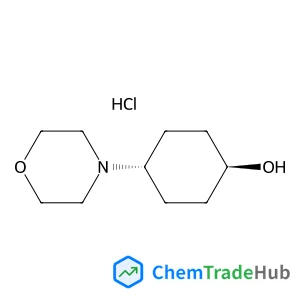
trans-4-(4-Morpholinyl)cyclohexanol hydrochloride (1:1)
CAS Number:
1588441-09-1
Molecular Formula:
C10H20ClNO2
Tommaso Francese, Arpan Kundu, Francois Gygi
We investigate the prototypical NAI-DMAC thermally activated delayed fluorescence (TADF) emitter in the gas phase- and high-packing fraction limits at finite temperature, by combining first principles molecular dynamics with a quantum thermostat to account for nuclear quantum effects (NQE). We find a weak dependence of the singlet–triplet energy gap (ΔEST) on temperature in both the solid and the molecule, and a substantial effect of packing. While the ΔEST vanishes in the perfect crystal, it is of the order of ∼0.3 eV in the molecule, with fluctuations ranging from 0.1 to 0.4 eV at 300 K. The transition probability between the HOMOs and LUMOs has a stronger dependence on temperature than the singlet–triplet gap, with a desirable effect for thermally activated fluorescence; such temperature effect is weaker in the condensed phase than in the molecule. Our results on ΔEST and oscillator strengths, together with our estimates of direct and reverse intersystem crossing rates, show that optimization of packing and geometrical conformation is critical to increase the efficiency of TADF compounds. Our findings highlight the importance of considering thermal fluctuations and NQE to obtain robust predictions of the electronic properties of NAI-DMAC.
Kelsea K. Miller, Armando de Rezende, Daniel Tunega, Michelle L. Pantoya
DOI: 10.1039/D1CP05924F
Li-Zhen Sun, Jun-Lin Qian, Pinggen Cai, Xiaojun Xu
DOI: 10.1039/D2CP02737B
Muhammad Shafiq Bin Mohd Yusof, Hongwei Song, Tushar Debnath, Bethany Lowe, Zhi-Heng Loh
DOI: 10.1039/D2CP00505K
DOI: 10.1039/D2CP00415A
Deniz Akgül, Viktorya Aviyente
DOI: 10.1039/D2CP00043A
Jing Xu, Shijun Luo, Bin Xu, Jing Zhang, Fei Wang
DOI: 10.1039/D2CP02209E
Stuart W. Crane, Michael N. R. Ashfold
DOI: 10.1039/D2CP90143A
Xialei Guo, Yuhua Hou, Xuan Chen, Ruyan Zhang, Wei Li, Xiaoma Tao, Youlin Huang
DOI: 10.1039/D2CP02730E
Vikram Mahamiya, Alok Shukla
DOI: 10.1039/D2CP02705D
Ethyl 4-chlorothieno[2,3-b]pyridine-5-carboxylate (CAS: 59713-58-5) can be synth...
5-Methyl-1H-indole-3-carbaldehyde (CAS: 52562-50-2) is subject to various regula...
(1,3-Dimethyl-2,4-dioxo-1,2,3,4-tetrahydro-5-pyrimidinyl)boronic acid is a white...
Waste containing Sulfocostunolide A (CAS: 1016983-51-9) should be handled with c...
When handling Murraxocin (CAS: 88478-44-8), ensure proper personal protective eq...
Formvar (CAS: 63148-64-1) is an alkyd resin characterized by a high molecular we...
(S)-4-benzyl-2-((benzyloxy)methyl)morpholine is generally safe when handled with...
Methyl 1-(5-bromo-2-pyrimidinyl)cyclopropanecarboxylate (CAS: 1447607-69-3) is p...
2-Methyl-1-phenyl-1-propanamine hydrochloride (CAS: 24290-47-9) is generally con...
3-(4-Bromophenyl)-2-methylpropanoic acid is synthesized through a multi-step pro...

Physical Chemistry Chemical Physics (PCCP) is an international journal co-owned by 19 physical chemistry and physics societies from around the world. This journal publishes original, cutting-edge research in physical chemistry, chemical physics and biophysical chemistry. To be suitable for publication in PCCP, articles must include significant innovation and/or insight into physical chemistry; this is the most important criterion that reviewers and Editors will judge against when evaluating submissions. The journal has a broad scope and welcomes contributions spanning experiment, theory, computation and data science. Topical coverage includes spectroscopy, dynamics, kinetics, statistical mechanics, thermodynamics, electrochemistry, catalysis, surface science, quantum mechanics, quantum computing and machine learning. Interdisciplinary research areas such as polymers and soft matter, materials, nanoscience, energy, surfaces/interfaces, and biophysical chemistry are welcomed if they demonstrate significant innovation and/or insight into physical chemistry. Joined experimental/theoretical studies are particularly appreciated when complementary and based on up-to-date approaches.
![2-(Methylsulfonyl)-2,4,5,6-tetrahydropyrrolo[3,4-c]pyrazole structure](https://static.chemtradehub.com/structs/122/1226781-80-1-09d5.webp "2-(Methylsulfonyl)-2,4,5,6-tetrahydropyrrolo[3,4-c]pyrazole structure")
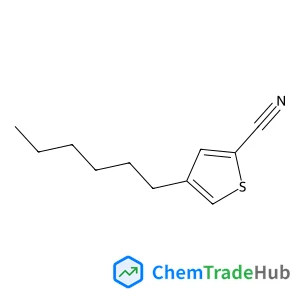
![2-Methyl-2-propanyl 1,6-diazaspiro[3.4]octane-6-carboxylate structure](https://static.chemtradehub.com/structs/115/1158749-79-1-81ee.webp "2-Methyl-2-propanyl 1,6-diazaspiro[3.4]octane-6-carboxylate structure")







