



Mechanical stimulation of energetic materials at the nanoscale
Literature Information
Publication Date
2022-03-30
DOI
10.1039/D2CP00832G
Impact Factor
3.676
Authors
Ekaterina K. Kosareva, Radmir V. Gainutdinov, Adam A. L. Michalchuk, Ivan V. Ananyev, Nikita V. Muravyev
View Original
Abstract
The initiation of energetic materials by mechanical stimuli is a critical stage of their functioning, but remains poorly understood. Using atomic force microscopy (AFM) we explore the microscopic initiation behavior of four prototypical energetic materials: 3,4-dinitropyrazole, ε-CL-20, α-PETN and picric acid. Along with the various chemical structures, these energetic compounds cover a range of application types: a promising melt-cast explosive, the most powerful energetic compound in use, a widespread primary explosive, and a well-established nitroaromatic explosive from the early development of energetics. For the softest materials (picric acid and 3,4-dinitropyrazole), the surfaces were found to behave dynamically, quickly rearranging in response to mechanical deformation. The pit created by nanoscale friction stimulation on the surface of 3,4-dinitropyrazole doubled in volume upon aging for half an hour. Over the same time frame, a similar pit on the picric acid surface increased in volume by more than seven-fold. Remarkably, increased humidity was found to reduce the rate of surface rearrangement, potentially offering an origin for the desensitization of energetic materials when wetted. Finally, we identify an inverse correlation between the surface dynamics and mechanical sensitivity of our test energetic compounds. This strongly suggests that surface dynamics influence a material's ability to dissipate excess energy, acting as a buffer towards mechanical initiation.
Recommended Journals

Crystallography Reports

Chemical Communications

Journal of Peptide Science

Saudi Pharmaceutical Journal

Russian Chemical Bulletin

Chemistry Education Research and Practice

Journal of Saudi Chemical Society

Journal of Natural Medicines

Current Opinion in Colloid & Interface Science

Organic Process Research & Development
Related Literature
Multi-stimuli responsive poly(azodibenzo-18-crown-6-ether)s
S. Wiktorowicz, H. Tenhu, V. Aseyev
2014-04-16
Paper
DOI: 10.1039/C4PY00298A
Synthesis and properties of a rod-g-rod bottlebrush with a semirigid mesogen-jacketed polymer as the side chain
Hai-Jian Tian, Wei Qu, Yu-Feng Zhu, Zhihao Shen, Xing-He Fan
2014-04-22
Paper
DOI: 10.1039/C4PY00033A
The effect of LiNTf2 on the propagation rate coefficient of methyl methacrylate
Benjamin B. Noble, Leesa M. Smith, Michelle L. Coote
2014-06-04
Paper
DOI: 10.1039/C4PY00190G
Bimetallic nickel and cobalt complexes as high-performance catalysts for copolymerization of carbon dioxide with cyclohexene oxide
Hui-Ju Chuang, Chen-Yu Li, Bao-Tsan Ko, Chia-Her Lin
2014-06-09
Communication
DOI: 10.1039/C4PY00528G
ATRP with a light switch: photoinduced ATRP using a household fluorescent lamp
Tao Zhang, Tao Chen, Ihsan Amin, Rainer Jordan
2014-04-01
Paper
DOI: 10.1039/C4PY00346B
You might also like
Compound Q&A
What precautions should be taken when handling lithium chloride hydrate (1:1:1) (CAS: 16712-20-2)?
When handling lithium chloride hydrate (1:1:1) (CAS: 16712-20-2), it is importan...
16712-20-2Lithium chloride hyd...
Compound Q&A
Is 4-(4H-1,2,4-Triazol-4-yl)piperidine (CAS: 690261-92-8) safe?
4-(4H-1,2,4-Triazol-4-yl)piperidine is generally considered safe for use in phar...
690261-92-84-(4H-1,2,4-Triazol-...
Compound Q&A
How should waste containing 1,3-Thiazole-2-carboxamide (CAS: 16733-85-0) be handled?
Waste containing 1,3-Thiazole-2-carboxamide (CAS: 16733-85-0) should be collecte...
16733-85-01,3-Thiazole-2-carbo...
Compound Q&A
What regulatory guidelines apply to 5-(Difluoromethyl)-2-fluorobenzonitrile (CAS: 934175-58-3)?
5-(Difluoromethyl)-2-fluorobenzonitrile (CAS: 934175-58-3) is subject to regulat...
934175-58-35-(Difluoromethyl)-2...
Compound Q&A
How is Methyl 3-acetamido-2-thiophenecarboxylate (CAS: 22288-79-5) typically synthesized?
Methyl 3-acetamido-2-thiophenecarboxylate can be synthesized by the reaction of ...
22288-79-5Methyl 3-acetamido-2...
Compound Q&A
What is 4-Isoquinolinecarbonitrile (CAS: 34846-65-6)?
4-Isoquinolinecarbonitrile is a chemical compound with the CAS number 34846-65-6...
34846-65-64-Isoquinolinecarbon...
Compound Q&A
How should Methyl 1H-1,2,3-triazole-4-carboxylate (CAS: 877309-59-6) be stored?
Store Methyl 1H-1,2,3-triazole-4-carboxylate (CAS: 877309-59-6) in a cool, dry p...
877309-59-6Methyl 1H-1,2,3-tria...
Compound Q&A
What regulatory guidelines apply to 6-Bromo[1,3]thiazolo[5,4-b]pyridin-2-amine (CAS: 1160791-13-8)?
6-Bromo[1,3]thiazolo[5,4-b]pyridin-2-amine (CAS: 1160791-13-8) is subject to the...
1160791-13-86-Bromo[1,3]thiazolo...
Compound Q&A
Is (2S,3S)-2-Ammonio-3-(3,4-dihydroxyphenyl)-3-hydroxypropanoate (CAS: 23651-95-8) safe?
(2S,3S)-2-Ammonio-3-(3,4-dihydroxyphenyl)-3-hydroxypropanoate (CAS: 23651-95-8) ...
23651-95-8(2S,3S)-2-Ammonio-3-...
Compound Q&A
What are the physical and chemical properties of 7-bromo-3-methyl-3,4-dihydroquinazolin-4-one (CAS: 1293987-84-4)?
7-Bromo-3-methyl-3,4-dihydroquinazolin-4-one is a solid with a crystalline form....
1293987-84-47-bromo-3-methyl-3,4...
Source Journal
Physical Chemistry Chemical Physics

CiteScore:
5.5
Self-citation Rate:
10.3%
Articles per Year:
3036
Physical Chemistry Chemical Physics (PCCP) is an international journal co-owned by 19 physical chemistry and physics societies from around the world. This journal publishes original, cutting-edge research in physical chemistry, chemical physics and biophysical chemistry. To be suitable for publication in PCCP, articles must include significant innovation and/or insight into physical chemistry; this is the most important criterion that reviewers and Editors will judge against when evaluating submissions. The journal has a broad scope and welcomes contributions spanning experiment, theory, computation and data science. Topical coverage includes spectroscopy, dynamics, kinetics, statistical mechanics, thermodynamics, electrochemistry, catalysis, surface science, quantum mechanics, quantum computing and machine learning. Interdisciplinary research areas such as polymers and soft matter, materials, nanoscience, energy, surfaces/interfaces, and biophysical chemistry are welcomed if they demonstrate significant innovation and/or insight into physical chemistry. Joined experimental/theoretical studies are particularly appreciated when complementary and based on up-to-date approaches.
Recommended Compounds
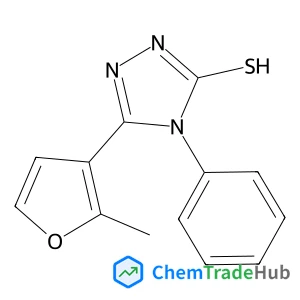
5-(2-Methyl-3-furyl)-4-phenyl-2,4-dihydro-3H-1,2,4-triazole-3-thione
CAS Number:
346464-59-3
Molecular Formula:
C13H11N3OS
![1-[4-(4-Methyl-1H-imidazol-1-yl)phenyl]ethanone structure](https://static.chemtradehub.com/structs/142/142161-53-3-7f55.webp "1-[4-(4-Methyl-1H-imidazol-1-yl)phenyl]ethanone structure")


Recommended Suppliers






Disclaimer
This page provides academic journal information for reference and research purposes only. We are not affiliated with any journal publishers and do not handle publication submissions. For publication-related inquiries, please contact the respective journal publishers directly.
If you notice any inaccuracies in the information displayed, please contact us at support@chemtradehub.com. We will promptly review and address your concerns.