












Machine learning for non-additive intermolecular potentials: quantum chemistry to first-principles predictions
Literature Information
Publication Date
2022-05-24
DOI
10.1039/D2CC01820A
Impact Factor
6.222
Authors
Richard S. Graham, Richard J. Wheatley
View Original
Abstract
Prediction of thermophysical properties from molecular principles requires accurate potential energy surfaces (PES). We present a widely-applicable method to produce first-principles PES from quantum chemistry calculations. Our approach accurately interpolates three-body non-additive interaction data, using the machine learning technique, Gaussian Processes (GP). The GP approach needs no bespoke modification when the number or type of molecules is changed. Our method produces highly accurate interpolation from significantly fewer training points than typical approaches, meaning ab initio calculations can be performed at higher accuracy. As an exemplar we compute the PES for all three-body cross interactions for CO2–Ar mixtures. From these we calculate the CO2–Ar virial coefficients up to 5th order. The resulting virial equation of state (EoS) is convergent for densities up to the critical density. Where convergent, the EoS makes accurate first-principles predictions for a range of thermophysical properties for CO2–Ar mixtures, including the compressibility factor, speed of sound and Joule–Thomson coefficient. Our method has great potential to make wide-ranging first-principles predictions for mixtures of comparably sized molecules. Such predictions can replace the need for expensive, laborious and repetitive experiments and inform the continuum models required for applications.
Related Literature
Regioselective catalytic asymmetric N-alkylation of isoxazol-5-ones with para-quinone methides
Suo-Suo Qi, Zhen-Hui Jiang, Ming-Ming Chu, Yi-Feng Wang, Xue-Yang Chen, Wan-Zhen Ju, Dan-Qian Xu
2020-03-14
Communication
DOI: 10.1039/D0OB00393J
The impact of cation structure upon the acidity of triazolium salts in dimethyl sulfoxide
Nicholas Konstandaras, Michelle H. Dunn, Max S. Guerry, Christopher D. Barnett, Marcus L. Cole, Jason B. Harper
2019-11-14
Paper
DOI: 10.1039/C9OB02258A
A visible-light-induced “on–off” one-pot synthesis of 3-arylacetylene coumarins with AIE properties
Xinjie Wu, Ming Jia, Mengmeng Huang, Jung Keun Kim, Zheng Zhao, Junkai Liu, Jinhu Xi, Yabo Li, Yangjie Wu
2020-04-08
Paper
DOI: 10.1039/D0OB00479K
Exploring the relationship between structure and activity in BODIPYs designed for antimicrobial phototherapy
Burkhard Gitter, Keith J. Flanagan, Christopher J. Kingsbury, Mathias O. Senge
2020-03-06
Paper
DOI: 10.1039/D0OB00188K
Phenylboronic acid-catalyzed tandem construction of S–S and C–S bonds: a new method for the synthesis of benzyl disulfanylsulfone derivatives from S-benzyl thiosulfonates
Raju Jannapu Reddy, Md. Waheed, Gamidi Rama Krishna
2020-04-03
Communication
DOI: 10.1039/D0OB00442A
Synthetic approaches towards avibactam and other diazabicyclooctane β-lactamase inhibitors
Laure Peilleron, Kevin Cariou
2020-01-13
Review Article
DOI: 10.1039/C9OB02605C
p-TsOH-mediated synthesis of substituted 2,4-diaryl-3-sulfonylquinolines from functionalized 2-aminobenzophenones and aromatic β-ketosulfones under microwave irradiation
Chieh-Kai Chan, Chien-Yu Lai, Wei-Chih Lo, Yu-Ting Cheng, Cheng-Chung Wang
2019-12-11
Paper
DOI: 10.1039/C9OB02445J
The visible-light-triggered regioselective alkylation of quinoxalin-2(1H)-ones via decarboxylation coupling
Hongdou Zhang, Jun Xu, Min Zhou, Jianming Zhao, Pengfei Zhang, Wanmei Li
2019-11-14
Paper
DOI: 10.1039/C9OB02203A
Copper-catalyzed direct amination of benzylic hydrocarbons and inactive aliphatic alkanes with arylamines
Hua Yao, Bo Xie, Xiaoyang Zhong, Shengzhou Jin, Sen Lin, Zhaohua Yan
2020-04-10
Communication
DOI: 10.1039/D0OB00491J
1-(2H-Azirine-2-carbonyl)benzotriazoles: building blocks for the synthesis of pyrrole-containing heterocycles‡
Ekaterina E. Galenko, Firuza M. Shakirova, Vladimir A. Bodunov, Mikhail S. Novikov, Alexander F. Khlebnikov
2020-03-03
Paper
DOI: 10.1039/D0OB00206B
You might also like
Compound Q&A
What regulatory guidelines apply to 6-Bromo-2-methylimidazo[1,2-a]pyrimidine (CAS: 1111638-05-1)?
6-Bromo-2-methylimidazo[1,2-a]pyrimidine (CAS: 1111638-05-1) falls under various...
1111638-05-16-Bromo-2-methylimid...
Compound Q&A
Are there alternatives to 1-Pyrrolidineethanol, β-methyl-α-phenyl-, (αS,βR) (CAS: 123620-80-4) in synthesis?
While there are no direct alternatives, similar compounds like 1-Pyrrolidineetha...
123620-80-41-Pyrrolidineethanol...
Compound Q&A
Is 4-Methyl-2,6-bis(2-methyl-2-propanyl)phenyl methylcarbamate (CAS: 1918-11-2) safe?
4-Methyl-2,6-bis(2-methyl-2-propanyl)phenyl methylcarbamate (CAS: 1918-11-2) is ...
1918-11-24-Methyl-2,6-bis(2-m...
Compound Q&A
How should 2-(3-Bromo-4-fluorophenyl)-1,3-dioxolane (CAS: 77771-04-1) be stored?
2-(3-Bromo-4-fluorophenyl)-1,3-dioxolane (CAS: 77771-04-1) should be stored in a...
77771-04-12-(3-Bromo-4-fluorop...
Compound Q&A
What are the physical and chemical properties of 4,5,6,7-Tetrahydro-1H-indazole hydrochloride (CAS: 18161-11-0)?
4,5,6,7-Tetrahydro-1H-indazole hydrochloride is a white crystalline solid with a...
18161-11-04,5,6,7-Tetrahydro-1...
Compound Q&A
What is (2R)-1-Methoxy-3-phenyl-2-propanamine (CAS: 59919-07-2)?
(2R)-1-Methoxy-3-phenyl-2-propanamine is a chiral organic compound with the CAS ...
59919-07-2(2R)-1-Methoxy-3-phe...
Compound Q&A
What industries use Ethyl 1-(1-phenylethyl)-1H-imidazole-5-carboxylate (CAS: 56649-47-9)?
Ethyl 1-(1-phenylethyl)-1H-imidazole-5-carboxylate is used in various industries...
56649-47-9Ethyl 1-(1-phenyleth...
Compound Q&A
What regulatory guidelines apply to 4-[(1E,3S)-1-(4-Hydroxyphenyl)-1,4-pentadien-3-yl]phenol (CAS: 17676-24-3)?
4-[(1E,3S)-1-(4-Hydroxyphenyl)-1,4-pentadien-3-yl]phenol (CAS: 17676-24-3) falls...
17676-24-34-[(1E,3S)-1-(4-Hydr...
Compound Q&A
What industries use (S)-3-Amino-5-phenylpentanoic acid hydrochloride (CAS: 331846-97-0)?
(S)-3-Amino-5-phenylpentanoic acid hydrochloride is primarily used in the pharma...
331846-97-0(S)-3-Amino-5-phenyl...
Compound Q&A
How is 7-methoxy-1-benzothiophene-2-carboxylic acid (CAS: 88791-07-5) typically synthesized?
7-Methoxy-1-benzothiophene-2-carboxylic acid is typically synthesized by reactin...
88791-07-57-methoxy-1-benzothi...
Source Journal
Chemical Communications

CiteScore:
8.6
Self-citation Rate:
4.7%
Articles per Year:
2458
ChemComm publishes urgent research which is of outstanding significance and interest to experts in the field, while also appealing to the journal’s broad chemistry readership. Our communication format is ideally suited to short, urgent studies that are of such importance that they require accelerated publication. Our scope covers all topics in chemistry, and research at the interface of chemistry and other disciplines (such as materials science, nanoscience, physics, engineering and biology) where there is a significant novelty in the chemistry aspects. Major topic areas covered include: Analytical Chemistry Catalysis Chemical Biology and medicinal chemistry Computational Chemistry and Machine Learning Energy and sustainable chemistry Environmental Chemistry Green Chemistry Inorganic Chemistry Materials Chemistry Nanoscience Organic Chemistry Physical Chemistry Polymer Chemistry Supramolecular Chemistry
Recommended Compounds
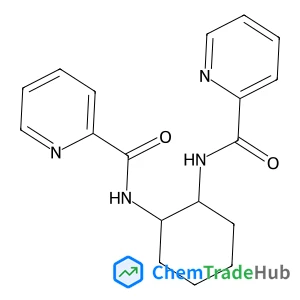
N,N'-(1R,2R)-1,2-Cyclohexanediyldi(2-pyridinecarboxamide)
CAS Number:
218290-24-5
Molecular Formula:
C18H20N4O2
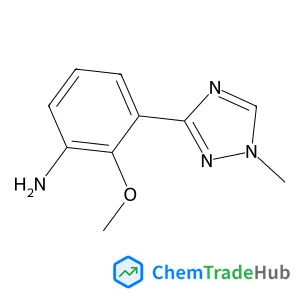
2-Methoxy-3-(1-methyl-1H-1,2,4-triazol-3-yl)aniline
CAS Number:
1609394-10-6
Molecular Formula:
C10H12N4O
Recommended Suppliers


Disclaimer
This page provides academic journal information for reference and research purposes only. We are not affiliated with any journal publishers and do not handle publication submissions. For publication-related inquiries, please contact the respective journal publishers directly.
If you notice any inaccuracies in the information displayed, please contact us at support@chemtradehub.com. We will promptly review and address your concerns.