![N-[2,6-Di(9-anthryl)-4-oxido-8,9,10,11,12,13,14,15-octahydrodinaphtho[2,1-d:1',2'-f][1,3,2]dioxaphosphepin-4-yl]-1,1,1-trifluoromethanesulfonamide structure](https://static.chemtradehub.com/structs/122/1227374-64-2-cdb5.webp "N-[2,6-Di(9-anthryl)-4-oxido-8,9,10,11,12,13,14,15-octahydrodinaphtho[2,1-d:1',2'-f][1,3,2]dioxaphosphepin-4-yl]-1,1,1-trifluoromethanesulfonamide structure")
N-[2,6-Di(9-anthryl)-4-oxido-8,9,10,11,12,13,14,15-octahydrodinaphtho[2,1-d:1',2'-f][1,3,2]dioxaphosphepin-4-yl]-1,1,1-trifluoromethanesulfonamide
CAS Number:
1227374-64-2
Molecular Formula:
C49H37F3NO5PS
Ashish Kumar, Manish Kumar, Vempuluru Navakoteswara Rao, Muthukonda Venkatakrishnan Shankar, Saswata Bhattacharya, Venkata Krishnan
The investigation of the structural and morphological stability of leaf-templated and oxygen vacancy engineered materials is of great importance along with the detailed study of catalytically active sites. In this work, oxygen vacancy engineered leaf-templated CaTiO3 materials have been synthesized by using NaBH4 as a reductant and the formation of oxygen vacancies was confirmed by using different spectroscopic and morphological techniques. Leaf-templated CaTiO3 with the optimum amount of oxygen vacancies showed improved photocatalytic H2 evolution and N2 fixation abilities in comparison to pristine CaTiO3. Density functional theory calculations suggested that the O-vacancies present in the TiO2 plane played a crucial role in enhancing the photocatalytic performance than the O-vacancies present in the CaO plane of CaTiO3. The optimized material showed good structural stability but with a loss in morphological features. It is concluded that the benefits of efficient light absorption by the three-dimensional morphology of leaf-templated semiconductor materials could not be utilized in the studied solid–liquid binary phase reactions. The enhanced photocatalytic performance could solely be attributed to the optimum oxygen vacancy sites, which promote the surface reactions and improve the separation of photogenerated charge carriers. This work is expected to provide a future direction in the smart design of application-oriented three-dimensional photocatalysts and other materials.
DOI: 10.1039/C5CP01136A
Yushi Wen, Chaoyang Zhang, Xianggui Xue, Xinping Long
DOI: 10.1039/C5CP00006H
Shuang Gao, Fei Zeng, Minjuan Wang, Guangyue Wang, Cheng Song, Feng Pan
DOI: 10.1039/C5CP01235J
Florence Haudin, V. Brasiliense, Julyan H. E. Cartwright, Fabian Brau, A. De Wit
DOI: 10.1039/C5CP00068H
Jieping Zhong, Shuangquan Liao, Wei Gong, Jianhe Liao, Lingxue Kong
DOI: 10.1039/C5CP00465A
Deniz Çakır, Deniz Kecik, Hasan Sahin, Engin Durgun, Francois M. Peeters
DOI: 10.1039/C5CP00414D
Jin Zhang, S. A. Meguid
DOI: 10.1039/C5CP00914F
Khalid Elamin, Helén Jansson, Jan Swenson
DOI: 10.1039/C5CP00751H
Agata Arendt, Marek Samoc, Sławomir Szafert
DOI: 10.1039/C5CP01661D
Kada Yesudas, Eluvathingal D. Jemmis, Kotamarthi Bhanuprakash
DOI: 10.1039/C5CP01410G
(5-Sulfamoyl-3-pyridinyl)boronic acid is primarily used in chemical synthesis, p...
Benzyl 2-methyl-2-(methylsulfonyl)-4-pentenoate is typically synthesized via est...
When handling 8-Fluoroquinolin-6-ol (CAS: 209353-22-0), it is important to use p...
1,3-Dibromo-5-(2-methyl-2-propanyl)benzene (CAS: 129316-09-2) is a crystalline c...
Ethyl 7-chloro-4-oxo-1-(1,3-thiazol-2-yl)-1,4-dihydro-1,8-naphthyridine-3-carbox...
When handling Delta-7-Avenasterol (CAS: 23290-26-8), it is important to wear app...
Proper handling involves the use of personal protective equipment such as gloves...
When handling 2-Methyl-2-proanyl 4-[(2-aminophenyl)amino]-1-piperidinecarboxylat...
N-Methyl-4-chlorobenzylamine hydrochloride (CAS: 65542-24-7) is a organic compou...
[2-(Dodecyloxy)ethoxy]acetic acid (CAS: 27306-90-7) is generally considered safe...
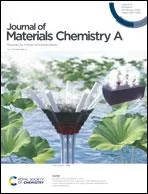
Journal of Materials Chemistry A, B & C cover high quality studies across all fields of materials chemistry. The journals focus on those theoretical or experimental studies that report new understanding, applications, properties and synthesis of materials. The journals have a strong history of publishing quality reports of interest to interdisciplinary communities and providing an efficient and rigorous service through peer review and publication. The journals are led by an international team of Editors-in-Chief and Associate Editors who are all active researchers in their fields. Journal of Materials Chemistry A, B & C are separated by the intended application of the material studied. Broadly, applications in energy and sustainability are of interest to Journal of Materials Chemistry A, applications in biology and medicine are of interest to Journal of Materials Chemistry B, and applications in optical, magnetic and electronic devices are of interest to Journal of Materials Chemistry C. More than one Journal of Materials Chemistry journal may be suitable for certain fields and researchers are encouraged to submit their paper to the journal that they feel best fits for their particular article. Example topic areas within the scope of Journal of Materials Chemistry A are listed below. This list is neither exhaustive nor exclusive. Artificial photosynthesis Batteries Carbon dioxide conversion Catalysis Fuel cells Gas capture/separation/storage Green/sustainable materials Hydrogen generation Hydrogen storage Photocatalysis Photovoltaics Self-cleaning materials Self-healing materials Sensors Supercapacitors Thermoelectrics Water splitting Water treatment