












Spectral dependence of nonlinear optical properties of symmetrical octatetraynes with p-substituted phenyl end-groups
Literature Information
Publication Date
2015-04-20
DOI
10.1039/C5CP01661D
Impact Factor
3.676
Authors
Agata Arendt, Marek Samoc, Sławomir Szafert
View Original
Abstract
Organic compounds containing conjugated carbon chains have been extensively investigated due to their interesting properties including nonlinear optical response. Polyynes are a group of compounds where the conjugation can be modified by appropriate selection of end-groups, enabling “control” and improvement of nonlinear effects. In this work, we investigate three newly synthesized aryl end-capped octatetraynes, exhibiting strong nonlinear absorption and nonlinear refraction properties, which can be attributed to the presence of aryl end-groups with electron-withdrawing functional groups suitable for further extending the conjugation. Nonlinear optical measurements were performed using a f-scan (modified Z-scan) technique with a femtosecond laser system at various wavelengths in the visible and near-infrared range (540–1600 nm), revealing strong negative third-order nonlinear refraction (3NR) and two-photon absorption (2PA) below 600 nm and a noticeable three-photon absorption (3PA) at longer wavelengths. The results of spectroscopic characterization and the crystallographic data for the investigated compounds are also presented.
Related Literature
The synthesis of enantiomerically pure 4-substituted [2.2]paracyclophane derivatives by sulfoxide–metal exchange
Peter B. Hitchcock, Gareth J. Rowlands, Rakesh Parmar
2005-07-25
Communication
DOI: 10.1039/B507394D
Polydipyrrole- and polydicarbazole-nanorods as new nanosized supports for DNA hybridization
Jean-Paul Lellouche, Senthil Govindaraji, Augustine Joseph, Jyongsik Jang, Kyung Jin Lee
2005-07-14
Communication
DOI: 10.1039/B502483H
Biofunctionalization of fluorescent-magnetic-bifunctional nanospheres and their applications
Guo-Ping Wang, Er-Qun Song, Hai-Yan Xie, Zhi-Ling Zhang, Zhi-Quan Tian, Chao Zuo, Dai-Wen Pang, Dao-Cheng Wu, Yun-Bo Shi
2005-08-08
Communication
DOI: 10.1039/B508075D
High-nuclearity homometallic iron and nickel clusters: Fe22 and Ni24 complexes from the use of N-methyldiethanolamine
Dolos Foguet-Albiol, Khalil A. Abboud, George Christou
2005-08-03
Communication
DOI: 10.1039/B507748F
Thiolate-bridged heterodinuclear platinum–zinc chelates as models for ternary platinum–DNA–protein complexes and zinc ejection from zinc fingers. Evidence from studies using ESI-mass spectrometry
Qin Liu, Melissa Golden, Marcetta Y. Darensbourg, Nicholas Farrell
2005-08-10
Communication
DOI: 10.1039/B507751F
Organogel of an 8-quinolinol platinum(ii) chelate derivative and its efficient phosphorescence emission effected by inhibition of dioxygen quenching
Michihiro Shirakawa, Norifumi Fujita, Takahiro Tani, Kenji Kaneko, Seiji Shinkai
2005-07-04
Communication
DOI: 10.1039/B506148B
Networked calix[4]arenepolymers with unusual mechanical properties
Joseph N. Grima, Kenneth E. Evans
2005-07-14
Communication
DOI: 10.1039/B505839B
Gold supported on a mesoporous CeO2matrix as an efficient catalyst in the selective aerobic oxidation of aldehydes in the liquid phase
Avelino Corma, Marcelo E. Domine
2005-07-19
Communication
DOI: 10.1039/B506685A
Porous polystyrene microspheres having dimpled surface structures prepared within micellar assemblies of amphiphilic silica particles in water
Yoshiko K. Takahara, Koji Tachi, Takao Sakata, Toshiaki Hasegawa, Hirotaro Mori, Michio Matsumura, Bunsho Ohtani
2005-07-21
Communication
DOI: 10.1039/B507123B
You might also like
Compound Q&A
How should waste containing N-Methoxy-N-methyl-1,3-thiazole-5-carboxamide (CAS: 898825-89-3) be handled?
Waste containing N-Methoxy-N-methyl-1,3-thiazole-5-carboxamide (CAS: 898825-89-3...
898825-89-3N-Methoxy-N-methyl-1...
Compound Q&A
How should N-(4-Biphenylyl)dibenzo[b,d]furan-4-amine (CAS: 1318338-47-4) be stored?
N-(4-Biphenylyl)dibenzo[b,d]furan-4-amine should be stored in a tightly sealed c...
1318338-47-4N-(4-Biphenylyl)dibe...
Compound Q&A
What is the market or research trend for 3-Acetamido-5-amino-2,4,6-triiodobenzoic acid (CAS: 1713-07-1)?
The market for 3-Acetamido-5-amino-2,4,6-triiodobenzoic acid (CAS: 1713-07-1) is...
1713-07-13-Acetamido-5-amino-...
Compound Q&A
How should Benzyl 2-O-acetyl-3,4,6-tri-O-benzyl-beta-D-galactopyranoside (CAS: 61820-03-9) be stored?
Benzyl 2-O-acetyl-3,4,6-tri-O-benzyl-beta-D-galactopyranoside (CAS: 61820-03-9) ...
61820-03-9Benzyl 2-O-acetyl-3,...
Compound Q&A
What regulatory guidelines apply to 2-Ethylpiperazine dihydrochloride (CAS: 438050-52-3)?
2-Ethylpiperazine dihydrochloride (CAS: 438050-52-3) is regulated under the Glob...
438050-52-32-Ethylpiperazine di...
Compound Q&A
What regulatory guidelines apply to 1,1'-[1,3-Phenylenebis(methylene)]bis(3-methyl-1H-pyrrole-2,5-dione) (CAS: 119462-56-5)?
1,1'-[1,3-Phenylenebis(methylene)]bis(3-methyl-1H-pyrrole-2,5-dione) (CAS: 11946...
119462-56-51,1'-[1,3-Phenyleneb...
Compound Q&A
Are there alternatives to 5-Fluoro-2-(1-pyrrolidinyl)pyridine (CAS: 1287217-79-1) in synthesis?
Several alternatives can be used in the synthesis of 5-Fluoro-2-(1-pyrrolidinyl)...
1287217-79-15-Fluoro-2-(1-pyrrol...
Compound Q&A
What precautions should be taken when handling 1-((2R,3R,4R,5R)-5-((bis(4-methoxyphenyl)(phenyl)methoxy)methyl)-4-hydroxy-3-methoxytetrahydrofuran-2-yl)-5-methylpyrimidine-2,4(1H,3H)-dione (CAS: 153631-19-7)?
Proper personal protective equipment (PPE) must be worn when handling this compo...
153631-19-71-((2R,3R,4R,5R)-5-(...
Compound Q&A
What precautions should be taken when handling 6-Bromoimidazo[1,2-a]pyridin-8-amine (CAS: 676371-00-9)?
When handling 6-Bromoimidazo[1,2-a]pyridin-8-amine, it is important to wear appr...
676371-00-96-Bromoimidazo[1,2-a...
Compound Q&A
Are there alternatives to (2S,4R)-4-(4-Nitrobenzyl)pyrrolidine-2-carboxylic acid hydrochloride (CAS: 1049740-22-8) in synthesis?
Alternatives to (2S,4R)-4-(4-Nitrobenzyl)pyrrolidine-2-carboxylic acid hydrochlo...
1049740-22-8(2S,4R)-4-(4-Nitrobe...
Source Journal
Physical Chemistry Chemical Physics

CiteScore:
5.5
Self-citation Rate:
10.3%
Articles per Year:
3036
Physical Chemistry Chemical Physics (PCCP) is an international journal co-owned by 19 physical chemistry and physics societies from around the world. This journal publishes original, cutting-edge research in physical chemistry, chemical physics and biophysical chemistry. To be suitable for publication in PCCP, articles must include significant innovation and/or insight into physical chemistry; this is the most important criterion that reviewers and Editors will judge against when evaluating submissions. The journal has a broad scope and welcomes contributions spanning experiment, theory, computation and data science. Topical coverage includes spectroscopy, dynamics, kinetics, statistical mechanics, thermodynamics, electrochemistry, catalysis, surface science, quantum mechanics, quantum computing and machine learning. Interdisciplinary research areas such as polymers and soft matter, materials, nanoscience, energy, surfaces/interfaces, and biophysical chemistry are welcomed if they demonstrate significant innovation and/or insight into physical chemistry. Joined experimental/theoretical studies are particularly appreciated when complementary and based on up-to-date approaches.
Recommended Compounds
![4-Chloro-2-{[(2-chlorophenoxy)acetyl]amino}benzoic acid structure](https://static.chemtradehub.com/structs/351/351424-20-9-9467.webp "4-Chloro-2-{[(2-chlorophenoxy)acetyl]amino}benzoic acid structure")
4-Chloro-2-{[(2-chlorophenoxy)acetyl]amino}benzoic acid
CAS Number:
351424-20-9
Molecular Formula:
C15H11Cl2NO4
![2-Methylbenzo[h]quinoline structure](https://static.chemtradehub.com/structs/605/605-88-9-ac43.webp "2-Methylbenzo[h]quinoline structure")
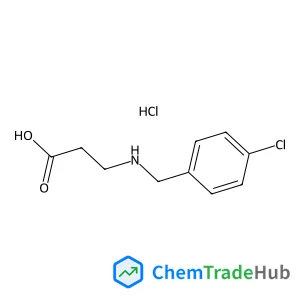
N-(4-Chlorobenzyl)-beta-alanine hydrochloride (1:1)
CAS Number:
1172479-10-5
Molecular Formula:
C10H13Cl2NO2
Recommended Suppliers






Disclaimer
This page provides academic journal information for reference and research purposes only. We are not affiliated with any journal publishers and do not handle publication submissions. For publication-related inquiries, please contact the respective journal publishers directly.
If you notice any inaccuracies in the information displayed, please contact us at support@chemtradehub.com. We will promptly review and address your concerns.