












Molecular insights into the allosteric coupling mechanism between an agonist and two different transducers for μ-opioid receptors
Literature Information
Publication Date
2022-01-31
DOI
10.1039/D1CP05736G
Impact Factor
3.676
Authors
Fuhui Zhang, Yuan Yuan, Yichi Chen, Jianfang Chen, Yanzhi Guo, Xuemei Pu
View Original
Abstract
G protein-coupled receptors (GPCRs) as the most important class of pharmacological targets regulate G-protein and β-arrestin-mediated signaling through allosteric interplay, which are responsible for different biochemical and physiological actions like therapeutic efficacy and side effects. However, the allosteric mechanism underlying preferentially recruiting one transducer versus the other has been poorly understood, limiting drug design. Motivated by this issue, we utilize accelerated molecular dynamics simulation coupled with potential of mean force (PMF), molecular mechanics Poisson Boltzmann surface area (MM/PBSA) and protein structure network (PSN) to study two ternary complex systems of a representative class A GPCR (μ-opioid receptor (μOR)) bound by an agonist and one specific transducer (G-protein and β-arrestin). The results show that no significant difference exists in the whole structure of μOR between two transducer couplings, but displays transducer-dependent changes in the intracellular binding region of μOR, where the β-arrestin coupling results in a narrower crevice with TM7 inward movement compared with the G-protein. In addition, both the G-protein and β-arrestin coupling can increase the binding affinity of the agonist to the receptor. However, the interactions between the agonist and μOR also exhibit transducer-specific changes, in particular for the interaction with ECL2 that plays an important role in recruiting β-arrestin. The allosteric network analysis further indicates that Y1483.33, F1523.37, F1563.41, N1914.49, T1603.45, Y1062.42, W2936.48, F2896.44, I2485.54 and Y2525.58 play important roles in equally activating G-protein and β-arrestin. In contrast, M1613.46 and R1653.50 devote important contributions to preferentially recruit G-protein while D1643.49 and R179ICL2 are revealed to be important for selectively activating β-arrestin. The observations provide useful information for understanding the biased activation mechanism.
Related Literature
Short peptide based self-assembled nanostructures: implications in drug delivery and tissue engineering
Virander Singh Chauhan
2014-04-23
Review Article
DOI: 10.1039/C4PY00173G
Synthesis of multi-functionalized hydrogels by a thiolactone-based synthetic protocol
Stefan Reinicke, Pieter Espeel, Milan M. Stamenović, Filip E. Du Prez
2014-05-20
Paper
DOI: 10.1039/C4PY00468J
A well-defined coil–comb polycationic brush with “star polymers” as side chains for gene delivery
Mingming Zhang, Qingqing Xiong, Yinsong Wang, Zhibao Zhang, Wei Shen, Lingrong Liu, Quanyao Wang
2014-04-22
Paper
DOI: 10.1039/C4PY00311J
Highly stable hybrid selenophene-3,4-ethylenedioxythiophene as electrically conducting and electrochromic polymers
Shijie Zhen, Shimin Zhang, Guoqun Zhao
2014-05-29
Paper
DOI: 10.1039/C4PY00529E
Bimetallic nickel and cobalt complexes as high-performance catalysts for copolymerization of carbon dioxide with cyclohexene oxide
Hui-Ju Chuang, Chen-Yu Li, Bao-Tsan Ko, Chia-Her Lin
2014-06-09
Communication
DOI: 10.1039/C4PY00528G
Switch on/off microcapsules for controllable photosensitive drug release in a ‘release-cease-recommence’ mode
Hang Lin, Wang Xiao, Si-Yong Qin, Si-Xue Cheng, Xian-Zheng Zhang
2014-05-15
Communication
DOI: 10.1039/C4PY00564C
Nano-building block based-hybrid organic–inorganic copolymers with self-healing properties
A. Guinault, S. Delalande
2014-04-03
Paper
DOI: 10.1039/C4PY00172A
Stability of star-shaped RAFT polystyrenes under mechanical and thermal stress
Mahdi Abbasi, Kamran Riazi, Nico Dingenouts, Manfred Wilhelm
2014-05-08
Paper
DOI: 10.1039/C4PY00484A
Supramolecular flower micelle formation of polyrotaxane-containing triblock copolymers prepared from macro-chain transfer agents bearing molecular hooks
Atsushi Tamura, Hajime Tanaka, Nobuhiko Yui
2014-05-16
Paper
DOI: 10.1039/C4PY00379A
You might also like
Compound Q&A
What precautions should be taken when handling lithium chloride hydrate (1:1:1) (CAS: 16712-20-2)?
When handling lithium chloride hydrate (1:1:1) (CAS: 16712-20-2), it is importan...
16712-20-2Lithium chloride hyd...
Compound Q&A
Is 4-(4H-1,2,4-Triazol-4-yl)piperidine (CAS: 690261-92-8) safe?
4-(4H-1,2,4-Triazol-4-yl)piperidine is generally considered safe for use in phar...
690261-92-84-(4H-1,2,4-Triazol-...
Compound Q&A
How should waste containing 1,3-Thiazole-2-carboxamide (CAS: 16733-85-0) be handled?
Waste containing 1,3-Thiazole-2-carboxamide (CAS: 16733-85-0) should be collecte...
16733-85-01,3-Thiazole-2-carbo...
Compound Q&A
What regulatory guidelines apply to 5-(Difluoromethyl)-2-fluorobenzonitrile (CAS: 934175-58-3)?
5-(Difluoromethyl)-2-fluorobenzonitrile (CAS: 934175-58-3) is subject to regulat...
934175-58-35-(Difluoromethyl)-2...
Compound Q&A
How is Methyl 3-acetamido-2-thiophenecarboxylate (CAS: 22288-79-5) typically synthesized?
Methyl 3-acetamido-2-thiophenecarboxylate can be synthesized by the reaction of ...
22288-79-5Methyl 3-acetamido-2...
Compound Q&A
What is 4-Isoquinolinecarbonitrile (CAS: 34846-65-6)?
4-Isoquinolinecarbonitrile is a chemical compound with the CAS number 34846-65-6...
34846-65-64-Isoquinolinecarbon...
Compound Q&A
How should Methyl 1H-1,2,3-triazole-4-carboxylate (CAS: 877309-59-6) be stored?
Store Methyl 1H-1,2,3-triazole-4-carboxylate (CAS: 877309-59-6) in a cool, dry p...
877309-59-6Methyl 1H-1,2,3-tria...
Compound Q&A
What regulatory guidelines apply to 6-Bromo[1,3]thiazolo[5,4-b]pyridin-2-amine (CAS: 1160791-13-8)?
6-Bromo[1,3]thiazolo[5,4-b]pyridin-2-amine (CAS: 1160791-13-8) is subject to the...
1160791-13-86-Bromo[1,3]thiazolo...
Compound Q&A
Is (2S,3S)-2-Ammonio-3-(3,4-dihydroxyphenyl)-3-hydroxypropanoate (CAS: 23651-95-8) safe?
(2S,3S)-2-Ammonio-3-(3,4-dihydroxyphenyl)-3-hydroxypropanoate (CAS: 23651-95-8) ...
23651-95-8(2S,3S)-2-Ammonio-3-...
Compound Q&A
What are the physical and chemical properties of 7-bromo-3-methyl-3,4-dihydroquinazolin-4-one (CAS: 1293987-84-4)?
7-Bromo-3-methyl-3,4-dihydroquinazolin-4-one is a solid with a crystalline form....
1293987-84-47-bromo-3-methyl-3,4...
Source Journal
Physical Chemistry Chemical Physics

CiteScore:
5.5
Self-citation Rate:
10.3%
Articles per Year:
3036
Physical Chemistry Chemical Physics (PCCP) is an international journal co-owned by 19 physical chemistry and physics societies from around the world. This journal publishes original, cutting-edge research in physical chemistry, chemical physics and biophysical chemistry. To be suitable for publication in PCCP, articles must include significant innovation and/or insight into physical chemistry; this is the most important criterion that reviewers and Editors will judge against when evaluating submissions. The journal has a broad scope and welcomes contributions spanning experiment, theory, computation and data science. Topical coverage includes spectroscopy, dynamics, kinetics, statistical mechanics, thermodynamics, electrochemistry, catalysis, surface science, quantum mechanics, quantum computing and machine learning. Interdisciplinary research areas such as polymers and soft matter, materials, nanoscience, energy, surfaces/interfaces, and biophysical chemistry are welcomed if they demonstrate significant innovation and/or insight into physical chemistry. Joined experimental/theoretical studies are particularly appreciated when complementary and based on up-to-date approaches.
Recommended Compounds
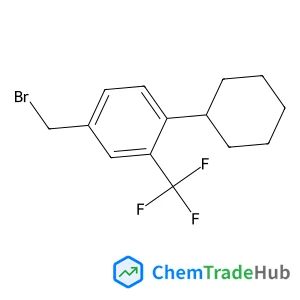
4-(Bromomethyl)-1-cyclohexyl-2-(trifluoromethyl)benzene
CAS Number:
800381-60-6
Molecular Formula:
C14H16BrF3
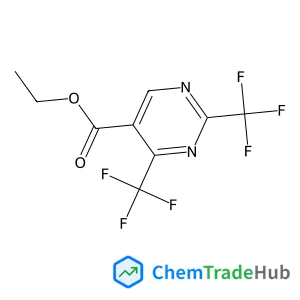
Ethyl 2,4-bis(trifluoromethyl)-5-pyrimidinecarboxylate
CAS Number:
188781-15-9
Molecular Formula:
C9H6F6N2O2
Recommended Suppliers





Disclaimer
This page provides academic journal information for reference and research purposes only. We are not affiliated with any journal publishers and do not handle publication submissions. For publication-related inquiries, please contact the respective journal publishers directly.
If you notice any inaccuracies in the information displayed, please contact us at support@chemtradehub.com. We will promptly review and address your concerns.