












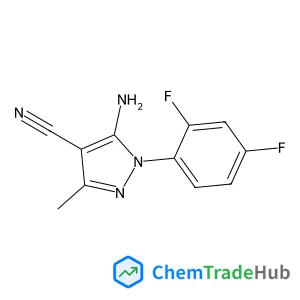
5-Amino-1-(2,4-difluorophenyl)-3-methyl-1H-pyrazole-4-carbonitrile
CAS Number:
1020057-92-4
Molecular Formula:
C11H8F2N4
Peter R. Birkin, Jack J. Youngs, Tadd T. Truscott, Silvana Martini
Understanding the origins of the enhancement of crystallisation of a lipid (all-purpose shortening, APS) through the application of ultrasound is a fundamental pre-requisite for the exploitation of this technique in a wider context. To this end, we show here a number of measurements designed to probe the mechanisms responsible for this effect. For example, we show how the type of bubble cluster, produced at the sound source, alters the bubble population and residency time. In addition, to probe the various contributions to the enhanced crystallisation rate, isolation of the cluster environment below the piston like emitter (PLE) used as the ultrasonic source was shown to reduce the enhancement observed, but did not remove it entirely. This implied that the exposure of the liquid to pressure shocks and the environment around the cluster has a positive effect on the crystallisation kinetics. In turn the addition of extra seed crystals and mechanical agitation also enhances the rate of crystallisation. Finally, the time at which ultrasonic irradiation of the fluid is applied is shown to alter the kinetics observed. These observations suggest that two components are important: large bubble populations and mechanical effects on pre-existing crystals. These findings suggest that maximising these effects could be an eloquent way to enhance and control the material characteristics of materials produced in this manner.
Balázs Barhács, Ewald Janssens
DOI: 10.1039/D2CP01316A
J. C. Woicik
DOI: 10.1039/D2CP00912A
Cole D. Allen, Susan L. B. Rempe, Timothy S. Zwier, Pengyu Ren
DOI: 10.1039/D2CP00717G
Xing Zou, Li-Li Liu, Anrong Wang, Shi-Fa Wang, Yong Wei, Chun-Ming Yang, Lei Hu
DOI: 10.1039/D2CP03069A
Muhammad Shafiq Bin Mohd Yusof, Hongwei Song, Tushar Debnath, Bethany Lowe, Zhi-Heng Loh
DOI: 10.1039/D2CP00505K
Oihana Galparsoro, Pascal Larrégaray
DOI: 10.1039/D2CP01850K
Aleksandra Leszczyk, Paweł Tecmer, Dariusz Kedziera, Katharina Boguslawski
DOI: 10.1039/D2CP03377A
DOI: 10.1039/D1CP05311F
Daron M. Standley, Tomoko Matsuda, Mohammad Reza Housaindokht
DOI: 10.1039/D2CP01279K
Seth Beck, Phillip Choi, Samir H. Mushrif
DOI: 10.1039/D2CP01683D
Ethyl 4-chlorothieno[2,3-b]pyridine-5-carboxylate (CAS: 59713-58-5) can be synth...
5-Methyl-1H-indole-3-carbaldehyde (CAS: 52562-50-2) is subject to various regula...
(1,3-Dimethyl-2,4-dioxo-1,2,3,4-tetrahydro-5-pyrimidinyl)boronic acid is a white...
Waste containing Sulfocostunolide A (CAS: 1016983-51-9) should be handled with c...
When handling Murraxocin (CAS: 88478-44-8), ensure proper personal protective eq...
Formvar (CAS: 63148-64-1) is an alkyd resin characterized by a high molecular we...
(S)-4-benzyl-2-((benzyloxy)methyl)morpholine is generally safe when handled with...
Methyl 1-(5-bromo-2-pyrimidinyl)cyclopropanecarboxylate (CAS: 1447607-69-3) is p...
2-Methyl-1-phenyl-1-propanamine hydrochloride (CAS: 24290-47-9) is generally con...
3-(4-Bromophenyl)-2-methylpropanoic acid is synthesized through a multi-step pro...

Physical Chemistry Chemical Physics (PCCP) is an international journal co-owned by 19 physical chemistry and physics societies from around the world. This journal publishes original, cutting-edge research in physical chemistry, chemical physics and biophysical chemistry. To be suitable for publication in PCCP, articles must include significant innovation and/or insight into physical chemistry; this is the most important criterion that reviewers and Editors will judge against when evaluating submissions. The journal has a broad scope and welcomes contributions spanning experiment, theory, computation and data science. Topical coverage includes spectroscopy, dynamics, kinetics, statistical mechanics, thermodynamics, electrochemistry, catalysis, surface science, quantum mechanics, quantum computing and machine learning. Interdisciplinary research areas such as polymers and soft matter, materials, nanoscience, energy, surfaces/interfaces, and biophysical chemistry are welcomed if they demonstrate significant innovation and/or insight into physical chemistry. Joined experimental/theoretical studies are particularly appreciated when complementary and based on up-to-date approaches.
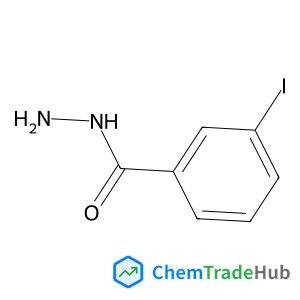
![4-{1-[4-(4,4,5,5-Tetramethyl-1,3,2-dioxaborolan-2-yl)phenyl]cyclopropyl}morpholine structure](https://static.chemtradehub.com/structs/120/1206594-08-2-7afb.webp "4-{1-[4-(4,4,5,5-Tetramethyl-1,3,2-dioxaborolan-2-yl)phenyl]cyclopropyl}morpholine structure")
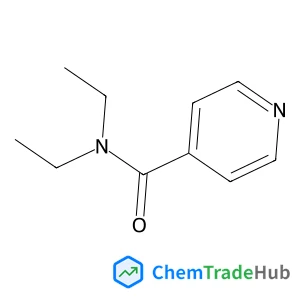
![Imidazo[1,5-a]pyrazine structure](https://static.chemtradehub.com/structs/274/274-49-7-d749.webp "Imidazo[1,5-a]pyrazine structure")



