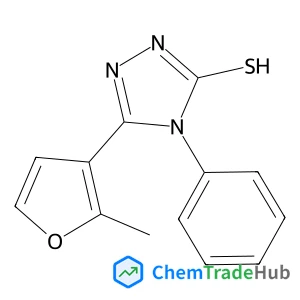
5-(2-Methyl-3-furyl)-4-phenyl-2,4-dihydro-3H-1,2,4-triazole-3-thione
CAS Number:
346464-59-3
Molecular Formula:
C13H11N3OS
Romain Dupuis, Seung Ho Hahn, Adri C. T. van Duin, Roland J.-M. Pellenq, Arnaud Poulesquen
The precipitation of zeolite nanoparticles involves the initial formation of metastable precursors, such as amorphous entities, that crystallize through non-classical pathways. Here, using reactive force field-based simulations, we reveal how aluminosilicate oligomers grow concomitantly to the decondensation of silicate entities during the initial step of the reaction. Aluminate clusters first form in the solution, thus violating the Loewenstein rule in the first instant of the reaction, which is then followed by their connection with silicate oligomers at the terminal silanol groups before reorganization to finally diffuse within the silicate oligomers to form stable amorphous aluminosilicate nanoparticles that do obey the Loewenstein rule. Our results clearly indicate that aluminate does not serve as the nucleation center for the growth of aluminosilicates in a nucleation-like process but rather proceeds via an aggregation process. The coexistence of aluminosilicate oligomers and small silicate entities induces a phase separation that promotes the precipitation of zeolites with aging.

Russian Journal of Coordination Chemistry

Current Opinion in Solid State & Materials Science

Crystallography Reports

Journal of Natural Medicines

Saudi Pharmaceutical Journal

Chemistry Education Research and Practice

Drug Discovery Today

Current Opinion in Colloid & Interface Science

Russian Journal of Applied Chemistry

Journal of Saudi Chemical Society
Yuanyuan Yuan, Shudong Lin, Du Cheng, Xiaoying Wang, Qing Jiang, Xintao Shuai
DOI: 10.1039/C4PY00291A
DOI: 10.1039/C4PY00473F
Ying Li, Ye Liu, Tao Gong, Lin Wang, Shaobing Zhou
DOI: 10.1039/C4PY00474D
Thavasyappan Thambi, V. G. Deepagan, Hyewon Ko, Gi-Ra Yi, Jun Young Lee, Doo Sung Lee
DOI: 10.1039/C4PY00567H
A. Guinault, S. Delalande
DOI: 10.1039/C4PY00172A
Virander Singh Chauhan
DOI: 10.1039/C4PY00173G
Xiuyu Jiang, Xue Jiang, Guolin Lu, Chun Feng, Xiaoyu Huang
DOI: 10.1039/C4PY00415A
When handling lithium chloride hydrate (1:1:1) (CAS: 16712-20-2), it is importan...
4-(4H-1,2,4-Triazol-4-yl)piperidine is generally considered safe for use in phar...
Waste containing 1,3-Thiazole-2-carboxamide (CAS: 16733-85-0) should be collecte...
5-(Difluoromethyl)-2-fluorobenzonitrile (CAS: 934175-58-3) is subject to regulat...
Methyl 3-acetamido-2-thiophenecarboxylate can be synthesized by the reaction of ...
4-Isoquinolinecarbonitrile is a chemical compound with the CAS number 34846-65-6...
Store Methyl 1H-1,2,3-triazole-4-carboxylate (CAS: 877309-59-6) in a cool, dry p...
6-Bromo[1,3]thiazolo[5,4-b]pyridin-2-amine (CAS: 1160791-13-8) is subject to the...
(2S,3S)-2-Ammonio-3-(3,4-dihydroxyphenyl)-3-hydroxypropanoate (CAS: 23651-95-8) ...
7-Bromo-3-methyl-3,4-dihydroquinazolin-4-one is a solid with a crystalline form....

Physical Chemistry Chemical Physics (PCCP) is an international journal co-owned by 19 physical chemistry and physics societies from around the world. This journal publishes original, cutting-edge research in physical chemistry, chemical physics and biophysical chemistry. To be suitable for publication in PCCP, articles must include significant innovation and/or insight into physical chemistry; this is the most important criterion that reviewers and Editors will judge against when evaluating submissions. The journal has a broad scope and welcomes contributions spanning experiment, theory, computation and data science. Topical coverage includes spectroscopy, dynamics, kinetics, statistical mechanics, thermodynamics, electrochemistry, catalysis, surface science, quantum mechanics, quantum computing and machine learning. Interdisciplinary research areas such as polymers and soft matter, materials, nanoscience, energy, surfaces/interfaces, and biophysical chemistry are welcomed if they demonstrate significant innovation and/or insight into physical chemistry. Joined experimental/theoretical studies are particularly appreciated when complementary and based on up-to-date approaches.
![8-Bromo-6-fluoro[1,2,4]triazolo[1,5-a]pyridin-2-amine structure](https://static.chemtradehub.com/structs/125/1257705-51-3-9f4a.webp "8-Bromo-6-fluoro[1,2,4]triazolo[1,5-a]pyridin-2-amine structure")