












Effects of stearyl alcohol monolayer on the structure, dynamics and vibrational sum frequency generation spectroscopy of interfacial water
Literature Information
Publication Date
2022-02-28
DOI
10.1039/D1CP04944E
Impact Factor
3.676
Authors
Banshi Das, Amalendu Chandra
View Original
Abstract
The structure, dynamics and vibrational spectroscopy of a water surface covered by a monolayer of stearyl alcohol (STA) are investigated by means of molecular dynamics simulations and vibrational sum frequency generation (VSFG) spectral calculations. The STA molecules possess long linear alkyl chains without any branching and have a rather large hydrophobic surface area. The STA–water interface is found to be rather narrow with an ordered outward arrangement of the alcohol chains at the water surface. The water molecules in the interfacial region which contribute most to the observed VSFG spectrum are identified. It is shown that the observed red shift in the hydrogen bonded part of the VSFG spectrum can originate from partial cancellation of the spectral responses from up and down-oriented OH moieties of interfacial water which are hydrogen bonded, respectively, to alcohol and water molecules. The effects of intra and intermolecular coupling to the VSFG spectrum are also calculated for the STA–water interface considered here. On the dynamical side, a slowing down of the hydrogen bond and orientational relaxation is found for the interfacial water. It is found that the ordered arrangement of STA molecules at the surface holds the interfacial water molecules rather tightly and slows down the dynamics. The current results of the STA–water interface are also compared with those of the tertiary butyl alcohol (TBA)–water interface where the alcohol has a fully branched hydrophobic part of the lower surface area.
Recommended Journals
Related Literature
Controlling micro-phase separation in semi-crystalline/amorphous conjugated block copolymers
Lianshan Li, Zhiyuan Tian, Zhiyong Tang
2014-05-21
Communication
DOI: 10.1039/C4PY00498A
Thiol–ene “click” reactions and recent applications in polymer and materials synthesis: a first update
Andrew B. Lowe
2014-05-01
Review Article
DOI: 10.1039/C4PY00339J
Synthesis of a multimodal molecular imaging probe based on a hyperbranched polymer architecture
Barbara E. Rolfe, Karine Mardon
2014-05-13
Paper
DOI: 10.1039/C4PY00513A
Effect of polymer chemistry on globular protein–polymer block copolymer self-assembly
Dongsook Chang, Christopher N. Lam, Shengchang Tang, Bradley D. Olsen
2014-06-30
Paper
DOI: 10.1039/C4PY00448E
Nano-building block based-hybrid organic–inorganic copolymers with self-healing properties
A. Guinault, S. Delalande
2014-04-03
Paper
DOI: 10.1039/C4PY00172A
The effect of LiNTf2 on the propagation rate coefficient of methyl methacrylate
Benjamin B. Noble, Leesa M. Smith, Michelle L. Coote
2014-06-04
Paper
DOI: 10.1039/C4PY00190G
Synthesis of 3-, 4-, 5-, 6-, 7-, 8-, 9-, 10-, 11-, and 12-armed star-shaped poly(styrene oxide) Ru(ii) complexes by a click-to-chelate approach
Yougen Chen, Nao Xiao, Toshifumi Satoh, Toyoji Kakuchi
2014-04-15
Paper
DOI: 10.1039/C4PY00314D
Low band-gap copolymers derived from fluorinated isoindigo and dithienosilole: synthesis, properties and photovoltaic applications
Zhenguo Wang, Ying Li, Qiang Peng
2014-05-02
Paper
DOI: 10.1039/C4PY00273C
Dimanganese decacarbonyl/2-cyanoprop-2-yl-1-dithionaphthalate: toward sunlight induced RAFT polymerization of MMA
Xuelang Miao, Jiajia Li, Zhengbiao Zhang, Zhenping Cheng, Wei Zhang, Jian Zhu, Xiulin Zhu
2014-04-23
Paper
DOI: 10.1039/C4PY00509K
Synthesis of triphenylamine based polysiloxane as a blue phosphorescent host
Dianming Sun, Zhaomin Yang, Xiaoli Sun, Huihui Li, Zhongjie Ren, Junteng Liu, Dongge Ma, Shouke Yan
2014-05-02
Paper
DOI: 10.1039/C4PY00450G
You might also like
Compound Q&A
What precautions should be taken when handling lithium chloride hydrate (1:1:1) (CAS: 16712-20-2)?
When handling lithium chloride hydrate (1:1:1) (CAS: 16712-20-2), it is importan...
16712-20-2Lithium chloride hyd...
Compound Q&A
Is 4-(4H-1,2,4-Triazol-4-yl)piperidine (CAS: 690261-92-8) safe?
4-(4H-1,2,4-Triazol-4-yl)piperidine is generally considered safe for use in phar...
690261-92-84-(4H-1,2,4-Triazol-...
Compound Q&A
How should waste containing 1,3-Thiazole-2-carboxamide (CAS: 16733-85-0) be handled?
Waste containing 1,3-Thiazole-2-carboxamide (CAS: 16733-85-0) should be collecte...
16733-85-01,3-Thiazole-2-carbo...
Compound Q&A
What regulatory guidelines apply to 5-(Difluoromethyl)-2-fluorobenzonitrile (CAS: 934175-58-3)?
5-(Difluoromethyl)-2-fluorobenzonitrile (CAS: 934175-58-3) is subject to regulat...
934175-58-35-(Difluoromethyl)-2...
Compound Q&A
How is Methyl 3-acetamido-2-thiophenecarboxylate (CAS: 22288-79-5) typically synthesized?
Methyl 3-acetamido-2-thiophenecarboxylate can be synthesized by the reaction of ...
22288-79-5Methyl 3-acetamido-2...
Compound Q&A
What is 4-Isoquinolinecarbonitrile (CAS: 34846-65-6)?
4-Isoquinolinecarbonitrile is a chemical compound with the CAS number 34846-65-6...
34846-65-64-Isoquinolinecarbon...
Compound Q&A
How should Methyl 1H-1,2,3-triazole-4-carboxylate (CAS: 877309-59-6) be stored?
Store Methyl 1H-1,2,3-triazole-4-carboxylate (CAS: 877309-59-6) in a cool, dry p...
877309-59-6Methyl 1H-1,2,3-tria...
Compound Q&A
What regulatory guidelines apply to 6-Bromo[1,3]thiazolo[5,4-b]pyridin-2-amine (CAS: 1160791-13-8)?
6-Bromo[1,3]thiazolo[5,4-b]pyridin-2-amine (CAS: 1160791-13-8) is subject to the...
1160791-13-86-Bromo[1,3]thiazolo...
Compound Q&A
Is (2S,3S)-2-Ammonio-3-(3,4-dihydroxyphenyl)-3-hydroxypropanoate (CAS: 23651-95-8) safe?
(2S,3S)-2-Ammonio-3-(3,4-dihydroxyphenyl)-3-hydroxypropanoate (CAS: 23651-95-8) ...
23651-95-8(2S,3S)-2-Ammonio-3-...
Compound Q&A
What are the physical and chemical properties of 7-bromo-3-methyl-3,4-dihydroquinazolin-4-one (CAS: 1293987-84-4)?
7-Bromo-3-methyl-3,4-dihydroquinazolin-4-one is a solid with a crystalline form....
1293987-84-47-bromo-3-methyl-3,4...
Source Journal
Physical Chemistry Chemical Physics

CiteScore:
5.5
Self-citation Rate:
10.3%
Articles per Year:
3036
Physical Chemistry Chemical Physics (PCCP) is an international journal co-owned by 19 physical chemistry and physics societies from around the world. This journal publishes original, cutting-edge research in physical chemistry, chemical physics and biophysical chemistry. To be suitable for publication in PCCP, articles must include significant innovation and/or insight into physical chemistry; this is the most important criterion that reviewers and Editors will judge against when evaluating submissions. The journal has a broad scope and welcomes contributions spanning experiment, theory, computation and data science. Topical coverage includes spectroscopy, dynamics, kinetics, statistical mechanics, thermodynamics, electrochemistry, catalysis, surface science, quantum mechanics, quantum computing and machine learning. Interdisciplinary research areas such as polymers and soft matter, materials, nanoscience, energy, surfaces/interfaces, and biophysical chemistry are welcomed if they demonstrate significant innovation and/or insight into physical chemistry. Joined experimental/theoretical studies are particularly appreciated when complementary and based on up-to-date approaches.
Recommended Compounds
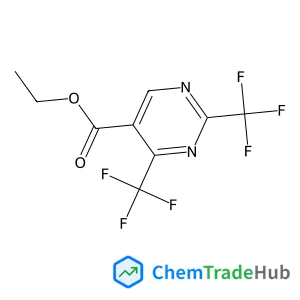
Ethyl 2,4-bis(trifluoromethyl)-5-pyrimidinecarboxylate
CAS Number:
188781-15-9
Molecular Formula:
C9H6F6N2O2
Recommended Suppliers





Disclaimer
This page provides academic journal information for reference and research purposes only. We are not affiliated with any journal publishers and do not handle publication submissions. For publication-related inquiries, please contact the respective journal publishers directly.
If you notice any inaccuracies in the information displayed, please contact us at support@chemtradehub.com. We will promptly review and address your concerns.