












![2-Bromo-7-chloro-4H-pyrrolo[2,3-b]pyrazine structure](https://static.chemtradehub.com/structs/115/1150617-58-5-0b0a.webp "2-Bromo-7-chloro-4H-pyrrolo[2,3-b]pyrazine structure")
Theoretical insights into volatile iodine adsorption onto COF-DL229
Literature Information
Publication Date
2021-10-19
DOI
10.1039/D1CP04390K
Impact Factor
3.676
Authors
Dayin Tong, Yaolin Zhao, Zhongcun Chen, Yuqi Wang, Ziqi Jia, Xiaomeng Nie, Songtao Xiao
View Original
Abstract
COF-DL229 is one of the promising sorbents for the capture of volatile radioiodine due to its large adsorption capacity. However, the interaction mechanism between them remains unclear. In the present work, the adsorption of volatile iodine onto COF-DL229 was systematically investigated using periodic density functional theory and crystal orbital Hamilton population calculations. The “soft” characters of COF-DL229 have been theoretically demonstrated. Furthermore, the adsorption energies are extremely large (−8.38 to −9.26 eV), which mainly originate from the framework deformation energies, accounting for 90% at least. The I2 interacts with the skeleton mainly through the N atoms of the imine linkers or the C atoms of the phenyl rings. And, the I–N bond is the strongest bond among all the potential secondary bonds formed between the skeleton and I2. The electrons could be transferred from the skeletons to the iodine atoms and from the near iodine atom to the far one. It is also found that the energy gap becomes narrow after iodine adsorption and the skeletons mainly interact with the bonding orbital σp of I2. The present work could provide reasonable theoretical explanations to the corresponding experimental investigations and contribute to the design and screening of better sorbents for the capture of volatile radioiodine.
Related Literature
The reactivity of CO2 with K atoms adsorbed on MgO powders
Gloria Preda, Gianfranco Pacchioni, Mario Chiesa, Elio Giamello
2009-06-22
Paper
DOI: 10.1039/B906192D
Reversible photoisomerization of an azobenzene-functionalized self-assembled monolayer probed by sum-frequency generation vibrational spectroscopy
Steffen Wagner, Felix Leyssner, Christian Kördel, Sebastian Zarwell, Roland Schmidt, Karola Rück-Braun, Petra Tegeder
2009-05-20
Paper
DOI: 10.1039/B823330F
Photophysical comparative study of amylose and polyvinyle pyrrolidone/single walled carbon nanotubes complex
J. P. Buisson, N. Nomède Martyr, H. Bizot, A. Buelon, O. Chauvet
2009-07-28
Paper
DOI: 10.1039/B907948C
The formation of colloidal coppernanoparticles stabilized by zinc stearate: one-pot single-step synthesis and characterization of the core–shell particles
André Rittermeier, Shaojun Miao, Xiaoning Zhang, Maurits W. E. van den Berg, Shankhamala Kundu, Yuemin Wang, Sabine Schimpf, Elke Löffler, Roland A. Fischer, Martin Muhler
2009-07-13
Paper
DOI: 10.1039/B908034A
Elucidation of oxyanion coordination geometries at solid surfaces of varied electric field strengths
Jean-François Boily
2009-07-08
Communication
DOI: 10.1039/B909925E
Efficiency of the NICSzz-scan curves to probe the antiaromaticity of organic and inorganic rings/cages
2009-06-30
Paper
DOI: 10.1039/B903677F
Structural evolution of Pt–Au nanoalloys during heating process: comparison of random and core-shell orderings
Zhen Yang, Xiaoning Yang, Zhijun Xu, Shuyan Liu
2009-05-18
Paper
DOI: 10.1039/B821328C
You might also like
Compound Q&A
What precautions should be taken when handling 2-Methyl-2-propanyl 5-amino-2-thiophenecarboxylate (CAS: 1498311-57-1)?
When handling 2-Methyl-2-propanyl 5-amino-2-thiophenecarboxylate (CAS: 1498311-5...
1498311-57-12-Methyl-2-propanyl ...
Compound Q&A
What are the physical and chemical properties of 5-Bromo-1,2-dichloro-3-fluorobenzene (CAS: 1000572-93-9)?
5-Bromo-1,2-dichloro-3-fluorobenzene (CAS: 1000572-93-9) is a crystalline solid ...
1000572-93-95-Bromo-1,2-dichloro...
Compound Q&A
How should (2R)-2-Amino-2-(4-bromophenyl)ethanol (CAS: 354153-64-3) be stored?
(2R)-2-Amino-2-(4-bromophenyl)ethanol (CAS: 354153-64-3) should be stored in a c...
354153-64-3(2R)-2-Amino-2-(4-br...
Compound Q&A
What regulatory guidelines apply to Methyl 4-(aminomethyl)tetrahydro-2H-pyran-4-carboxylate hydrochloride (CAS: 362707-24-2)?
Methyl 4-(aminomethyl)tetrahydro-2H-pyran-4-carboxylate hydrochloride (CAS: 3627...
362707-24-2Methyl 4-(aminomethy...
Compound Q&A
What are the main uses of 1,4-dimethyl-1H-pyrazole-5-sulfonyl chloride (CAS: 1174834-52-6)?
1,4-Dimethyl-1H-pyrazole-5-sulfonyl chloride is primarily used as an intermediat...
1174834-52-61,4-dimethyl-1H-pyra...
Compound Q&A
Is Dinaphtho[1,2-b:2',1'-d]furan (CAS: 239-69-0) safe?
Dinaphtho[1,2-b:2',1'-d]furan is generally safe when handled with appropriate pe...
239-69-0Dinaphtho[1,2-b:2',1...
Compound Q&A
What is the market or research trend for 7-Methyl-7,9-dihydro-1H-purine-2,6,8(3H)-trione (CAS: 612-37-3)?
The market for 7-Methyl-7,9-dihydro-1H-purine-2,6,8(3H)-trione (CAS: 612-37-3) i...
612-37-37-Methyl-7,9-dihydro...
Compound Q&A
What are the physical and chemical properties of 2-(4-Chlorophenyl)malonaldehyde (CAS: 205676-17-1)?
2-(4-Chlorophenyl)malonaldehyde (CAS: 205676-17-1) is a colorless or light yello...
205676-17-12-(4-Chlorophenyl)ma...
Compound Q&A
How is 2-Methylchrysene (CAS: 3351-32-4) typically synthesized?
2-Methylchrysene (CAS: 3351-32-4) is typically synthesized via the reaction of c...
3351-32-42-Methylchrysene
Compound Q&A
Is N-(6-aminopyrimidin-4-yl)acetamide (CAS: 89533-23-3) safe?
N-(6-aminopyrimidin-4-yl)acetamide (CAS: 89533-23-3) is generally considered saf...
89533-23-3N-(6-aminopyrimidin-...
Source Journal
Physical Chemistry Chemical Physics

CiteScore:
5.5
Self-citation Rate:
10.3%
Articles per Year:
3036
Physical Chemistry Chemical Physics (PCCP) is an international journal co-owned by 19 physical chemistry and physics societies from around the world. This journal publishes original, cutting-edge research in physical chemistry, chemical physics and biophysical chemistry. To be suitable for publication in PCCP, articles must include significant innovation and/or insight into physical chemistry; this is the most important criterion that reviewers and Editors will judge against when evaluating submissions. The journal has a broad scope and welcomes contributions spanning experiment, theory, computation and data science. Topical coverage includes spectroscopy, dynamics, kinetics, statistical mechanics, thermodynamics, electrochemistry, catalysis, surface science, quantum mechanics, quantum computing and machine learning. Interdisciplinary research areas such as polymers and soft matter, materials, nanoscience, energy, surfaces/interfaces, and biophysical chemistry are welcomed if they demonstrate significant innovation and/or insight into physical chemistry. Joined experimental/theoretical studies are particularly appreciated when complementary and based on up-to-date approaches.
Recommended Compounds

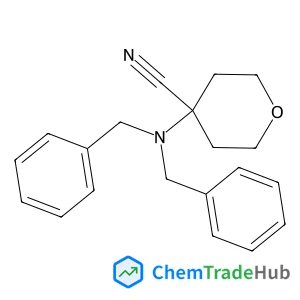
4-(Dibenzylamino)tetrahydro-2H-pyran-4-carbonitrile
CAS Number:
1630906-81-8
Molecular Formula:
C20H22N2O
Recommended Suppliers






Disclaimer
This page provides academic journal information for reference and research purposes only. We are not affiliated with any journal publishers and do not handle publication submissions. For publication-related inquiries, please contact the respective journal publishers directly.
If you notice any inaccuracies in the information displayed, please contact us at support@chemtradehub.com. We will promptly review and address your concerns.