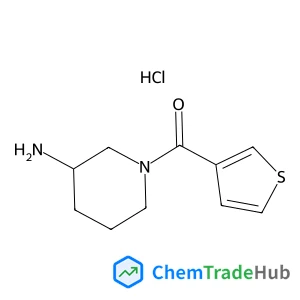
(3-Amino-piperidin-1-yl)-thiophen-3-yl-methanone hydrochloride
CAS Number:
1185316-70-4
Molecular Formula:
C10H15ClN2OS
Basil Raju Karimadom, Haya Kornweitz
The hydrolysis of borohydride on the Ag(111) surface is explored theoretically to obtain the in-depth reaction mechanism. Many heterogeneously catalyzed reactions like this involve the adsorption of charged species on metals. DFT calculations of charged systems, with periodic boundaries, face serious problems, concerning convergence and reliability of the results. To study the heterogeneously catalyzed reactions, a simple method to calculate the adsorption energy of charged systems in metallic periodic cells is proposed. In this method, a counter ion is placed at a non-interactive distance, in an aqueous medium, so that the calculated system is neutral. Bader analysis is used to validate that the calculated couple is charged correctly. Adsorption energies of F−, Cl−, Br−, OH−, BH4−, ClO4− and H− ions on the Ag(111) surface in an aqueous medium were determined using Na+ and K+ as counter ions, to evaluate the performance of this method. The adsorption of the divalent ions S2−, Se2− and SO42− on different surfaces was studied as well. Then this method was used to explore the hydrolysis of BH4− ions, which have a high theoretical hydrogen storage capacity, on the Ag(111) surface. The results point out that during the catalytic hydrolysis only one hydrogen atom from borohydride is transferred to the surface. In the first step one hydrogen atom from BH4− is transferred to the silver surface; this H atom reacts with a hydrogen atom that is released from an adsorbed water molecule; in addition, a hydrogen molecule is released in the second step (one atom from *BH4− and one from *H2O). Thus, the mechanisms of the catalyzed reductions by BH4− and the hydrogen evolution reactions must be reconsidered.
Josh J. Newby, Ching-Ping Liu, Christian W. Müller, Timothy S. Zwier
DOI: 10.1039/B903827B
Matthieu Hureau, Alain Moissette, Séverine Marquis, Claude Brémard, Hervé Vezin
DOI: 10.1039/B904010B
Erick Castellón, Marcos Zayat, David Levy
DOI: 10.1039/B903926K
Run Long, Ying Dai, Guo Meng, Baibiao Huang
DOI: 10.1039/B903298C
DOI: 10.1039/B903677F
Merrill D. Halling, Mark Strohmeier, Mark S. Solum, Vikki M. Tsefrikas, Toshikazu Hirao, Lawrence T. Scott, Ronald J. Pugmire, David M. Grant
DOI: 10.1039/C001903H
Valéria Moraes Longo, Maria das Graça Sampaio Costa, Alexandre Zirpole Simões, Ieda Lúcia Viana Rosa, Carlos Oliveira Paiva Santos, Juan Andrés, Elson Longo, José Arana Varela
DOI: 10.1039/B923281H
Igor Pašti, Slavko Mentus
DOI: 10.1039/B823385C
When handling 2-Methyl-2-propanyl 5-amino-2-thiophenecarboxylate (CAS: 1498311-5...
5-Bromo-1,2-dichloro-3-fluorobenzene (CAS: 1000572-93-9) is a crystalline solid ...
(2R)-2-Amino-2-(4-bromophenyl)ethanol (CAS: 354153-64-3) should be stored in a c...
Methyl 4-(aminomethyl)tetrahydro-2H-pyran-4-carboxylate hydrochloride (CAS: 3627...
1,4-Dimethyl-1H-pyrazole-5-sulfonyl chloride is primarily used as an intermediat...
Dinaphtho[1,2-b:2',1'-d]furan is generally safe when handled with appropriate pe...
The market for 7-Methyl-7,9-dihydro-1H-purine-2,6,8(3H)-trione (CAS: 612-37-3) i...
2-(4-Chlorophenyl)malonaldehyde (CAS: 205676-17-1) is a colorless or light yello...
2-Methylchrysene (CAS: 3351-32-4) is typically synthesized via the reaction of c...
N-(6-aminopyrimidin-4-yl)acetamide (CAS: 89533-23-3) is generally considered saf...

Physical Chemistry Chemical Physics (PCCP) is an international journal co-owned by 19 physical chemistry and physics societies from around the world. This journal publishes original, cutting-edge research in physical chemistry, chemical physics and biophysical chemistry. To be suitable for publication in PCCP, articles must include significant innovation and/or insight into physical chemistry; this is the most important criterion that reviewers and Editors will judge against when evaluating submissions. The journal has a broad scope and welcomes contributions spanning experiment, theory, computation and data science. Topical coverage includes spectroscopy, dynamics, kinetics, statistical mechanics, thermodynamics, electrochemistry, catalysis, surface science, quantum mechanics, quantum computing and machine learning. Interdisciplinary research areas such as polymers and soft matter, materials, nanoscience, energy, surfaces/interfaces, and biophysical chemistry are welcomed if they demonstrate significant innovation and/or insight into physical chemistry. Joined experimental/theoretical studies are particularly appreciated when complementary and based on up-to-date approaches.